
English 
T: +86-17717097520
E: sales1@melko2015.com
E: sales1@melko2015.com
No.222 Xiangche Rd. Chedun Town Songjiang Dist. Shanghai China 201611


Views: 0 Author: Site Editor Publish Time: 2026-07-14 Origin: Site


Industrial fluid management faces a persistent, invisible threat. Biofouling disrupts critical operations across food and beverage processing, medical preparation, and high-purity industrial sectors. Contaminants quietly multiply inside standard filtration systems. This silent growth compromises product safety. It ruins system efficiency and causes unpredictable failures. Traditional depth filters capture particulate matter effectively. However, they often trap organic debris alongside inorganic dirt. These dark, damp environments quickly become active breeding grounds for trapped bacteria.
Unchecked microbial growth causes severe differential pressure spikes. It inevitably leads to dangerous downstream contamination. We explore how a melt-blown antibacterial filter cartridge solves this complex challenge. You will learn about its dual-action mechanism. It provides reliable particulate retention while offering continuous microbial inhibition. We will cover strict selection criteria. We will examine operational benefits. You will discover practical system implementation strategies to protect your critical processes from biological risks.
Biofouling creates severe bottlenecks in fluid processing operations. Depth filters capture organic matter effectively within their porous matrices. Ambient temperatures then accelerate bacterial proliferation within the media. Microbes feed on these trapped organics. They form sticky, impermeable biofilms across the filtration matrix. Bacteria excrete extracellular polymeric substances (EPS) to build this biological slime. This EPS layer blocks microscopic flow paths rapidly. It fundamentally destroys the intended porosity of the filter.
Cascading failures occur once biofilms establish themselves inside the housing. First, operators notice rapid increases in differential pressure (ΔP). System pumps must work significantly harder to push fluid through clogged pores. Unplanned downtime soon follows this pressure spike. Facilities spend excessive capital on premature cartridge replacements. Maintenance teams waste valuable hours swapping out fouled filters long before their expected dirt-holding capacity is reached.
More critically, bacterial breakthrough threatens the entire downstream process. Mature biofilms shed active bacterial colonies into the filtrate stream. They escape the filter housing entirely. They contaminate critical medical or food-grade processes. Standard depth solutions cannot handle these biological threats. String-wound filters leave large gaps where bacteria easily hide and multiply. An untreated melt-blown filter cartridge simply acts as a passive net. It holds dirt but completely ignores microbial growth. You need a targeted intervention to stop biofouling at its structural source.
Manufacturers use thermal extrusion to create advanced depth filters. They melt polymer pellets at extreme temperatures. High-velocity air streams then attenuate the molten plastic into extremely fine microfibers. These fibers layer themselves naturally to form a rigid, cylindrical structure. This manufacturing process creates a consistent, graded pore density. Outer layers catch large, coarse particles. Inner layers trap exceptionally fine contaminants. This graded structure provides exceptional dirt-holding capacity.
To stop bacteria, engineers modify the base polymer before extrusion. They embed active antibacterial agents directly into the polypropylene melt. Some manufacturers use silver ions. Others use specialized organic antimicrobials. This fundamental distinction matters deeply for system safety. Topical coatings often wash away under heavy fluid flow. Embedded agents remain permanently locked inside the polymer matrix. They provide continuous biological protection throughout the entire lifespan of the filter.
The active agent functions through direct physical contact. It attacks the cellular walls of trapped microbes. The agent disrupts internal enzymes and inhibits cellular reproduction entirely. It prevents isolated bacteria from multiplying into thick, problematic biofilms. The fluid chemistry remains completely unaltered during this entire process. The active agent stays inside the fiber.
We must establish realistic expectations regarding this technology. An antibacterial filter cartridge does not sterilize flowing water. It strictly inhibits bacterial growth on the filter media itself. You cannot use it to purify heavily contaminated raw water sources. Instead, it prevents the filter from becoming a dangerous biological incubator.
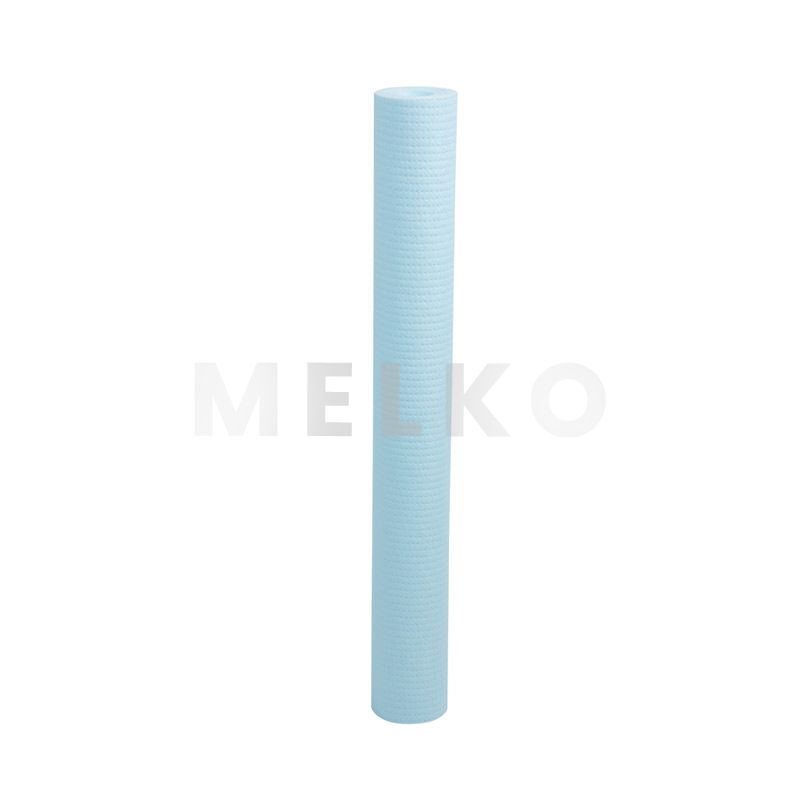
Facility managers often weigh hardware costs before upgrading filtration systems. Antibacterial filters naturally carry a premium price tag over standard units. You must evaluate the return on investment carefully. Consider upgrading immediately when your system handles static water. Elevated process temperatures and high organic loads also strongly justify the switch. Reduced labor costs and fewer physical changeouts quickly offset the initial purchase premium. You save substantial operational budget by preventing unplanned system downtime.
Let us compare boundary use cases against legacy filtration technology. String-wound filters suffer heavily from media migration. They release broken yarns into the fluid stream. A melt-blown design offers superior structural consistency. It features zero media migration. Adding antibacterial properties makes it the undeniable choice for high-purity environments. It outperforms string-wound alternatives across every measurable biological metric.
We must also consider absolute-rated pleated filters. Pleated filters rely entirely on surface area for filtration. Melt-blown units utilize true depth filtration. You should position an antibacterial depth filter as a dedicated pre-filter. It expertly shields expensive final pleated filters from heavy biological burdens. This specific strategy maximizes the lifespan of your entire downstream filtration train.
Comparison of Depth Filtration Technologies
| Technology Type | Primary Mechanism | Biofouling Resistance | Best Application Scenario |
|---|---|---|---|
| Standard String-Wound | Surface & Limited Depth | Very Low | Coarse filtration, non-critical industrial water |
| Standard Melt-Blown | Graded Density Depth | Low | High dirt holding, continuous flow cooling water |
| Antibacterial Melt-Blown | Graded Depth + Inhibition | High | F&B prep, static water tanks, medical pre-filtration |
| Pleated Absolute Filter | Surface Area Capture | Moderate | Final polishing, critical downstream protection |
Procurement teams must apply strict evaluation standards before purchasing. First, examine the micron rating and overall particulate efficiency. You must accurately match the graded density specification to your fluid viscosity. Micron ratings typically span from 1µm up to 50µm. High particulate loads require careful micron selection. Proper sizing prevents premature surface blinding and ensures deep particle penetration.
Regulatory compliance directly ensures consumer safety. Always demand official documentation from your chosen supplier. FDA Title 21 compliance verifies material safety for contact applications. NSF certification guarantees suitability for potable water processing. These authoritative documents prove the active antibacterial agent will not chemically contaminate your final product. Never install undocumented filters in sensitive process lines.
Next, verify the manufacturer's chosen testing standards. Do not accept vague marketing claims regarding microbial control. Look specifically for verified log-reduction data. Authoritative testing frameworks include JIS Z 2801 or ISO 22196. These standardized laboratory tests prove the media actively inhibits microbial growth. A log-3 reduction indicates a 99.9% decrease in bacterial colonies.
Finally, establish safe operating parameters for your facility. Every polymer filter possesses specific physical limits. You must align these constraints with your system design.
Always request a technical data sheet (TDS) before finalizing a purchase. The TDS provides the maximum operating temperature and flow rate curves. Compare these curves against your current pump performance. If your system runs hot water sanitation cycles, ensure the polypropylene housing can withstand the thermal shock without deforming.
Engineering teams frequently worry about active agents leaching into the filtrate. Low-quality topical treatments often wash away under turbulent flow. High-quality manufacturing strictly mitigates this leaching risk. The thermal embedding process locks the antimicrobial agent inside the polymer lattice. It remains physically trapped within the individual fibers. The final filtrate remains exceptionally pure and uncontaminated. You avoid dangerous chemical adulteration entirely.
You might wonder about potential performance impacts. The addition of these embedded agents does not negatively impact fluid flow rates. The initial pressure drop precisely mirrors standard cartridges. The microscopic porosity remains structurally identical. System pumps will not experience added mechanical strain during initial startup. You maintain expected operational efficiency from day one.
Knowing exactly when to change the filter prevents catastrophic system failures. Visual inspection fails as a reliable maintenance metric. Bacteria remain completely invisible to the naked eye. A filter may look clean while harboring massive biological colonies internally. Rely exclusively on hard, verifiable performance metrics.
Many operators wait for visual discoloration before replacing depth filters. This error leads to severe biofouling. Organic slimes often lack distinct colors. By the time visual darkening occurs, the biofilm has likely compromised the downstream equipment. Always use mechanical pressure gauges to dictate maintenance schedules.
Upgrading your filtration infrastructure delivers measurable strategic value. It actively mitigates biological contamination risks across all critical fluid processes. Embedded antimicrobial protection ensures strict regulatory compliance. Operations run much smoother when unpredictable biofouling events disappear entirely. You gain consistent system performance, reliable flow rates, and predictable maintenance intervals. This approach maximizes facility productivity.
Take immediate action to secure your vulnerable filtration systems. Request a comprehensive technical data sheet from your filtration supplier. Ask for all relevant material safety certifications before proceeding with procurement. We strongly recommend requesting sample cartridges for immediate pilot testing. Deploy them directly in your specific fluid environment. Observe the pressure stability and performance benefits firsthand.
A: No. It prevents bacterial growth on the filter media itself to prevent biofouling and cross-contamination. It is not a replacement for UV, ozone, or absolute sterilization. You must use dedicated purification systems to treat biologically unsafe raw water sources.
A: Yes, provided they utilize FDA-approved polypropylene and food-contact-safe antibacterial agents. Always verify supplier certifications to ensure safety compliance. Look for explicit NSF certifications or FDA Title 21 documentation before installing them in consumable fluid lines.
A: Lifespan increases vary by application. However, in environments prone to organic fouling, users typically see a 30% to 50% increase in service life before reaching terminal pressure drop. Static water applications often see even greater longevity improvements.
A: No. Because the agent is integrated into the polymer matrix at a microscopic level, the porosity and flow characteristics remain identical to standard melt-blown filters. Your system pumps will perform exactly as they do with conventional filter cartridges.

