
English 
T: +86-17717097520
E: sales1@melko2015.com
E: sales1@melko2015.com
No.222 Xiangche Rd. Chedun Town Songjiang Dist. Shanghai China 201611


Views: 0 Author: Site Editor Publish Time: 2026-07-01 Origin: Site


Filtering acidic liquids involves incredibly high operational stakes for industrial facilities. Premature filter failure quickly leads to severe downstream equipment corrosion. It also causes hazardous batch contamination and triggers costly unplanned downtime. Polyester (PE) occupies a highly specific niche within the industrial filtration material matrix. Polypropylene (PP) generally serves as the standard material for generic chemical processing. However, PE handles intense operational stress points beautifully. It excels at managing elevated thermal limits where other basic polymers simply melt or degrade.
We will explore how these specific materials function under intense chemical and thermal duress. We aim to provide plant managers and procurement engineers with a transparent, actionable evaluation framework. You will learn exactly when to specify these specialized filters for your demanding acid-facing applications. This guide breaks down material compatibility, structural necessities, and practical implementation strategies.
Handling acidic waste or process fluids requires balancing chemical resistance with overall operational efficiency. Reusable systems often seem appealing during initial facility design phases. However, they introduce substantial hidden maintenance burdens over time. You must evaluate the practical daily advantages of single-use polymers. They offer clear, measurable operational benefits for your facility.
Intensive cleaning cycles expose operators to severe chemical burn hazards. Washing reusable metal filters requires harsh neutralizing solvents. It demands strict personal protective equipment and rigorous training. single-use PE filter bags eliminate this hazardous washing step entirely. Operators simply isolate the vessel, remove the spent unit, and dispose of it safely. This dramatically reduces workplace injury risks. It simplifies your daily safety protocols and protects your workforce effectively.
Environmental regulations govern acidic wastewater disposal tightly. Washing reusable filters generates high volumes of hazardous liquid effluent. Facilities must capture and treat this wastewater before discharge. This treatment demands specialized dosing chemicals and continuous pH monitoring. Single-use bags offer highly predictable solid-waste disposal protocols instead. You manage the spent media as standardized solid waste according to local environmental guidelines. This simplifies environmental compliance significantly. It removes the unpredictable burden of liquid waste management.
Exotic metal alloys handle acidic environments exceptionally well. Materials like Hastelloy or Monel require enormous upfront capital expenditure. Single-use polymer systems require significantly lower initial investments. They also ensure reliable batch-to-batch consistency for your production lines. You avoid the gradual microscopic degradation seen in reusable wire mesh. Fresh polymer media guarantees identical filtration parameters every single time. This consistency protects your final product quality from unpredictable variations.
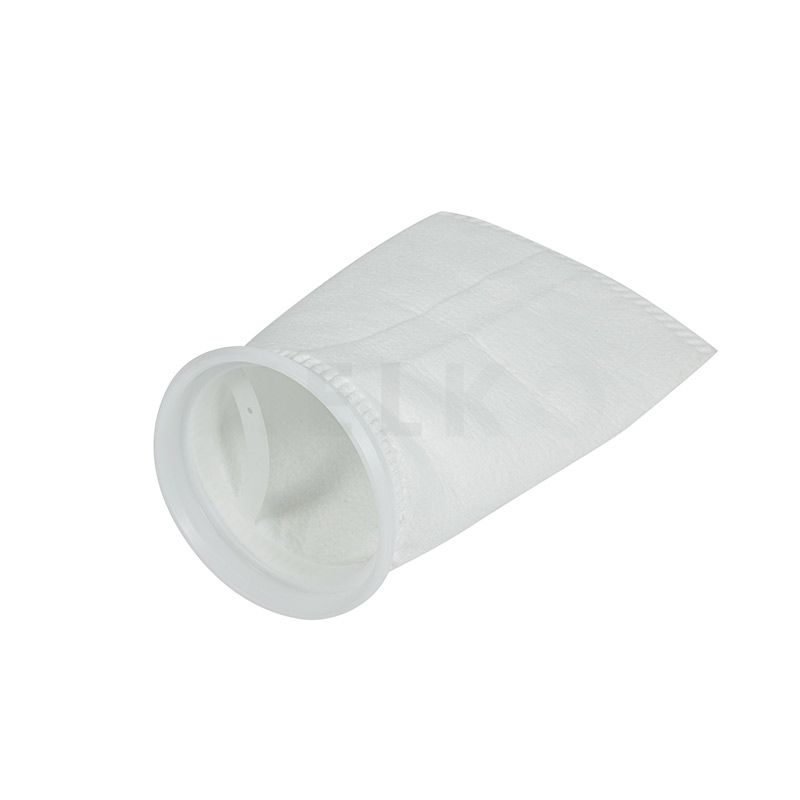
Material selection dictates the ultimate success of your filtration process. Polypropylene (PP) provides excellent, broad chemical resistance generally. Industries use it extensively for baseline chemical processing. However, PP possesses a critical thermal vulnerability. It degrades rapidly when fluid temperatures exceed 90°C (194°F). Its structural matrix begins to soften and stretch. This softening leads directly to catastrophic media failure.
Polyester (PE) bridges this specific thermal gap perfectly. It offers exceptional stability up to 135°C (275°F) in compatible chemical environments. This makes it an indispensable material for heated process fluids.
PE performs exceptionally well in very specific acidic environments. It handles dilute inorganic acids at elevated temperatures reliably. You can use it confidently for continuous processing of most organic acids. Common industrial examples include heated citric acid, acetic acid, and lactic acid. It also processes petroleum-based fluids effectively. These viscous fluids often contain corrosive acidic byproducts from refining stages. PE maintains strict dimensional stability under these compounded thermal and chemical stresses.
Transparency regarding limitations builds crucial engineering trust. You must know exact material boundaries to prevent system failures. PE cannot handle concentrated sulfuric or nitric acids. High-molarity strong acids destroy the polyester polymer chains quickly. You must specify PTFE or Teflon media for those extreme applications. Furthermore, PE is highly susceptible to chemical hydrolysis. High pH environments trigger this rapid chemical breakdown. You should strictly avoid exposing PE to strong alkaline or caustic solutions.
The following comparison illustrates the operational differences between standard polymer media in industrial environments.
| Chemical Environment | Polyester (PE) Performance | Polypropylene (PP) Performance |
|---|---|---|
| Organic Acids (Citric, Acetic) | Excellent up to 135°C | Good, but fails above 90°C |
| Dilute Inorganic Acids | Highly Stable | Highly Stable |
| Concentrated Strong Acids | Not Recommended (Degrades) | Not Recommended |
| Strong Alkalis / Caustics | Fails (Susceptible to Hydrolysis) | Excellent Resistance |
| Maximum Continuous Temperature | 135°C (275°F) | 90°C (194°F) |
Selecting the right material chemistry only solves half the engineering challenge. The physical structure of the media determines its daily performance. You must evaluate the construction methodology carefully.
Filter media physical structure dictates overall capture efficiency. Needle-punched PE felt utilizes true depth filtration mechanics. Manufacturers punch thousands of synthetic fibers together mechanically. This creates a dense, highly tortuous path for process liquids. The matrix captures varying particle sizes throughout its entire depth. This layered capture mechanism prevents premature surface blinding.
Available micron ranges typically span from 1 to 200 microns. You must align these ratings meticulously with your desired fluid cleanliness. Tighter micron ratings capture smaller particles but decrease overall flow capacity. You must balance capture efficiency against required production throughput.
Construction methods define operational reliability under stress. Sewn seams represent a massive physical vulnerability in acid-resistant filter bags. Acidic fluids attack standard sewing threads relentlessly during continuous operation. The thread dissolves, weakens, or snaps over time. This leads directly to unfiltered liquid bypass. You lose entire batch integrity immediately when seams fail.
You must demand absolute structural integrity for hazardous fluids. Ultrasonic or thermally welded seams fuse the polymer media together directly. They eliminate thread-based chemical vulnerabilities entirely. Welded seams ensure the weakest point of the bag remains as strong as the primary media.
The top ring secures the bag tightly inside the metal vessel. Standard carbon steel rings corrode almost instantly in acid. Rust will contaminate your filtered product and weaken the seal. You must evaluate and specify ring materials carefully.
Specify molded PE, PP, or stainless steel (316L) snap-rings. Molded polymer rings create a positive, bypass-free seal against the housing basket. They expand slightly under system pressure to lock firmly into place. This prevents any acidic fluid from slipping past the unfiltered edges.
Even the highest quality materials require strict operational oversight. Poor implementation strategies will compromise excellent filtration media. You must establish clear operational parameters for your maintenance teams.
Filters accumulate solid debris and build internal system pressure continuously. You must monitor this pressure differential constantly using installed gauges. Set strict pressure differential limits for mandatory bag replacement. Industry best practices strongly recommend a 15-20 psi maximum differential.
Exceeding this specific limit risks physical media rupture. A rupture causes catastrophic downstream contamination instantly. It forces costly rework of entire production batches and requires extensive pipe cleaning. Establish clear, non-negotiable protocols for your operators to follow.
Acidic fluids behave differently at various operating temperatures. You must factor in specific gravity carefully during system design. Consider the fluid viscosity when sizing your liquid filter bags. High-viscosity fluids require significantly larger filtration surface areas to process effectively. They also demand lower flow velocities to prevent channeling through the felt matrix. Failure to account for viscosity leads to rapid blinding and excessive pump wear.
The bag represents only one component of the entire system. A PE filter bag relies entirely on its surrounding metal housing. Ensure the external vessel withstands the specific chemical environment safely. Unlined standard carbon steel vessels will fail rapidly through corrosion. Specify vessels heavily lined with industrial fluoropolymers. Alternatively, use appropriate acid-resistant metal alloys for the housing construction. This prevents galvanic corrosion and catastrophic pressurized vessel leaks.
You need a systematic approach for effective procurement. Haphazard purchasing leads to process inconsistencies and safety hazards. Follow this structured framework to select the correct filtration media every time.
Specifying specialized filtration media requires careful, deliberate analysis of your entire process stream. Using polymer bags is never a universal, blanket solution for every chemical challenge. However, it remains a highly effective, deeply reliable strategy. It provides cost-efficient, predictable results for elevated-temperature, mild-acid applications.
By migrating to these engineered systems, you eliminate hazardous cleaning cycles completely. You also stabilize your long-term maintenance budgets by standardizing replacement protocols. Protect your process equipment and ensure pristine batch quality by strictly aligning material properties with your fluid matrix.
Take immediate action to protect your downstream process streams today. Consult directly with a certified filtration application engineer to review your systems. Request a comprehensive chemical compatibility audit for your specific facility fluids. Finally, order a small run of sample bags to conduct controlled, on-site pilot testing before committing to large-scale implementation.
A: No. Washing degrades the needle-punched felt structure, reducing capture efficiency. Furthermore, single-use disposal is safer and often cheaper than treating hazardous acid-wash water.
A: Standard PE felt operates safely up to 135°C (275°F), making it superior to Polypropylene for high-temp liquid filtration.
A: High-quality PE bags feature a singed or glazed external surface treatment specifically designed to lock fibers in place and prevent downstream migration.

