
English 
T: +86-17717097520
E: sales1@melko2015.com
E: sales1@melko2015.com
No.222 Xiangche Rd. Chedun Town Songjiang Dist. Shanghai China 201611


Views: 0 Author: Site Editor Publish Time: 2026-07-02 Origin: Site


Chemical processors face an ongoing battle on the production floor. You must constantly balance fluid purity against high throughput rates. Minimizing costly downtime remains critical during these demanding operational cycles. Choosing the correct filtration system directly impacts this delicate balance. For decades, facilities relied heavily on reusable metal or synthetic mesh filters. We now see a massive industry shift toward disposable solutions. This transition actively mitigates cross-contamination risks. It also eliminates grueling, expensive cleaning validation procedures.
This article provides an evidence-based framework for evaluating your liquid filtration strategy. You will learn whether single-use PE filter bags fit your facility's exact needs. We explore specific chemical, thermal, and operational demands typical in modern plants. Evaluating material compatibility prevents catastrophic process failures. Analyzing sizing metrics ensures optimal fluid flow. By understanding these core principles, you can implement a safer, more predictable filtration process.
Plant managers know cleaning reusable filters wastes valuable production time. Workers often spend hours scrubbing metal mesh baskets. They consume harsh cleaning chemicals during this maintenance window. This process demands extensive manual labor. It also generates secondary wastewater streams requiring separate treatment. Conversely, swapping out disposable media takes mere minutes. You simply remove the spent unit and install a fresh one. This approach creates a highly predictable maintenance schedule.
Multi-product processing lines face severe cross-contamination threats daily. Lingering chemical residue from one batch can easily ruin the next. Cleaning validation procedures attempt to prevent this, but human error happens. Single-use systems inherently solve this dangerous problem. Operators discard the spent bag completely after a batch concludes. You start each new production run completely fresh. The risk of trace chemical carryover drops to practically zero.
Reusable filters degrade continuously over their operational lifespan. Aggressive cleaning cycles warp metal mesh structures. Synthetic washable fabrics fray and lose their original pore size. This degradation alters your filtration consistency dramatically. Factory-new disposable bags guarantee consistent baseline differential pressure. They deliver exact micron retention for every single batch you run. You remove filter degradation variables entirely from your quality control equation.
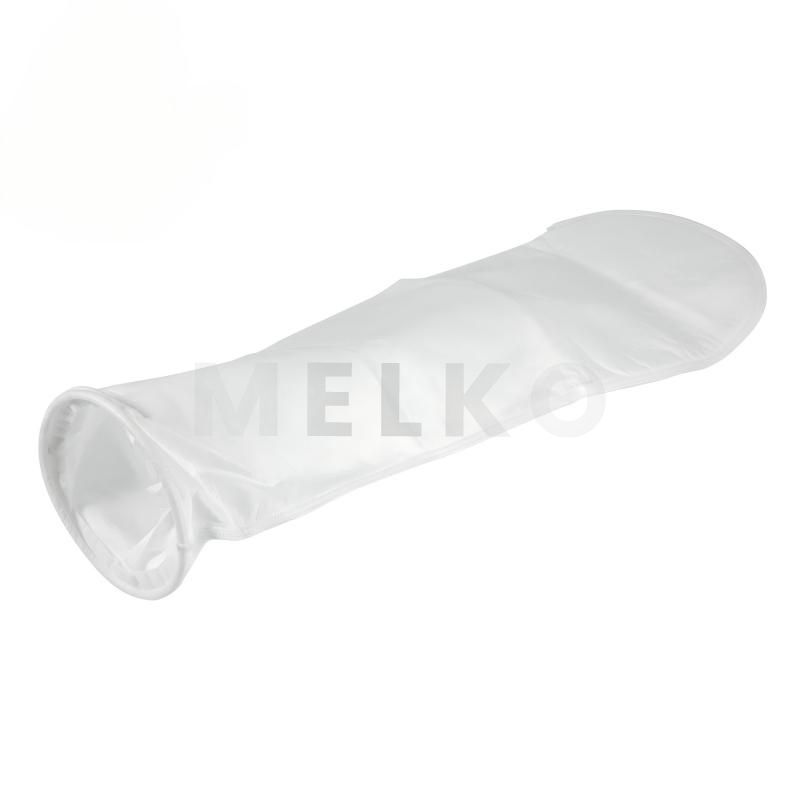
Polyester (PE) serves as a dominant material in liquid filtration applications. Manufacturers typically construct it using needle felt or woven mesh designs. Needle felt provides excellent depth filtration capabilities. The manufacturing process entangles thousands of fibers into a dense matrix. This structure creates a tortuous path for fluid flow. It traps varying particle sizes throughout the entire depth of the media. This three-dimensional capture mechanism dramatically increases overall dirt-holding capacity.
Polyester excels in highly demanding chemical processing environments. We frequently see it handling aggressive organic solvents. It performs exceptionally well across diverse petrochemical applications. The material also resists various acidic environments beautifully. Standard mineral acids rarely compromise the structural integrity of polyester fibers. Facilities processing resins, paints, and coatings heavily rely on this material. It offers exceptional dimensional stability under moderate pressure.
However, polyester is certainly not invincible. You must transparently assess its operational limits before installation. The material fails catastrophically when exposed to strong alkalis. Sodium hydroxide or potassium hydroxide will quickly degrade the fibers. This chemical reaction causes rapid hydrolysis, destroying the bag entirely. Furthermore, continuous operating temperatures should never exceed 135°C (275°F). If your process crosses these specific thresholds, pivot your strategy. You should transition to Polypropylene (PP) or PTFE media immediately.
Establish a rigorous standard operating procedure for material verification. Procurement teams must thoroughly review your chemical stream's Material Safety Data Sheet. Compare these chemical details against official compatibility charts. Pay close attention to concentration levels and operating temperatures. A chemical might be safe at room temperature but corrosive at 90°C. Perform this cross-referencing routine before finalizing any purchase order.
Understanding filtration metrics ensures long-term operational success. You must differentiate clearly between nominal and absolute ratings. Nominal ratings estimate an average particle retention efficiency. They typically capture about 60% to 70% of targeted particles. Absolute ratings guarantee a strict cutoff size, usually exceeding 98% efficiency. Chemical viscosity heavily impacts actual retention performance in the field. Thick fluids generate immense drag forces. This pressure can physically deform soft particles, pushing them through the media.
Optimal bag sizing prevents premature failure and production bottlenecks. To find the right fit, calculate your target flow rates accurately. Assess your acceptable initial differential pressure baseline. High flow rates demand significantly larger surface areas. Undersizing your housing leads to rapid blinding and frequent changeouts. A larger filtration surface reduces initial pressure drop significantly. This directly extends the usable life of the consumable unit.
| Industry Standard Size | Diameter (Inches) | Length (Inches) | Approximate Surface Area (Sq. Ft.) | Typical Max Flow Rate (GPM) |
|---|---|---|---|---|
| Size 1 | 7.0 | 16.5 | 2.0 | 90 |
| Size 2 | 7.0 | 32.0 | 4.4 | 200 |
| Size 3 | 4.1 | 8.0 | 0.5 | 25 |
| Size 4 | 4.1 | 14.0 | 1.0 | 50 |
A high-quality filter fails completely if its seal leaks. You must evaluate internal bypass risks carefully. Standard sewn steel rings work adequately for general industrial applications. They rely on the housing lid pressure to create a seal. However, critical chemical processing demands absolute perfection. Fully welded plastic flanges ensure zero fluid bypass. They snap securely directly into the housing basket. This design forces all liquid through the media matrix.
Extracting chemically soaked filters poses severe ergonomic challenges for operators. These bags become incredibly heavy when fully saturated. A Size 2 bag filled with dense sludge can easily exceed forty pounds. Workers risk harmful physical strain during manual extraction. They also risk sudden exposure to hazardous fumes or corrosive liquids. Facilities must implement strict safety protocols for all maintenance procedures. Provide proper lifting equipment, such as davit cranes, for heavy applications. Mandate appropriate personal protective equipment consistently.
Hazardous waste disposal dictates many facility operational decisions. A spent bag retains the exact chemical footprint of your fluid. This reality impacts your disposal weight directly. Heavy, saturated waste drives up hazardous removal fees exponentially. It also triggers strict regulatory compliance audits from environmental agencies. You must categorize and manifest the waste accurately. Some facilities utilize bag squeezers to reclaim valuable chemical products. This practice simultaneously reduces the final hazardous waste weight.
Supply chain continuity remains a critical concern for procurement teams. We highly recommend sticking to standard industry footprints. Relying on highly customized, proprietary dimensions creates unnecessary supply chain vulnerabilities. Standard sizing guarantees much broader vendor availability worldwide. Sourcing industrial filter bags designed to standard dimensions provides immense flexibility. It keeps your plant running smoothly during unexpected global material shortages.
Making the final material selection requires clear, logical steps. Guesswork often leads to compromised fluid quality or equipment damage. We recommend following a structured evaluation process. This ensures every operational variable receives proper attention.
Look carefully beyond the upfront purchase price of the consumable. You must model the hidden operational impacts accurately. Factor in hourly labor rates for physical maintenance changeouts. Add the freight fees associated with shipping consumable pallets. Include projected hazardous disposal fees based on estimated saturated weight. Contrast these upcoming expenses against your current hard savings. You will eliminate expensive cleaning chemicals completely. You should also achieve significantly higher overall plant uptime.
Never scale a new filtration strategy plant-wide without testing first. Request sample PE liquid filtration bags directly from your manufacturing partner. Run a controlled pilot test on a smaller slipstream line. This practical step verifies actual dirt-holding capacity in real-world conditions. It also measures the true pressure drop accurately. Pilot testing exposes unforeseen compatibility issues before they cause massive production losses.
Disposable polyester filters offer highly efficient solutions for modern chemical processing. They provide incredibly predictable performance for specific, chemically compatible process streams. Their ability to eliminate cross-contamination makes them invaluable in multi-product facilities. They remove the heavy labor burden associated with cleaning reusable metal meshes. Operators gain a safer, faster, and more reliable maintenance routine.
Evaluating these systems requires looking far beyond the initial unit price. You must calculate the entire operational impact on your facility. Consider the reduction in cleaning chemicals and secondary wastewater generation. Factor in the dramatic improvements to your overall production uptime. Facilities often save thousands of dollars annually in labor alone. Proper sizing and seal selection further guarantee process integrity.
Stop guessing about fluid compatibility and filtration efficiency. Consult an experienced application engineer today. Request a detailed chemical compatibility chart tailored to your specific fluids. Order a trial batch to establish a performance baseline in your processing environment. Taking these proactive steps ensures your chemical production line runs flawlessly.
A: Standard polyester (PE) filter bags safely operate at continuous temperatures up to 135°C (275°F). They can handle brief temperature excursions slightly above this limit. However, sustained exposure to higher heat will cause the synthetic fibers to degrade, shrink, or melt. If your process runs hotter, you must upgrade to high-temperature materials.
A: PE excels in handling organic solvents, petrochemicals, and higher operating temperatures (up to 135°C). Polypropylene (PP) handles lower maximum temperatures (around 93°C) but offers a vastly superior broad pH tolerance. PP resists strong alkalis and caustic sodas perfectly, whereas strong alkalis will quickly destroy PE fibers through chemical hydrolysis.
A: Yes, they handle viscous chemicals well, provided you size the system correctly. High viscosity creates significant flow resistance, leading to rapid pressure drops. You must compensate by selecting larger Size 2 bags or installing multi-bag housings. This increases the total surface area, reducing the differential pressure and preventing premature media blinding.
A: The most effective method is utilizing fully welded plastic sealing rings. Unlike traditional sewn metal rings, plastic flanges form a positive, 360-degree compression seal inside the housing basket. Welded construction eliminates needle holes in the media. This ensures zero fluid bypass, which remains critical for high-purity chemical filtration applications.

