
English 
T: +86-17717097520
E: sales1@melko2015.com
E: sales1@melko2015.com
No.222 Xiangche Rd. Chedun Town Songjiang Dist. Shanghai China 201611


Views: 0 Author: Site Editor Publish Time: 2026-07-09 Origin: Site


While filter media like carbon or RO membranes get the spotlight, the structural integrity of the purification system relies entirely on its housing. Material degradation, pressure bursts, and chemical leaching from substandard housings can compromise otherwise high-grade filtration setups. Low-grade plastics often crack under sudden spikes in municipal line pressure. They can also leak dangerous chemical plasticizers into an otherwise pristine water supply.
Polyethylene terephthalate (PET) has become an industry standard for housing specific types of filtration systems. This guide breaks down what a PET filter casing purifier actually does. We explore where it fits seamlessly into your water treatment architecture. You will learn exactly how to evaluate it against competing materials and make informed procurement decisions.
A filtration housing operates primarily as a pressure vessel. It establishes a firm physical boundary between the delicate internal purification process and the external environment. Municipal water supplies and private wells generate constant, varying pressure forces. A robust casing absorbs these fluctuations. It directs incoming fluid steadily through the core of the filter media. If the housing flexes or cracks, unfiltered water bypasses the cartridge entirely. Solid PET construction guarantees the housing maintains its shape under standard residential or commercial line loads.
You cannot achieve pure water if the containment vessel itself leaches contaminants. Food-grade PET features a highly stable polymer chain. It is inherently BPA-free and resists chemical degradation. This material stability prevents the leaching of microplastics or chemical plasticizers into your purified supply. Water remains chemically neutral as it contacts the interior walls. This inert nature makes PET highly favored by engineers designing systems for human consumption. It actively protects the integrity of the filtration process from start to finish.
Optical transparency provides a distinct operational edge. Maintenance personnel and homeowners can inspect filter conditions instantly. You do not need to shut off valves or dismantle the system to check for sediment accumulation. This visual feedback loop transforms maintenance routines. Instead of swapping filters based on arbitrary calendar dates, you schedule replacements driven by actual sediment load. Visual confirmation prevents premature filter disposal. It also alerts you immediately if an unexpected surge of dirt enters your supply lines.
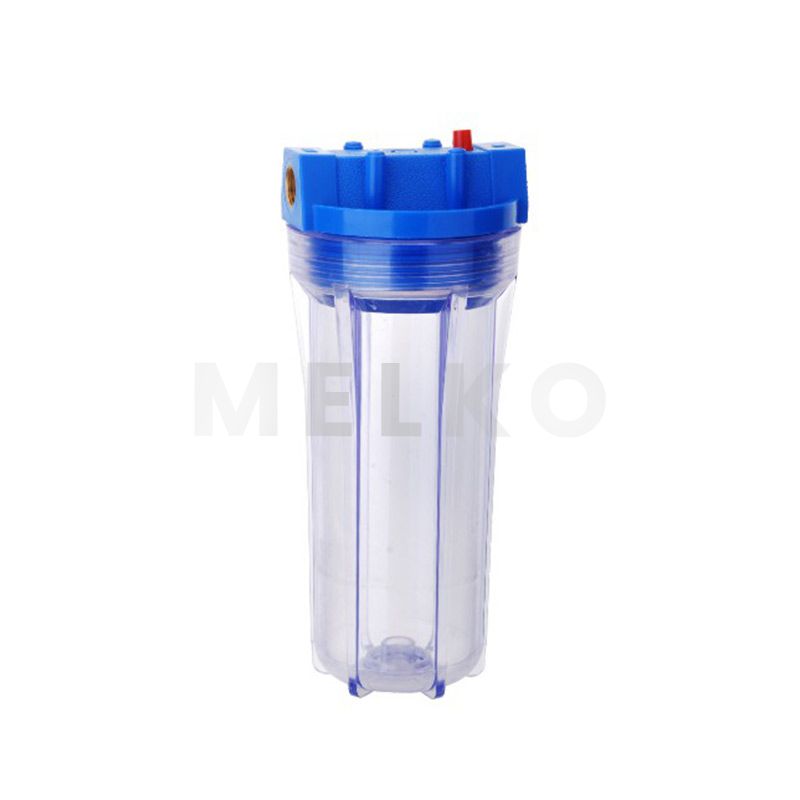
Different purification environments require specific housing capabilities. We can categorize the most effective deployment zones for PET housings below.
Choosing the right water purifier casing involves comparing polymer strengths and environmental limitations. No single material fits every possible scenario.
Polypropylene often serves as the default alternative to PET. The main divergence lies in clarity versus fatigue resistance. PET provides brilliant optical transparency. PP remains almost entirely opaque. When you need to see the filter media, PET wins easily. However, we must consider structural behavior. PET is generally stiffer and more rigid. PP offers slightly higher impact resistance against blunt force drops. If a heavy tool strikes a PP housing, it might bounce off. A similar strike might crack a highly rigid PET unit.
Stainless steel housings cater to completely different industrial segments. We look at cost and corrosion first. PET remains fundamentally immune to rust and highly cost-effective for mass deployment. Stainless steel costs significantly more to manufacture and ship. However, stainless steel easily wins in scalability. Industrial factories, high-temperature sanitization lines, or extreme high-pressure environments demand metal. PET structurally fails under boiling water or massive industrial pressure spikes.
Glass-filled nylon represents a middle ground for extreme plastic durability. Manufacturers inject glass fibers into nylon polymers. These materials handle much higher pressures than standard plastics. They resist warping under significant stress. However, they lack visual inspection capabilities. They also carry a notably higher price point than standard PET models. For standard residential or light commercial water pressure, glass-filled nylon is often an unnecessary over-investment.
Material Comparison Matrix
| Material Type | Visual Clarity | Impact Resistance | Cost Efficiency | Ideal Deployment Scenario |
|---|---|---|---|---|
| PET | High (Transparent) | Moderate | High | Residential POU, Visual Pre-Filtration |
| Polypropylene (PP) | Low (Opaque) | High | High | Heavy-duty Whole House, Hidden Systems |
| Stainless Steel | None | Extreme | Low | Industrial, High Temperature, High Pressure |
| Glass-Filled Nylon | None | Very High | Moderate | High-Pressure Commercial, Well Water |
Reading manufacturer specifications correctly prevents catastrophic flooding. You must differentiate between operating pressure and burst pressure. A reliable casing should comfortably handle standard municipal pressure, which usually sits between 40 and 80 PSI. The burst pressure rating indicates the absolute failure point. A quality unit provides a 3x to 4x safety margin. This means a housing rated for 80 PSI operating pressure should possess a burst rating near 320 PSI. This margin absorbs unexpected municipal pressure spikes safely.
Pressure is useless if the cap leaks. Evaluate the integration of sealing mechanisms carefully. Industry leaders utilize double O-rings, typically cast from EPDM or Buna-N rubber. A dual O-ring design creates a redundant seal. It mitigates micro-leaks during aggressive pressure spikes. Furthermore, examine the precision-machined threads. Deep, square-cut threads grip tighter and resist cross-threading during routine maintenance better than shallow, V-shaped threads.
Never procure unverified filtration housings. Always check for verifiable third-party certifications. Look for NSF/ANSI 42 certification. This verifies the structural integrity and aesthetic effects of the housing. Next, confirm NSF/ANSI 61 certification. This crucial standard guarantees safe water contact. It proves the materials will not leach toxic contaminants into your drinking water.
Avoid proprietary sizing whenever possible. Vendor lock-in forces you to buy expensive replacement filters from a single source. Ensure the casing adheres to universal sizing standards. Look for compatibility with standard 10-inch or 20-inch diameter drop-in cartridges. Universal compatibility guarantees you can source replacement media globally. It also allows you to upgrade filter technologies as water chemistry changes.
The primary advantage of PET is its transparency. However, this clarity introduces a specific environmental vulnerability. Transparent PET encourages aggressive algae growth if exposed to direct sunlight. Photosynthesis occurs rapidly inside the wet, bright chamber. Implementation must strictly include placing systems in dark, enclosed spaces. Always install them under sinks, inside utility closets, or within opaque protective cabinets.
You must respect strict limitations on temperature. PET is engineered exclusively for cold and ambient water applications. Routing hot water through a PET casing quickly compromises its structural integrity. The polymer softens rapidly. This leads to immediate warping, thread deformation, or sudden bursting. Always install these units on the cold water line before the water heater.
Human error accounts for a large percentage of housing failures. Over-tightening remains the biggest risk. When users crank the housing tight using excessive force, they stretch the polymer threads. Torque limits must be respected during every filter replacement. You should only hand-tighten the sump. Use the provided wrench only to loosen the housing, never to tighten it. This prevents micro-fracturing the threaded cap.
No plastic housing lasts forever. Constant pressure fluctuations cause microscopic material fatigue over time. Water chemistry, including heavy chlorination, slowly degrades the polymer structure. Standard industry guidelines recommend replacing the physical PET filter casing every 5 to 10 years. This schedule depends heavily on your local pressure fatigue and water chemistry. Proactive replacement costs far less than remediating water damage from a ruptured housing.
A PET filter casing purifier remains the optimal choice for a wide array of filtration demands. It perfectly serves residential and commercial applications requiring visual filter monitoring. It delivers high chemical purity and easily manages standard pressure containment. The transparent nature transforms maintenance from guesswork into a precise, visually confirmed routine.
Base your final purchasing decisions on hard data. Demand certified pressure ratings showing adequate safety margins. Insist on standard cartridge compatibility to maintain future flexibility. Finally, verify transparent material sourcing and check for proper NSF/ANSI compliance marks.
Audit your current installation location immediately. Check for ambient light exposure and measure the incoming water temperature. Next, calculate the required flow rate for your household or facility. Use these figures to select the appropriately sized PET housing, ensuring it meets both your volume demands and spatial constraints.
A: Yes, provided it is manufactured from food-grade, BPA-free PET and carries relevant material safety certifications (like NSF/ANSI 61). These certifications guarantee the plastic will not leach harmful chemicals into the purified water supply.
A: No. PET is engineered strictly for cold and ambient water applications. High temperatures will quickly weaken the polymer structure. This thermal stress risks catastrophic leaks, warping, and bursting.
A: Transparency allows users to physically see dirt, rust, and sediment buildup on the internal filter cartridge. This visibility enables accurate, condition-based maintenance rather than guessing when a replacement is due.
A: While internal filters are changed every few months, the casing itself should typically be replaced every 5 to 10 years. This schedule mitigates the underlying risk of pressure fatigue and long-term plastic degradation.

