
English 
T: +86-17717097520
E: sales1@melko2015.com
E: sales1@melko2015.com
No.222 Xiangche Rd. Chedun Town Songjiang Dist. Shanghai China 201611


Views: 0 Author: Site Editor Publish Time: 2026-07-04 Origin: Site


In industrial liquid processing, plant operators face a constant, high-stakes battle. You must balance high flow rate capabilities against rising consumable costs and maintenance downtime. This operational challenge dictates daily efficiency across various manufacturing sectors. Selecting the wrong filtration mechanism frequently leads to severe process bottlenecking. You might experience unexpected pressure drops or fail to meet critical industry sanitation standards. Poor filtration choices disrupt entire production lines and damage sensitive downstream equipment. This comprehensive guide breaks down the precise engineering mechanics of pressure-driven filtration setups. We will outline essential criteria for evaluating system viability in your specific applications. You will also learn how to establish strict operational benchmarks for successful implementation. By understanding these core principles, you can significantly improve fluid quality, lower operational risks, and ensure reliable processing uptime.
A bag filter is a pressure-driven filtration assembly designed to remove solid particulates from liquid streams. It relies on a porous, flexible medium to capture contaminants. The system architecture remains intentionally simple. This simplicity reduces potential failure points and streamlines routine maintenance tasks. Engineers divide the system into three critical components.
The filter housing acts as the main pressure vessel. Manufacturers typically construct these units from 304 or 316L stainless steel. Carbon steel presents a viable alternative for non-corrosive industrial applications. The housing material directly dictates the maximum operating pressure and temperature capabilities. It also ensures structural integrity during fluid surges. Selecting the correct vessel material prevents long-term corrosion and premature equipment failure.
The restrainer basket sits directly inside the filter housing. It functions as a perforated or mesh-lined metal cylinder. A flexible filter medium cannot withstand high differential pressure independently. Fluid flow exerts significant mechanical force against the fabric. The metal basket supports the bag entirely. It prevents the media from stretching, tearing, or blowing out under heavy particulate loads.
The consumable element inside the vessel is the liquid filter bag. Operators select these bags based on specific fluid properties. Common manufacturing materials include polypropylene, polyester, and nylon mesh. They come in various micron ratings for different particle sizes. Bags also feature specialized collar types. You can choose traditional metal snap-rings or precision-molded plastic flanges. Plastic flanges expand under pressure to create an absolute fluid seal.
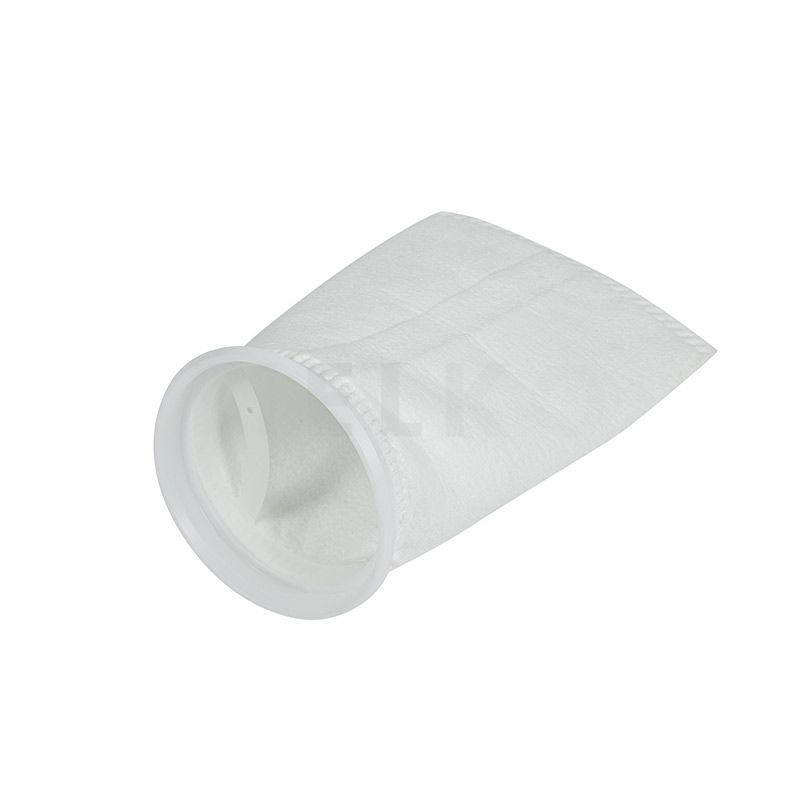
Understanding the internal fluid dynamics is crucial for proper system operation. Most filtration mechanisms operate on an outside-in flow pattern. Bag filtration utilizes a highly efficient inside-out principle.
Unfiltered liquid enters through the top or side inlet of the housing. The flow directs straight into the interior cavity of the filter bag. The liquid then pushes outward radially through the porous media. Once it passes through the fabric, the clean fluid travels down the sides of the restrainer basket. Finally, the processed liquid exits through the bottom outlet of the vessel.
This inside-out flow path offers distinct operational advantages. Contaminants remain trapped entirely inside the bag. As particles accumulate, they form a cake layer on the interior surface. This containment mechanism simplifies disposal significantly. During maintenance, the operator lifts out the dirty bag. The captured contaminants do not fall back into the clean side of the housing. This prevents cross-contamination and reduces vessel cleaning requirements.
Differential pressure serves as the primary health metric for the system. As the media captures particulates, fluid resistance steadily increases. You monitor the pressure difference between the inlet gauge and the outlet gauge. A rising ΔP indicates a successful capture process. However, you must track this value carefully. It determines both filtration efficiency and remaining bag capacity. Ignoring differential pressure limits will eventually cause media failure.
Process engineers frequently debate whether to install bags or cartridges. Each technology serves different industrial requirements. Making the right choice requires evaluating fluid characteristics and production goals.
Filter Media Comparison Chart
| Evaluation Criteria | Bag Filtration | Cartridge Filtration |
|---|---|---|
| Target Viscosity | Excellent for highly viscous fluids | Better suited for low viscosity fluids |
| Flow Rate Capacity | High flow per element | Lower flow per element |
| Filtration Precision | Nominal (1 to 1000+ microns) | Absolute (0.1 to 1 micron) |
| Dirt Holding Capacity | Very high (bulk removal) | Moderate to low |
Bag systems excel in high-flow applications. They handle highly viscous fluids far better than standard cartridges. Thick liquids like paints, resins, and heavy syrups easily blind over cartridge media. A flexible bag provides the necessary surface area and structural flow paths to process thick fluids without immediate pressure spikes.
Cartridges generally win when dealing with sub-micron precision. Industries prefer cartridges for absolute filtration ranging from 0.1 to 1 micron. Bag filters are optimal for nominal filtration. Their ratings typically range from 1 to over 1000 microns. If your goal is bulk particulate removal, bags offer the most efficient solution.
Financial constraints often dictate equipment selection. Bag housings generally require a lower initial capital expenditure (CAPEX). A single-bag vessel is inexpensive compared to a complex multi-cartridge array. Furthermore, high-dirt-load applications benefit from lower consumable costs (OPEX). Replacing one large bag is faster and cheaper than replacing thirty individual pleated cartridges.
Floor space is a premium asset in manufacturing plants. Multi-bag housings allow for massive flow rate scaling. You can increase throughput significantly within a relatively compact physical footprint. A four-bag vessel processes hundreds of gallons per minute while occupying just a few square feet of floor space.
Filtration requirements vary wildly across different manufacturing sectors. You must evaluate media compliance and housing specifications based on your specific industry.
Food manufacturers use these systems extensively. Common applications include filtering edible oils, processing syrups, and clarifying brewing water.
A bag filter system serves as an excellent pre-filtration stage. Facilities use them before Reverse Osmosis (RO) systems. They also excel at cooling tower water filtration. Removing bulk suspended solids protects highly sensitive downstream equipment. It extends the life of expensive RO membranes and prevents damage to high-pressure pumps.
Chemical plants process aggressive solvents, strong acids, and raw petrochemicals. Safety and material resilience are paramount.
Improper system sizing leads to immediate operational failures. Engineers must calculate multiple variables before finalizing a purchase.
You cannot select a housing based on pipe size alone. True sizing requires understanding the fluid dynamics. First, determine the total required flow rate in GPM or L/min. Next, evaluate the fluid viscosity and specific gravity at normal operating temperatures. Cold fluids are thicker and increase resistance. Finally, estimate the total suspended solids (TSS) load. A high TSS requires larger surface areas to maintain an acceptable bag life.
Bypass occurs when unfiltered liquid escapes around the collar. It happens when the seal does not seat correctly against the basket. This compromises the entire process.
Solution: Specify precision-molded plastic sealing rings instead of standard metal snap-rings. Plastic flanges expand under fluid pressure to create a reliable, leak-free seal.
Rupture represents a catastrophic failure. It is caused by exceeding the maximum differential pressure limits. The fabric tears, dumping concentrated dirt downstream.
Solution: Implement automated pressure gauges. Install alarms to alert operators of high resistance. Establish strict standard operating procedures (SOPs) for timely change-outs.
Aggressive chemicals can break down polymer media over time. Elevated temperatures accelerate this degradation process.
Solution: Cross-reference media data sheets carefully. You must evaluate compatibility against peak operating conditions, not just normal baseline temperatures.
Routine maintenance keeps the process stable. Operators must know exactly when and how to perform replacements.
Bags should never be run to total blockage. Pushing media to its absolute limit guarantees failure. Industry standards dictate changing the media when differential pressure reaches 12 to 15 PSI. Always consult the specific manufacturer guidelines. Replacing media early prevents ruptures and keeps pump energy consumption low.
Executing a safe replacement requires following strict procedural steps. Improper handling exposes operators to hazardous fluids and introduces contaminants.
A carefully designed filtration strategy protects your entire production line. A bag-based mechanism provides a robust, structurally simple, and economically viable solution for bulk liquid processing. It remains highly effective provided your micron requirements and fluid characteristics align with the media capabilities. You gain excellent flow rates, easy maintenance, and reliable particulate capture. Before moving to procurement, engineering teams must conduct thorough fluid compatibility analyses. You should calculate exact flow requirements based on operating temperatures. Finally, evaluate whether a single-bag vessel or a massive multi-bag array best serves your facility's long-term uptime requirements.
A: While some heavy-duty mesh bags (like nylon monofilament) can be washed for coarse applications, felt and standard micron bags are designed strictly as single-use consumables. Washing felt alters the pore structure. Replacing them guarantees specific retention rates and completely prevents cross-contamination between batches.
A: Nominal ratings indicate the media will capture most particles of that size, usually achieving 60% to 80% efficiency. Absolute ratings mean the material is rigorously engineered to capture 99.9% of particles at that designated micron size. Bags typically utilize nominal ratings for bulk removal.
A: Sizing requires calculating your desired flow rate and adjusting it for the fluid's specific viscosity and gravity. You then match this adjusted rate to the square footage of surface area provided by standard sizes (like Size 1 versus Size 2). This calculation maintains an acceptable initial pressure drop.

