
English 
T: +86-17717097520
E: sales1@melko2015.com
E: sales1@melko2015.com
No.222 Xiangche Rd. Chedun Town Songjiang Dist. Shanghai China 201611


Views: 0 Author: Site Editor Publish Time: 2026-07-16 Origin: Site


Standard polypropylene (PP) depth filters excel at capturing particulate matter across diverse industrial processes. They offer reliable depth filtration for silts, sands, and rust. But in environments prone to microbial growth, they often become active breeding grounds for bacteria. This biological vulnerability leads to premature bio-fouling, sudden system pressure drops, and excessively frequent replacements.
Operators frequently misdiagnose this rapid filter blinding as particulate exhaustion. In reality, bacterial slime represents the actual culprit choking the flow. Transitioning to a melt-blown antibacterial filter cartridge is a strategic operational decision. Facilities make this targeted switch to prevent biofilm accumulation, protect sensitive downstream equipment, and dramatically extend routine maintenance intervals.
This comprehensive guide outlines the specific industrial scenarios where investing in advanced antibacterial treatment delivers verifiable operational returns. You will discover a clear evaluation framework designed specifically for engineers and procurement teams. We will help you navigate complex regulatory compliance, assess structural integrity, and understand integration realities. By following these principles, you can optimize your critical fluid systems and eliminate costly biological bottlenecks.
Standard PP melt-blown filters perform brilliantly as purely physical traps. They capture dirt, silt, and rust efficiently through complex gradient fiber structures. However, these same trapped organic particles often serve as concentrated nutrient sources for opportunistic microorganisms. Bacteria settle into the porous media matrix and multiply rapidly. Soon, they secrete extracellular polymeric substances. This creates a thick, impenetrable biofilm across the entire filter surface.
The biofilm penalty hits facility operations incredibly hard. It triggers a sudden, exponential pressure drop across your fluid system. Pumping systems must work harder, burning significantly more energy to push fluid through the restrictive slime. Flow rates degrade dramatically long before the filter reaches its actual dirt-holding capacity. Even worse, unchecked biofilm presents a severe downstream contamination risk. Colonies of bacteria can shear off under pressure. They pass through the compromised media and heavily contaminate sensitive downstream processes.
You must establish clear, evidence-based success criteria for upgrading your filtration strategy. Examine the discarded cartridges carefully during routine maintenance. Do your operators pull out filters coated in a slimy, gelatinous, foul-smelling layer? If so, you are replacing them due to severe bacterial fouling, not typical particulate exhaustion. This specific biological failure mode establishes the absolute baseline for switching to an upgraded solution.
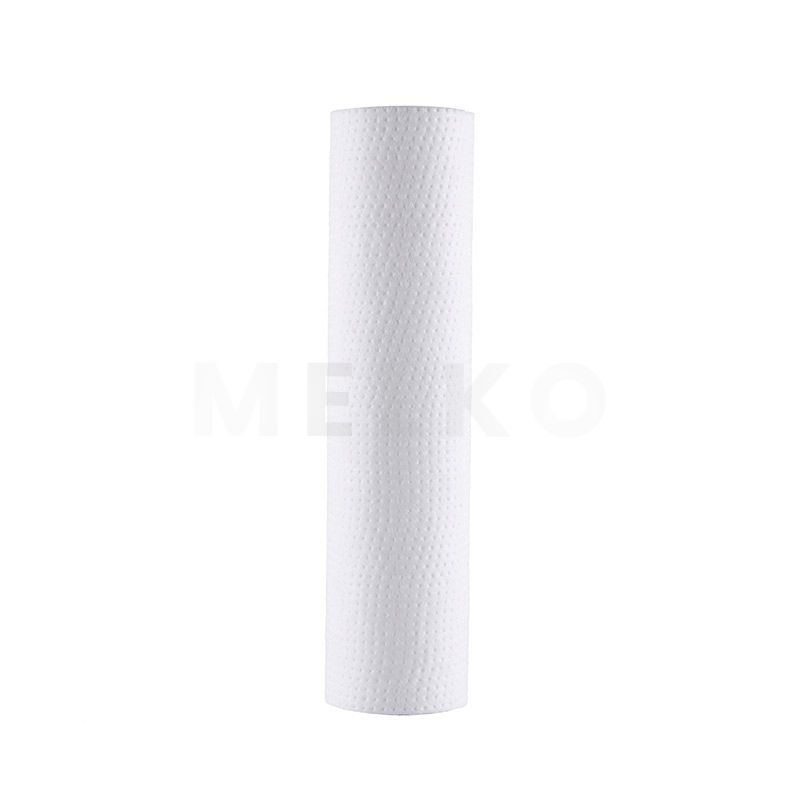
Reverse osmosis (RO) systems represent a massive capital investment for any facility. You must protect expensive RO membranes from biological degradation at all costs. Thin-film composite RO membranes cannot tolerate strong chemical oxidants like chlorine. Therefore, preventing bacterial growth upstream remains absolutely critical. Installing an antibacterial water filter prevents dangerous microbial loading during the critical pre-treatment phase. It effectively stops bacteria from colonizing the delicate, expensive membrane surfaces downstream.
Food and beverage processing demands absolute, uncompromised purity at every step. Plant operations use these specialized filters for primary process water, raw ingredient washing, and final bottling lines. Preventing taste alterations, foul odors, or safety spoilage remains paramount for brand protection. Spoilage bacteria can ruin entire production batches overnight. Facilities must maintain strict regulatory compliance throughout production to avoid costly product recalls and protect consumer health.
Medical, pharmaceutical, and high-end cosmetics manufacturing require stringent, documented bio-burden control. Critical fluid streams simply cannot tolerate unexpected bacterial spikes. Quality engineers integrate antibacterial depth filtration as a robust, highly reliable protective layer. They place it directly before expensive sub-micron sterilizing grade filters. This strategy significantly extends the lifespan of the final sterilizing barriers, reducing overall operational overhead while maintaining safety.
Cooling towers and warm water industrial systems pose unique, highly aggressive biological challenges. Elevated fluid temperatures accelerate microbial reproduction rates significantly. In these warm environments, deploying a specialized industrial filter cartridge actively inhibits rapid biological fouling. It keeps critical heat exchangers running efficiently and safely. It also helps mitigate the dangerous spread of airborne pathogens within industrial cooling networks.
Procurement teams need a highly structured approach to evaluate antibacterial options effectively. Regulatory compliance and operational safety stand out as the very top priorities. The antimicrobial agent, typically a highly engineered silver-ion base, must be strictly non-leaching. You must verify current FDA approvals and NSF/ANSI certifications for direct food and drinking water contact. This documentation ensures the active agent stays permanently locked within the filter structure.
Filtration efficiency and flow dynamics require careful, comparative review. Adding complex antibacterial properties should never negatively impact standard fluid performance. Confirm the stated micron rating accuracy remains perfectly consistent compared to standard variants. Porosity profiles and initial pressure drop metrics should match standard PP cartridges exactly. You should not have to upsize your pumping equipment just to accommodate a bio-resistant cartridge.
Structural integrity dictates operational safety under continuous mechanical stress. You must consciously choose between standard coreless designs and reinforced inner cores. Base this crucial decision on your specific system operating pressures and temperature maximums. High-pressure systems or high-viscosity fluids generally demand heavily reinforced inner cores. These robust cores prevent catastrophic filter collapse during sudden differential pressure spikes.
Always demand verifiable, third-party claims from prospective manufacturers. Discerning buyers should look for ISO-certified laboratory testing data to validate performance. Rigorous standards like JIS Z 2801 or ISO 22196 prove actual antimicrobial efficacy. Look for a guaranteed, documented standard bacterial reduction. You want to see results proving >99.9% effectiveness against common threats like E. coli and Staphylococcus aureus.
Filtration Specification Comparison Chart
| Evaluation Metric | Standard Melt-Blown Cartridge | Antibacterial Melt-Blown Cartridge |
|---|---|---|
| Primary Function | Physical particulate capture | Particulate capture + Biofilm inhibition |
| Bio-Fouling Resistance | Low (Prone to slime buildup) | High (Active microbial neutralization) |
| Pressure Drop (ΔP) Progression | Rapid in organic-rich fluids | Stable and predictable over time |
| Regulatory Certifications | FDA/NSF (Material safety only) | FDA/NSF (Material + Non-leaching agent) |
| Expected Lifespan in Warm Water | Short (Premature blinding) | Extended (2x to 3x longer duration) |
Facilities must meticulously assess compatibility against existing system sanitization protocols. Can the upgraded cartridge withstand standard facility Clean-in-Place (CIP) chemicals? Evaluate exactly how it handles harsh caustic soda washes or acidic neutralizers. Consider its endurance during hot water sanitization or aggressive steam sterilization cycles. The delicate antibacterial matrix must endure these intense stresses without degrading, melting, or shedding fibers into the product.
Avoid falling for the dangerous "Silver Bullet" fallacy when upgrading your filtration strategy. These specialized filters excel at inhibiting microbial growth strictly within the filter matrix itself. However, they absolutely do not sterilize the entire fluid stream passing through them. You cannot use them as a cheap replacement for active UV sterilization systems. They do not replace necessary chemical dosing or ozone sanitization processes.
Tracking concrete ROI relies on monitoring your change-out schedules very closely. We highly recommend setting up a controlled, localized pilot test first. Measure the extended operational lifespan by tracking days until the terminal pressure drop hits. A substantially longer run time between maintenance replacements easily justifies the higher initial unit cost. Reduced manual labor, fewer emergency interventions, and increased system uptime add massive direct value to your operation.
Deciding to upgrade requires a practical, objective decision matrix. You need to remove guesswork from the procurement process entirely. Ask yourself these rapid Yes/No questions to gauge your immediate operational need:
If you answered yes to these questions, focus heavily on physical sizing and integration. You need precise guidance on matching exact dimensional specifications to avoid bypass. Check the overall length, outer diameter, inner diameter, and specific end-cap configurations carefully. They must align perfectly with your existing stainless steel or plastic filter housings. Even a millimeter of gap allows dangerous bacteria to bypass the media entirely.
Follow these structured, highly actionable next steps to begin a successful implementation:
A premium depth filter serves as a highly specific, problem-solving component. It rescues industrial fluid systems paralyzed by rampant biological fouling. Bio-fouling drives up maintenance labor, forces premature membrane replacements, and severely threatens final product safety.
Upgrading to an antibacterial solution halts this costly cycle. It works by actively neutralizing bacteria trapped within the complex media matrix, keeping the pores open for genuine particulate capture. Proper procurement demands rigorous verification from your engineering team. Always confirm regulatory approvals, structural compatibility, and certified microbial reduction rates before making a bulk purchase.
We strongly encourage technical buyers to take immediate action. Request detailed product specification sheets today. Ask your suppliers for updated regulatory compliance certificates. Finally, schedule a comprehensive consultation with application engineers to scope a customized pilot test for your facility.
A: No, it does not leach. Manufacturers compound the active antimicrobial agent directly into the polypropylene melt during extrusion. This integrated manufacturing process firmly locks the agent inside the fiber structure. It prevents leaching into the fluid stream and ensures strict compliance with NSF and FDA food-contact standards.
A: You can expect realistic extensions of two to three times the normal lifespan. This applies heavily in bio-heavy or warm environments. The exact longevity depends entirely on your fluid temperature, initial microbial load, and available nutrient levels. Preventing internal slime buildup keeps the pores open much longer.
A: Absolutely not. These cartridges serve an entirely different purpose. They inhibit internal filter biofilm formation through depth filtration. They do not provide active, whole-stream sterilization. You must continue using UV systems or chemical dosing to eliminate free-floating bacteria passing through the fluid system.
A: Yes, they function as perfect drop-in replacements. You just need to ensure the dimensional specifications match. Verify the overall length, such as 10-inch or 20-inch variants. Check the end-cap styles, including Double Open End (DOE) or Single Open End (SOE) configurations, to fit your existing housings seamlessly.

