
English 
T: +86-17717097520
E: sales1@melko2015.com
E: sales1@melko2015.com
No.222 Xiangche Rd. Chedun Town Songjiang Dist. Shanghai China 201611


Views: 0 Author: Site Editor Publish Time: 2026-06-30 Origin: Site


Industrial liquid filtration systems demand absolute precision. Choosing the optimal filter media dictates the overall efficiency of your entire production line. Selecting the wrong filter media leads to premature blinding, excessive change-out downtime, or off-spec product batches. Facility managers frequently debate between two highly common industrial solutions: Polyester (PE) felt bags and Nylon Mesh (NMO) bags. Each material offers distinct behavioral characteristics under flow pressure. Our goal is to provide a detailed technical evaluation framework. We will rigorously compare single-use PE filter bags against nylon mesh bags based on their core filtration mechanisms, operational cost structures, and chemical compatibility profiles. By understanding these variables, you can implement the ideal solution to optimize flow rates and maximize fluid purity.
We must clearly define your operational success criteria before selecting a material. To achieve reliable filtration, operators must balance flow rate, particle retention accuracy, and overall media lifespan. You need a system operating seamlessly under continuous fluid pressure.
Depth Filtration (PE Felt): Polyester felt functions through depth filtration. The manufacturing process creates a thick, complex network of overlapping fibers. Fluid travels through a tortuous path across the entire cross-section of the media. As liquid flows, these interwoven fibers trap varying particle sizes throughout the depth of the material. It does not just block dirt at the surface layer. Instead, it embeds contaminants deeply within the fiber matrix. This structure handles varying particulate shapes exceptionally well.
Surface Filtration (Nylon Mesh): Conversely, nylon mesh relies entirely on surface filtration. Manufacturers weave monofilament threads into a precise geometric pattern. This structure creates exact, uniform pore sizes. The media acts as a hard barrier. Contaminants larger than the designated micron rating cannot pass. They hit the surface and stop immediately. You get an absolute classification, meaning zero oversized particles escape into the downstream process.
Outcome Mapping: These structural differences dictate performance outcomes in the field. Depth filtration directly aligns with bulk dirt-holding capacity. You capture significantly more mass before the bag clogs. Surface filtration aligns with exact particle straining. You sacrifice dirt capacity to guarantee a strict maximum particle size limit. Best practices suggest matching depth media to bulk cleaning tasks and surface media to final polishing stages.
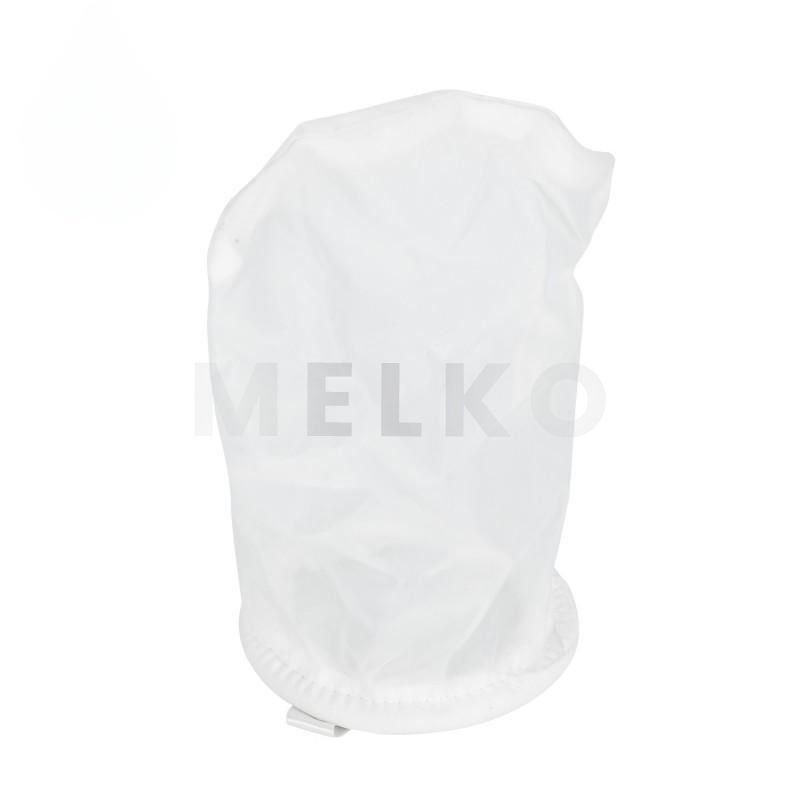
Needle-punched polyester felt forms the backbone of many heavy-duty industrial systems. This material provides exceptional physical strength alongside deep fiber matrices. Manufacturers mechanically interlock layers of polyester fibers to build a dense, highly porous sheet. This specialized structure gives it distinct behavioral properties under heavy fluid loads.
These bags offer substantial benefits for high-load applications. Facility operators frequently leverage them to optimize system uptime.
We commonly see this media deployed in highly demanding environments. It serves as excellent pre-filtration for Reverse Osmosis (RO) systems. Facilities also use it extensively in bulk chemical processing, wastewater treatment, and cooling water loops. It thrives in applications requiring the removal of broad, mixed-size particulate distributions.
However, you must consider certain inherent drawbacks. Untreated felt carries a risk of media migration. Loose fibers can occasionally shed into the clean filtrate. To prevent this common mistake, always specify glazed or singed exterior finishes. Applying heat to the outer surface melts loose fibers into a smooth, stable layer. Additionally, depth media lacks precise absolute micron ratings. It offers nominal retention, meaning a small percentage of oversized particles might occasionally slip through the tortuous path.
Woven monofilament nylon operates very differently from traditional felt. The manufacturing process extrudes a single, smooth plastic thread and weaves it tightly. This creates a remarkably consistent grid-like pattern. Unlike felt, mesh does not rely on thickness to capture debris.
When precision is non-negotiable, engineers naturally turn to this woven material. It delivers highly predictable results.
NMO filter bags shine in high-purity manufacturing sectors. Automotive and architectural manufacturers rely on them heavily for filtering paints, clear coatings, and specialized resins. They are also highly ideal for parts washing fluids. They serve perfectly as final-stage strainers where exact particle size cut-offs remain critical to product quality.
The primary drawback lies in physical capacity. Nylon mesh features a substantially lower dirt-holding capacity than felt. Because it catches everything on a single, two-dimensional surface plane, it is highly prone to rapid blinding. If you process high-solid loads through a mesh bag, you will experience sudden pressure spikes and require immediate change-outs.
Selecting the optimal material requires evaluating field performance across several technical dimensions. Let us break down how these two materials compare under real-world operating conditions.
Evaluating true expenses requires looking beyond the initial invoice price. We must compare the low unit cost of single-use filter bags against the potential reusability of NMO bags. Nylon mesh bags cost more upfront. However, operators can sometimes wash them to extend their lifecycle.
Yet, you must factor in the hidden costs of nylon reuse. Washing nylon requires dedicated labor hours. It demands equipment downtime while maintenance teams scrub the mesh. More importantly, manual cleaning introduces severe risks of cross-contamination. If a worker fails to remove all trapped debris, the residue ruins the next production batch. For most high-volume or regulated applications, discarding single-use bags remains the most reliable strategy. It removes labor variables and guarantees a perfectly clean start for every cycle.
Fluid chemistry heavily influences media selection. You cannot ignore chemical limits when designing a filtration system. Both materials generally operate safely up to temperatures between 275°F to 300°F (135°C–149°C). However, your specific thermal limits depend entirely on your housing material and operating pressure.
When confronting harsh chemicals, their behaviors diverge sharply. Polyester provides excellent resistance against acidic environments. It maintains structural integrity in low pH solutions. However, it degrades rapidly when exposed to strong alkalis. Nylon demonstrates the exact opposite profile. It offers superior resilience against strong alkalis and bases. Conversely, it fails quickly in highly acidic solutions. Matching the media to your fluid pH is an absolute necessity.
| Chemical Environment | Polyester (PE) Felt | Nylon (NMO) Mesh |
|---|---|---|
| Strong Acids (Low pH) | Excellent Resistance | Poor / Rapid Degradation |
| Strong Alkalis (High pH) | Poor / Rapid Degradation | Excellent Resistance |
| Organic Solvents | Good to Excellent | Excellent |
| Aromatic Hydrocarbons | Good | Excellent |
| Maximum Operating Temp | ~300°F (149°C) | ~275°F (135°C) |
Flow dynamics determine your daily operational tempo. Woven mesh allows for extremely rapid flow. It creates a remarkably low initial pressure drop. The fluid passes straight through the thin woven barrier without resistance. However, once a layer of dirt forms over the pores, the bag blinds quickly. Differential pressure spikes almost instantly, requiring immediate intervention.
Felt handles fluid pressure differently. The depth structure accommodates significantly higher solid loading before reaching capacity. It traps dirt continuously across its internal depth. This delays the inevitable rise in differential pressure. You gain a much longer run time before reaching the terminal pressure drop. Facility managers typically prefer this predictable, gradual pressure climb over the sudden spikes associated with surface mesh.
You must address several implementation risks before swapping out your filter elements. Ignoring these operational details often leads to system failures.
Food, beverage, and pharmaceutical applications demand strict regulatory oversight. You must verify the chosen media meets all safety standards. Ensure the top ring material—whether plastic, carbon steel, or stainless steel—complies fully. Check the thread and weld construction carefully. They must adhere to Title 21 CFR or equivalent EU food-grade standards. Do not assume all standard industrial bags carry these specialized certifications.
Switching media types directly impacts your existing pump systems. If you transition from PE felt to nylon mesh, expect different flow resistance profiles. A switch might require immediate flow rate adjustments on your variable frequency drives. Otherwise, your pumps could overwork, or you might rupture the delicate mesh under unexpected pressure surges. Always consult your pump curves before authorizing a media change.
Poor change-out protocols invite severe bypassing risks. You must ensure exact bag sizing. Standard bags come in precise dimensions (Size 1, 2, 3, or 4). An incorrectly sized bag will not seal properly inside the housing basket. Under high pressure, liquid will simply bypass the filter altogether by flowing around the poorly seated ring. This completely defeats the purpose of the installation. We recommend utilizing positive-seal plastic V-rings to guarantee a bypass-free fit.
Selecting the optimal filtration media ensures process stability, protects downstream equipment, and maintains rigorous product quality. You need a fast, reliable decision framework to guide your purchasing strategy.
We highly recommend proceeding systematically. Always request a comprehensive chemical compatibility chart from your supplier. Order a small sample batch first. Conduct a pilot pressure-drop test on your actual production line before committing to bulk purchasing. This practical verification step prevents costly misapplications.
A: No. Washing needle-punched felt compromises the depth structure. Agitation forces fibers apart, which destroys the internal tortuous path. This permanently reduces filtration efficiency, significantly increasing the risk of fluid bypass and downstream contamination.
A: Monofilament is extruded as a single, smooth thread. It offers highly precise pore sizes and allows for easy cleaning. Multifilament is woven from multiple smaller, twisted threads. It offers a lower unit cost but carries a much higher risk of fiber shedding.
A: Change-outs should be based strictly on differential pressure, not a set time schedule. Operators typically replace bags when they observe a 15-20 PSI drop across the housing. Pushing past this limit risks catastrophic bag rupture.

