
English 
T: +86-17717097520
E: sales1@melko2015.com
E: sales1@melko2015.com
No.222 Xiangche Rd. Chedun Town Songjiang Dist. Shanghai China 201611


Views: 0 Author: Site Editor Publish Time: 2026-07-03 Origin: Site


Industrial liquid filtration carries incredibly high stakes for manufacturing facilities today. Process contamination often leads to severe equipment wear, degraded product quality, and expensive unplanned downtime. Plant operators face mounting pressure to maintain optimal fluid purity across consecutive production cycles. Selecting the exact filtration media requires a careful balancing act. You must align operational temperatures, chemical compatibility, and precise particle retention needs perfectly. Over-engineering your filter setup wastes resources, while under-engineering ruins entire product batches. This guide provides a strict, evidence-based framework for evaluating your filtration needs. We will help you integrate single-use PE filter bags into existing housing systems flawlessly. You will learn how to match thermal limits, choose correct micron ratings, and specify fail-proof seals.
Engineers must understand the exact physical properties of filtration media before making a selection. Polyester (PE) stands out as a highly versatile polymer. It bridges the gap between basic commercial filters and extreme-duty industrial membranes. Identifying its specific strengths and chemical vulnerabilities prevents catastrophic media failure during operation.
Polyester felt offers remarkable resilience in specific chemical environments. It provides excellent resistance to most organic solvents, micro-organisms, and weak acids. Facilities processing petrochemicals, automotive resins, or non-corrosive organic compounds rely heavily on PE. The material maintains its structural matrix even when exposed to harsh solvent blends.
However, transparency about material limitations remains crucial for safe engineering. PE demonstrates a critical vulnerability to strong alkalis. High pH environments induce hydrolysis within the polyester polymer chains. This chemical reaction rapidly degrades the fibers, causing immediate media rupture. You should specify Polypropylene (PP) or PTFE for applications involving strong bases or aggressive caustic solutions.
Below is a standardized reference chart for evaluating chemical suitability.
| Chemical Category | Resistance Rating | Process Examples |
|---|---|---|
| Organic Solvents | Excellent | Paints, coatings, aromatic hydrocarbons |
| Weak Acids | Good | Diluted sulfuric acid, citric acid processes |
| Micro-organisms | Excellent | Agricultural runoff, treated wastewater |
| Strong Alkalis | Poor | Sodium hydroxide, heavy caustic cleaners |
| Strong Acids | Fair to Poor | Concentrated nitric or hydrochloric acid |
Temperature thresholds strictly dictate material selection. Standard PP filters typically fail or deform around 90°C (194°F). Conversely, PE filter bag material handles continuous operating temperatures up to 135°C (275°F). This elevated thermal limit positions PE as the industry standard for mid-to-high temperature processes. Hot oil filtration, elevated-temperature resin processing, and heated solvent wash systems depend on this thermal stability. Surpassing this limit causes the polymer to soften, which alters the micron rating and leads to particulate bypass.
Polyester felt maintains exceptional dimensional stability under high differential pressure. Manufacturers create these bags using needle-punched felt technology. Thousands of barbed needles interlock the polyester fibers, creating a dense, tortuous path for fluids. This manufacturing method prevents media migration. The fibers stay locked in place, ensuring they never shed into the clean downstream fluid. A singed or glazed exterior finish further locks down loose surface fibers, providing an ultra-clean filtration baseline.
Selecting the correct micron rating dictates the ultimate success of your filtration process. Misunderstanding retention efficiency leads directly to premature blinding or inadequate particle removal. Engineers must look past basic manufacturer claims and analyze fluid dynamics.
You must demystify the difference between nominal and absolute ratings. A nominal rating means the filter captures a broad percentage (usually 60% to 80%) of particles at the stated size. Nominal bags work perfectly for general pre-filtration. They catch bulk contaminants before the fluid reaches more expensive secondary filters.
An absolute rating guarantees the capture of at least 98% to 99.9% of particles at the target micron size. Critical final-stage clarification demands absolute ratings. If your downstream equipment contains sensitive nozzles or requires strict regulatory purity, you must specify absolute retention. Do not substitute a nominal filter in an absolute application.
Fluid viscosity dramatically impacts micron selection. Water-like fluids pass easily through tight micron structures. High-viscosity fluids—such as heavy resins, paints, and syrups—behave differently. Thick fluids force soft, gel-like particles through the media pores. They also drastically increase the initial differential pressure.
An inverse relationship exists between micron size, flow capacity, and change-out frequency. Selecting a tighter micron rating inherently reduces your maximum flow capacity. It also traps more particles, causing the bag to fill up faster. Many operators mistakenly choose the smallest possible micron rating, hoping for the cleanest fluid. This common mistake leads to constant change-outs, excessive downtime, and frustrated maintenance teams. Always select the largest micron rating acceptable for your specific quality standard.
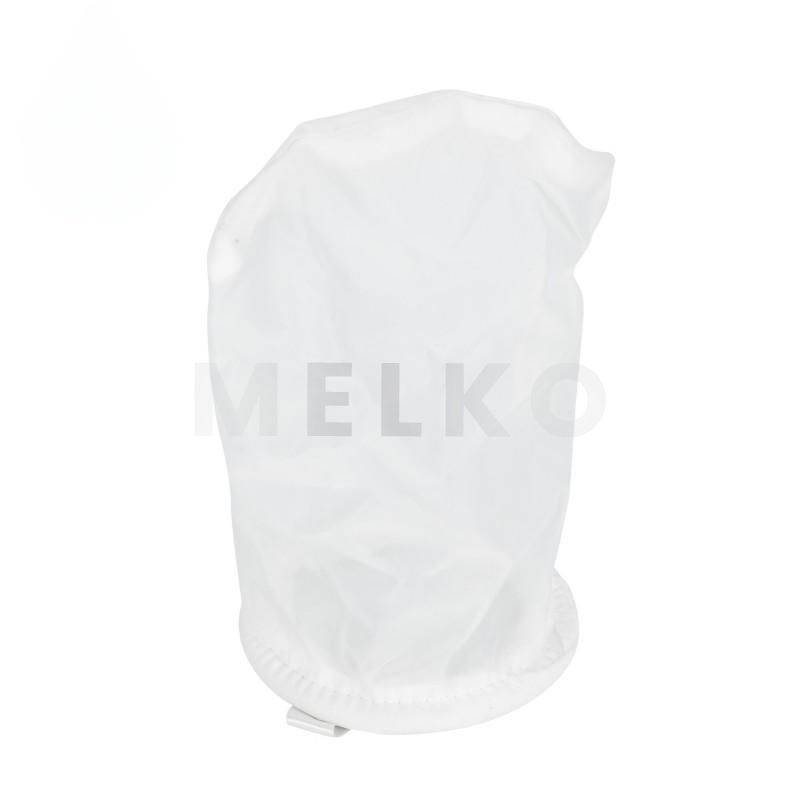
Premium filtration media means nothing if the fluid escapes around the edges. Understanding the physical connection between the bag and the housing is critical. A compromised seal instantly negates your careful micron selection.
Most industrial filtration failures occur at the housing seal, not through the media itself. High differential pressure forces fluid to seek the path of least resistance. If a microscopic gap exists between the bag collar and the housing basket, contaminated fluid bypasses the filter entirely. This unfiltered fluid rejoins the clean stream, ruining the entire batch. Securing a flawless, positive seal eliminates this hidden threat.
Manufacturers offer distinct sealing ring styles designed for different operational environments. You must match the ring type to your purity requirements.
Always verify your selected collar type against the existing OEM filter housing. Not all housings accept molded plastic flanges. Some older vessels require specific steel ring diameters. Measure the internal diameter of the support basket lip. Check the lid clearance to ensure it properly compresses the ring without crushing it. Standard sizes include Size 1 (7" x 16") and Size 2 (7" x 32"), but proprietary housings may demand custom collars.
Even the most perfectly specified filtration system requires rigorous operational protocols. Improper handling during maintenance introduces contaminants and risks operator safety. Establishing strict standard operating procedures guarantees consistent performance.
Differential pressure serves as the primary health metric for any filtration system. Install pressure gauges on both the inlet and outlet of the filter housing. The difference between these two readings is your ΔP. Establish the industry-standard metric for change-outs, which typically sits at a 15-20 PSI differential.
Never push the filter beyond recommended pressure limits. Exceeding 25 PSI causes severe media migration, where particles push completely through the felt. In extreme cases, high pressure ruptures the bag entirely, dumping a massive concentrated slug of dirt into your clean process stream. Change bags proactively based on gauge readings, not on visual inspection or calendar days.
Removing heavily saturated disposable filter bags presents distinct physical hazards. A Size 2 filter bag filled with fluid and wet solids easily weighs over 40 pounds. Operators must use ergonomic lifting techniques or mechanical hoists for large multi-bag vessels.
Follow strict lockout/tagout procedures. Always depressurize the vessel completely and open the vent valve before loosening the lid. Drain the residual fluid from the housing before extracting the bag. If the process involves hazardous chemicals, operators must wear appropriate personal protective equipment (PPE). Immediately place the saturated bag into a sealed containment drum to prevent cross-contamination on the factory floor.
Facilities must handle saturated bags according to strict environmental regulations. The disposal method depends entirely on the trapped solids and the process fluid, not the polyester media itself. If the bag filters water and inert sand, standard industrial waste disposal often suffices. However, if the bag captures heavy metals, volatile organic compounds, or toxic resins, it becomes hazardous waste. You must adhere strictly to EPA Resource Conservation and Recovery Act (RCRA) guidelines or local environmental laws. Maintain accurate logs of your waste characterization to ensure compliance during facility audits.
Transitioning to a new filtration media requires a disciplined procurement strategy. Do not rely solely on technical data sheets; real-world testing proves actual compatibility. A structured approach minimizes disruption to your production lines.
We recommend executing a structured pilot test before committing to a full facility rollout. Select a single, non-critical process line for the trial. Install the chosen PE bags and initiate a side-by-side ΔP tracking over a 7-day period. Record the initial pressure drop when the fluid runs clear. Document the exact hour the differential pressure hits 15 PSI. Compare this data against your legacy filters. This empirical evidence proves whether the new media extends operational runtimes or improves flow rates.
Demand transparency and consistency from your filtration suppliers. Batch-to-batch consistency dictates your maintenance schedule. When evaluating a vendor, request the following documentation:
Take immediate action to audit your current system. Walk your production floor and measure your existing housing dimensions. Note the collar styles currently in use. Record your baseline ΔP data across three standard production shifts. Once you compile this data, contact a reputable manufacturer to request specific material samples. Run compatibility testing in your lab before initiating the field pilot test.
Specifying a filtration setup remains a critical engineering decision, never a mere commodity purchase. Your choices directly impact operational uptime, equipment longevity, and ultimate product purity.
Aligning the exact material, micron rating, and seal type to your process fluid guarantees process purity and operational efficiency. Take the time to audit your housings, run empirical pilot tests, and partner with a vendor who provides consistent, certified manufacturing quality.
A: Polyester (PE) material handles continuous operating temperatures up to 135°C (275°F). This excellent thermal stability makes it vastly superior to standard Polypropylene (PP) for hot applications like heated resins, hot oil filtration, and high-temperature solvent washes.
A: We highly discourage cleaning and reusing them. Washing forces embedded particulates deeper into the tortuous felt path, creating a high risk of downstream contamination. Furthermore, washing degrades the structural integrity of the fibers, and the labor required generally exceeds the price of a fresh bag.
A: Steel rings work perfectly as standard components for basic, non-critical industrial applications. However, plastic flanges provide a superior, interlocking seal. If your process requires absolute particle retention and zero fluid bypass, you should strictly specify molded plastic flanges.
A: Rapid blinding usually occurs for three reasons: selecting too tight of a micron rating, experiencing unexpected spikes in fluid viscosity, or using standard bags when graded-density or pleated versions are required. Always check your flow rate and differential pressure to diagnose the issue.

