
English 
T: +86-17717097520
E: sales1@melko2015.com
E: sales1@melko2015.com
No.222 Xiangche Rd. Chedun Town Songjiang Dist. Shanghai China 201611


Views: 0 Author: Site Editor Publish Time: 2026-07-06 Origin: Site


Selecting the wrong filtration media in chemical processing or industrial water treatment introduces severe operational risks. You face unexpected downtime. Bypass contamination ruins entire product batches. Frequent maintenance intervals drain valuable labor resources. We cannot treat this selection process as a simple commodity purchase. It represents a critical process engineering decision. The components you choose directly dictate overall process efficiency and long-term operational viability. A proper technical framework evaluates material compatibility, micron precision, and housing fit. You need specific configurations tailored for harsh fluid environments. In this comprehensive guide, you will learn how to match media types to aggressive chemicals. We will explore complex flow dynamics and the vital role of sealing mechanisms. By the end, you will understand how to specify the exact setup required to protect downstream equipment, ensure regulatory compliance, and optimize your fluid purity for the long haul.
Suboptimal filtration heavily disrupts downstream equipment functionality. Reverse osmosis (RO) membranes represent a massive capital investment in any facility. When upstream filters fail to capture particulates, these sensitive membranes foul rapidly. This fouling forces operators into frequent chemical cleaning cycles. It degrades membrane lifespan and shrinks overall output capacity. Pump mechanisms also suffer under poor filtration. Abrasive particles bypass weak media and erode pump impellers over time. This erosion severely diminishes flow efficiency. Furthermore, product yield drops significantly when microscopic contaminants remain trapped in final chemical batches.
Facility managers must define clear success criteria before purchasing media. A successful deployment achieves specific operational benchmarks. You measure this success through three primary indicators:
System integration determines your actual success rate in the field. You must match your chemical filter bag to existing vessel specifications. Forcing a mismatched bag into a legacy housing inevitably causes micro-tears. The media stretches improperly. Fluid bypasses the material entirely. Proper integration requires precise measurement of basket depth and diameter. It guarantees fluid flows strictly through the designated filtration paths.
Selecting the correct polymer base requires deep understanding of your process fluid. Engineers cannot rely on guesswork. Every material reacts uniquely to heat, acidity, and alkalinity.
Polypropylene serves as the industry standard for broad chemical resistance. It easily handles aggressive acids and strong alkalis. The material structural integrity remains intact across varying pH levels. However, polypropylene has strict thermal limitations. It typically maxes out around 200°F (93°C). Engineers primarily deploy PP in aggressive chemical processing lines. It also serves as the backbone for general municipal water treatment.
Polyester offers superior thermal endurance compared to polypropylene. It effectively withstands continuous temperatures up to 300°F (149°C). It provides excellent resistance to most organic solvents. This makes it ideal for petrochemical applications. Its primary weakness lies in high-pH environments. Strong alkalis induce hydrolysis in polyester fibers. The material breaks down rapidly, causing catastrophic media failure.
Nylon monofilament excels at precise surface filtration. Manufacturers weave the threads into exact micron pores. This creates an unyielding mesh structure. Nylon is ideal for highly viscous fluids like resins, automotive paints, and thick adhesives. Operators often wash and reuse nylon meshes. You must weigh the labor costs of cleaning against the hard cost of replacement.
Demand a comprehensive compatibility chart from your manufacturer. You must map specific chemicals and precise concentrations against potential degradation risks.
| Material Type | Maximum Temperature | Acid Resistance | Alkali Resistance | Solvent Resistance |
|---|---|---|---|---|
| Polypropylene (PP) | 200°F (93°C) | Excellent | Excellent | Fair to Good |
| Polyester (PE) | 300°F (149°C) | Good | Poor | Excellent |
| Nylon (Mesh) | 250°F (121°C) | Poor | Good | Excellent |
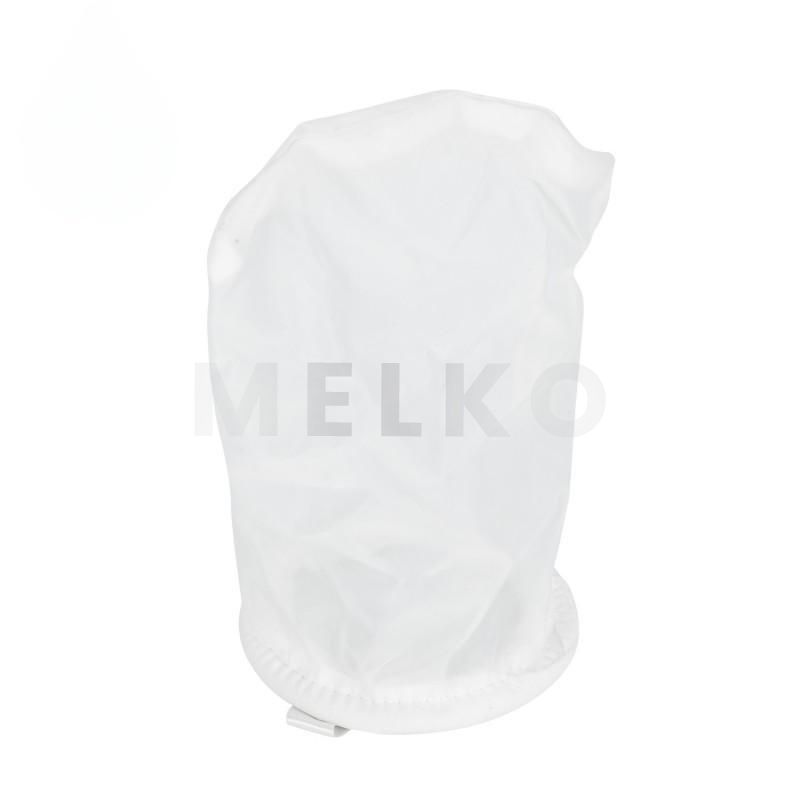
Understanding micron rating methodologies prevents disastrous misapplications. Manufacturers test and rate media using completely different engineering standards.
Nominal ratings represent an average retention rate. A nominally rated 10-micron media typically captures 60% to 80% of particles at that size. It relies on depth filtration and random fiber intersections. Absolute ratings guarantee strict performance. An absolute rated media captures 98% to 99.9% of particles at the stated micron size. Chemical processing applications demand absolute ratings to guarantee safety and product purity. Preliminary water treatment usually relies on nominal ratings. This strategy maximizes flow efficiency and reduces overhead.
Fluid characteristics directly alter filtration dynamics. Specific gravity and fluid viscosity dictate the true flow rate through your bag filter. Heavy, highly viscous fluids drag against the fibers. They lower the effective throughput. Dirt holding capacity (DHC) defines how much solid mass the media traps before clogging. High DHC directly reduces labor overhead. Maintenance teams spend less time executing manual change-outs. Extended runs increase facility uptime.
Manufacturers provide flow versus pressure drop charts. You must interpret these curves correctly. Selecting a media size that creates an artificially high initial pressure drop drastically reduces the effective lifecycle. The system reaches terminal pressure too quickly.
Follow these specific steps to read performance charts properly:
Filtration engineers widely acknowledge a sobering statistic. Nearly 90% of filtration failures in critical applications occur at the seal. The media itself rarely fails first. Contaminants simply find the path of least resistance. If the collar does not lock perfectly into the vessel, fluid bypasses the entire filtration zone.
Plastic flange collars offer advanced sealing capabilities. Polyloc and Sentinel styles utilize a specialized lip design. This plastic lip actually expands outward as differential pressure increases within the vessel. It creates an increasingly tighter, positive seal against the housing wall. Engineers specify these plastic flanges for critical chemical processing where bypass equals catastrophic failure.
Steel and stainless steel rings offer a simpler approach. Manufacturers sew the metal ring directly into the top of the media. These rings provide excellent structural rigidity. They remain the cost-effective standard for gravity-fed systems. Facilities frequently specify steel rings for standard, low-pressure water treatment filter bag applications. They withstand rough handling during installation better than rigid plastic.
You must verify the internal dimensions of your vessel basket. Every media design relies on the metal support basket beneath it. If the media length falls short of the basket depth, the pressure pushes downward. The fabric stretches violently. It ultimately blows out under the strain. Conversely, oversized media folds against itself. These creases create weak points where stress fractures develop. Exact dimensional alignment prevents premature rupture.
Industrial filtration operates under stringent regulatory frameworks. You cannot deploy uncertified materials in sensitive sectors. Overlooking compliance leads to hefty fines and compromised consumer safety.
Water treatment facilities navigate strict regional and national guidelines. You must align your selections with PA DEP standards or their regional equivalents. Potable water applications absolutely require NSF 61 certification. This specific certification guarantees the polymer fibers, thread, and collar materials do not leach toxic chemicals into municipal drinking supplies. Testing facilities subject these components to rigorous extraction tests to verify safety.
Chemical and high-end industrial sectors enforce different standards. Automotive manufacturers require strictly silicone-free manufacturing environments. Even trace amounts of silicone cross-contamination cause severe cratering defects in automotive paint lines. Fine chemical producers assess trace extractables. They demand media that releases zero fiber shedding into the final product.
Always seek concrete trust indicators from your suppliers. Reputable manufacturers gladly provide comprehensive certificates of conformance (CoC). They maintain strict lot traceability for every single batch produced. This documentation protects your facility during regulatory audits.
Field implementation exposes unforeseen challenges. Theoretical sizing often clashes with operational realities. You must learn from common rollout mistakes.
Facilities frequently underestimate hazardous disposal fees. Chemical-soaked materials weigh significantly more than dry media. Waste management companies charge disposal fees by weight. You must consider volume reduction strategies. Using higher DHC media means fewer saturated bags hit the disposal bin. Operator safety remains a paramount concern. High-temperature chemical change-outs pose severe burn and inhalation risks. Operators need media configurations that allow for rapid, secure extraction without prolonged vapor exposure.
Evaluate potential vendors ruthlessly. Avoid suppliers who lack transparent testing methodologies. If they cannot explain how they derive their absolute ratings, find another partner. Reject vendors unwilling to provide sample units for field pilot testing. Laboratory tests rarely replicate exact plant floor conditions. You need real-world validation.
Prioritize manufacturers capable of producing custom sizes. Legacy vessels frequently deviate from modern standards. Forcing a standard Size 1 or Size 2 unit into an irregular housing guarantees bypass gaps. Custom manufacturing bridges this gap perfectly.
Take immediate action on your plant floor. Audit your current differential pressure logs. Identify the exact hour when pressure spikes typically occur. Gather your specific fluid data, including dynamic viscosity, operating temperature range, pH levels, and target flow rates. Contact a dedicated filtration engineer with this data to request a customized, application-specific quote.
Selecting the correct filtration setup requires calculated precision. It sits squarely at the intersection of applied material science, complex fluid dynamics, and exact vessel geometry. You cannot alter one variable without affecting the others. Proper analysis up front eliminates cascading failures downstream.
Always prioritize slightly higher-grade materials when specifying your system. Investing in superior polymer structures and advanced sealing collars yields improved long-term efficiency. You will significantly reduce manual maintenance labor. You will eliminate the chaos of unplanned downtime. Better filtration geometry stabilizes your entire process flow.
Do not leave your facility vulnerable to unpredictable contaminant spikes. Reach out to a technical specialist today to request a comprehensive consultation. Download a verified chemical compatibility sizing matrix to begin optimizing your fluid processing lines immediately.
A: Bag options excel in high-flow, high-particulate applications due to massive dirt holding capacity. They catch bulk contaminants effectively and allow rapid change-outs. Cartridge filters provide a significantly higher surface area within a small footprint. Cartridges work best for fine, precise polishing steps rather than heavy bulk load removal.
A: You monitor the differential pressure (ΔP) gauge across the vessel. Industry standards typically dictate replacing the media when the terminal differential pressure reaches 15 to 20 psi. Pushing beyond 20 psi risks catastrophic media rupture, leading to total contaminant bypass.
A: Cleaning depends entirely on the material construction. You can wash and reuse heavy monofilament nylon meshes multiple times. However, standard needle felt structures (like polypropylene or polyester) are strictly single-use consumables. Attempting to wash needle felt drives contaminants deeper into the matrix, permanently ruining the efficiency.
A: Yes, whenever possible. Matching the collar polymer to the media polymer ensures uniform thermal expansion under high temperatures. It also guarantees consistent chemical resistance. If you use a polypropylene collar on a polyester body in an aggressive solvent, the collar might fail while the fabric survives.

