
English 
T: +86-17717097520
E: sales1@melko2015.com
E: sales1@melko2015.com
No.222 Xiangche Rd. Chedun Town Songjiang Dist. Shanghai China 201611


Views: 0 Author: Site Editor Publish Time: 2026-09-14 Origin: Site


Selecting the wrong filtration media for high-sediment fluid streams inevitably leads to premature blinding, excessive pressure drops, and costly production downtime. Engineers and facility managers frequently struggle to balance precise particle retention with maximum filter lifespan. This often results in over-specifying micron ratings, which drives up consumable waste and operational friction without delivering measurable improvements in fluid quality. Establishing a rigorous evaluation framework for specifying a melt blown depth filter requires analyzing fluid characteristics at the source. You must match micron ratings directly to particle size distributions rather than relying on guesswork. Selecting the correct surface architecture for the application ensures optimal dirt-holding capacity and prevents sudden media collapse during pressure spikes. A systematic approach to filter selection protects downstream equipment, stabilizes flow rates across the entire production cycle, and maintains consistent effluent standards.
Match the micron rating to the specific particle size distribution of the incoming fluid stream, not just the target effluent quality, to prevent rapid filter fouling.
Surface modifications—such as grooved or dotted textures—significantly increase surface area and dirt-holding capacity compared to standard smooth cartridges.
Gradient density structures in melt blown filters excel at capturing deformable particles and broad size distributions but require strict monitoring of differential pressure to prevent channeling.
Chemical compatibility and maximum operating temperature dictate the viability of polypropylene (PP) melt blown filters across industrial, chemical, and sanitary applications.
Success in depth filtration hinges on establishing baseline requirements for effluent purity while maximizing the volume of captured contaminants before a changeout becomes necessary. You cannot evaluate a filter based solely on its ability to catch particles; you must also measure how long it can sustain that performance under continuous flow. Field operators know that a filter that blinds over in two hours is useless, regardless of its retention efficiency.
Particle retention measures the size of contaminants the filter successfully blocks. Dirt-holding capacity dictates how much physical mass the filter can absorb before the media becomes completely saturated. Standard smooth filters often face a rapid decline in dirt-holding capacity when exposed to heavy sediment loads. High-capacity applications demand media that traps particles throughout its entire cross-section rather than just on the outer surface. Balancing these two metrics prevents scenarios where a highly efficient filter blinds over rapidly.
To properly balance these factors, operators must evaluate the incoming fluid stream. If the fluid contains a high concentration of large, rigid particles like sand or pipe scale, the dirt-holding capacity will be tested quickly. In these cases, a filter with a gradient structure allows the larger particles to embed in the outer layers, leaving the tighter inner layers free to capture finer silt. This distribution of mass is what extends the run time between changeouts.
Initial pressure drop directly impacts pump efficiency and overall system energy consumption. When you install a new filter, the resistance it creates against the fluid flow establishes the baseline differential pressure. As the filter captures contaminants, this resistance increases. Monitoring terminal ΔP is critical for preventing media collapse. If the pressure differential exceeds the structural integrity of the polypropylene matrix, the filter will compress, releasing trapped contaminants downstream in a phenomenon known as unloading.
Operators should follow a strict protocol for monitoring pressure drops:
Install calibrated pressure gauges on both the inlet and outlet sides of the filter housing.
Record the clean pressure drop immediately after installing a new cartridge and bringing the system up to normal operating flow.
Log the differential pressure at regular intervals, noting any sudden spikes that could indicate a process upset upstream.
Schedule a filter changeout when the differential pressure reaches the manufacturer's recommended terminal limit, typically around 30 to 35 psi.
Clarifying the difference between nominal ratings and absolute ratings is essential for proper specification. Nominal ratings represent an average capture rate, meaning the filter will retain a high percentage of particles at the stated micron size, but some larger particles may still pass through. Absolute ratings guarantee a 99.9% capture rate for particles at or above the specified micron size. The manufacturing process of melt blown media typically produces nominally rated filters, which excel in pre-filtration and bulk sediment removal where absolute precision is not strictly required.
When specifying filters for a multi-stage system, engineers often use nominal depth filters upstream to handle the bulk of the contaminant load. This protects the more expensive, absolute-rated pleated filters downstream. Understanding this dynamic allows facilities to optimize their consumable usage without compromising the final fluid quality.
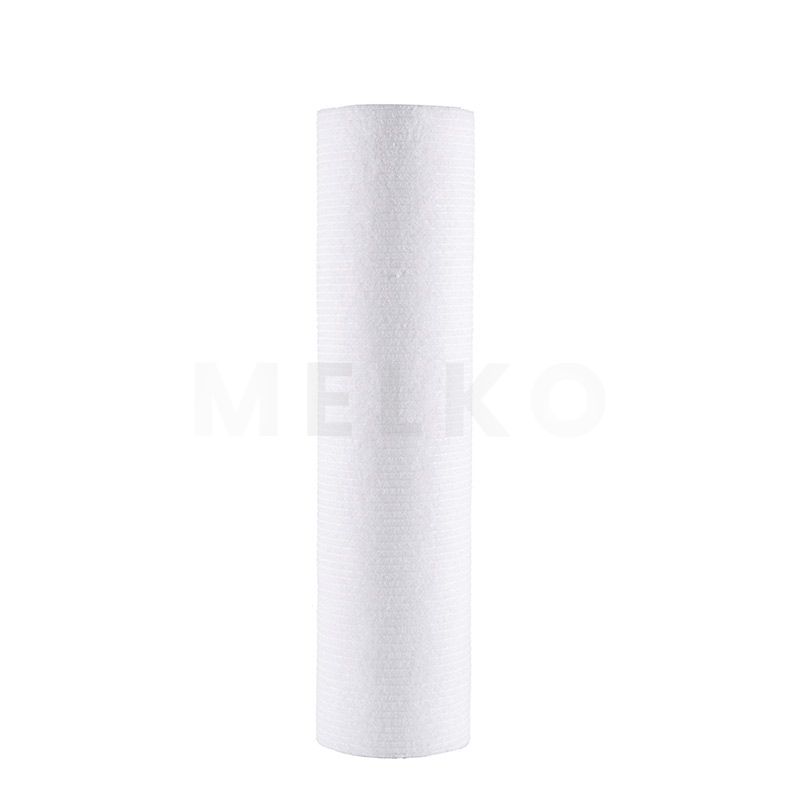
The physical structure of the filtration media determines how it handles varying contaminant loads. Understanding the mechanical differences between available filter types allows operators to optimize changeout schedules and protect sensitive downstream equipment. The manufacturing process of melt blown cartridges creates a unique structure that offers distinct advantages over other media types.
The core advantage of a well-engineered melt blown cartridge lies in its gradient density structure. During manufacturing, the extrusion process creates coarser, more porous outer layers and progressively denser inner zones. This architecture traps larger sediments like rust, sand, and pipe scale on the outside while capturing micro-particles deep within the core. By distributing the contaminant load across the entire depth of the media, gradient density prevents premature surface blinding and significantly extends the operational life of the filter.
This gradient structure is particularly effective when dealing with fluids that have a broad particle size distribution. Instead of all particles accumulating on a single plane, they are separated by size as the fluid travels through the media. This three-dimensional capture mechanism is what gives depth filters their high dirt-holding capacity.
Comparing service life and changeout frequency reveals distinct use cases for different media types. Pleated filters excel at capturing uniform particle sizes and offer massive surface area, making them ideal for final polishing stages. However, depth filters offer superior performance when handling broad particle size distributions and deformable gels. A pleated filter will quickly blind over when exposed to gelatinous contaminants, whereas a melt blown cartridge will absorb these deformable particles into its matrix without immediately restricting flow.
Feature | Melt Blown Depth Filter | Pleated Cartridge |
|---|---|---|
Primary Capture Mechanism | Depth (Gradient Density) | Surface Area |
Best For | Broad particle size distributions, gels | Uniform particle sizes, hard particulates |
Dirt-Holding Capacity | High for mixed contaminants | High for specific target sizes |
Typical Application | Pre-filtration, bulk sediment removal | Final polishing, absolute retention |
String wound filters have historically been used for bulk sediment removal, but they present specific operational risks. Under fluctuating differential pressures, the yarn can shift, creating bypass channels that allow unfiltered fluid to escape. Melt blown cartridges feature thermally bonded fibers that maintain structural integrity even under pressure spikes. This thermal bonding eliminates the risk of media migration, ensuring that loose fibers do not contaminate the downstream process fluid.
Furthermore, the manufacturing process for melt blown filters is highly automated and consistent, resulting in predictable performance from batch to batch. String wound filters can suffer from variations in winding tension, which directly impacts their micron rating and retention efficiency.
Effective filtration systems rarely rely on a single cartridge. Integrating industrial bag filters as primary strainers protects downstream sub-micron polishing filters. Facilities typically deploy 25 µm, 50 µm, or 100 µm bag filters to catch large debris before the fluid reaches the melt blown media. This staged approach prevents the finer, more restrictive cartridges from being overwhelmed by large particulate matter, optimizing the overall efficiency of the filtration train.
When designing a multi-stage system, consider the following progression:
Install a coarse bag filter (e.g., 50 µm) to remove large debris and protect the pumps.
Utilize a mid-range melt blown depth filter (e.g., 10 µm) to capture the bulk of the suspended solids.
Deploy a fine melt blown or pleated cartridge (e.g., 1 µm) for final polishing before the fluid exits the system.
Choosing the correct micron rating requires empirical data rather than assumptions. Over-specifying or under-specifying the filter directly impacts process reliability and maintenance schedules. Operators must analyze the fluid to make informed decisions.
Standard industrial ranges span from 0.5 to over 100 microns. You must categorize these ratings and match them to specific process requirements. A 50 µm or 100 µm filter serves well for bulk cooling water or initial well water intake. A 5 µm or 10 µm filter provides excellent protection for reverse osmosis membranes or carbon beds. Sub-micron ratings like 0.5 µm or 1 µm are reserved for critical polishing applications where fine particulate removal is mandatory.
Selecting the right rating involves understanding the downstream requirements. If the goal is to protect a spray nozzle with a 50-micron orifice, a 10-micron filter provides an adequate safety margin. Using a 1-micron filter in this scenario would be unnecessary and would lead to premature plugging.
Using particle size analysis allows you to select a target micron rating that avoids premature face-blinding. If the fluid stream contains a high concentration of 20-micron particles, installing a 1-micron filter will cause immediate surface loading. The filter will plug rapidly, requiring constant replacement. Analyzing the turbidity and the specific distribution of particle sizes ensures you select a rating that allows the filter to utilize its full depth.
Facilities should periodically sample their fluid streams and conduct a particle size distribution (PSD) analysis. This data reveals the volume of particles at various size intervals, allowing engineers to select a micron rating that targets the majority of the contaminants without being overly restrictive.
Engineers often default to the tightest possible micron rating, assuming it provides better protection. This approach introduces an exponential penalty in maintenance frequency. Selecting a 1-micron filter when a 5-micron or 10-micron filter easily meets the downstream specification forces the system to work harder. It increases differential pressure, reduces flow rates, and mandates frequent filter replacements without offering any tangible benefit to the final product quality.
Over-specification also increases the risk of pump cavitation. As the overly tight filter plugs, the suction pressure drops, potentially damaging the transfer pumps. Aligning the micron rating with the actual process requirements ensures smooth operation and extends the life of both the filters and the mechanical equipment.
The exterior texture of the cartridge plays a massive role in how it handles incoming solids. Modifying the surface architecture alters the flow dynamics and increases the effective filtration area. Manufacturers have developed specific surface patterns to address different types of contaminant loads.
Smooth surface filters represent the baseline for depth filtration. They perform reliably when handling uniform, non-deformable particulates in low-turbidity environments. However, their limitation becomes apparent in high-solids loading applications. Because the surface is flat, heavy sediment can quickly form a non-permeable cake on the exterior, blocking fluid from accessing the inner gradient layers.
In applications with clean municipal water or light particulate loads, smooth filters offer a cost-effective solution. But when dealing with surface water, wastewater, or heavy industrial fluids, the smooth surface often becomes the limiting factor in the filter's lifespan.
Integrating a Light Grooved Surface Melt Blown Filter Cartridge drastically alters the performance profile in heavy sediment applications. The design mechanics involve longitudinal or helical grooves cut or molded into the exterior. This increases the active filtration surface area by up to 50% compared to a smooth cylinder. The grooved architecture mitigates premature surface blinding in high-turbidity water treatment and process streams by providing alternative flow paths even as sediment begins to accumulate on the outer ridges.
The grooves act as channels, directing the fluid into the valleys of the filter media. As the peaks of the grooves collect larger debris, the valleys remain open, allowing the fluid to continue penetrating the depth of the cartridge. This design significantly extends the run time in applications with high suspended solids.
For applications dealing with complex contaminant profiles, a Dot Surface Melt Blown Filter Cartridge offers specialized advantages. The patterned indentations impact local flow dynamics, creating micro-turbulence at the media surface. This turbulence helps prevent sticky, gelatinous, or deformable contaminants from immediately sealing the pores. The dotted texture optimizes depth utilization, maximizing mechanical dirt-holding capacity and allowing the filter to process difficult fluids longer before reaching terminal pressure.
The dotted surface is particularly effective in chemical processing or food and beverage applications where the fluid may contain organic matter or viscous compounds. The indentations disrupt the formation of a solid cake, forcing the contaminants to distribute more evenly across the surface and into the depth of the media.
Surface Architecture | Primary Benefit | Ideal Application |
|---|---|---|
Smooth | Baseline performance, cost-effective | Low-turbidity, uniform particulates |
Light Grooved | Increased surface area, prevents blinding | High-sediment, surface water, heavy industrial |
Dot Surface | Micro-turbulence, handles gels | Viscous fluids, organic matter, deformable particles |
Different industries impose unique demands on filtration media. Material compatibility, regulatory compliance, and thermal limits dictate which filter configurations are viable. Selecting the right filter requires understanding the specific challenges of the operating environment.
Water treatment facilities require filters that balance high flow rates with efficient sediment, sand, and scale removal. Polypropylene melt blown filters excel here due to their low resistance to flow and high dirt-holding capacity. Grooved surfaces are particularly valuable in municipal intake applications where seasonal changes can cause sudden spikes in turbidity and suspended solids.
In these large-scale operations, minimizing pressure drop is critical for maintaining pump efficiency. The gradient density of melt blown filters ensures that the pressure drop remains low even as the filter collects significant amounts of debris, reducing the overall energy consumption of the facility.
Aggressive environments demand strict evaluation of chemical compatibility. Polypropylene offers broad resistance to acids, alkalis, and many organic solvents. However, you must evaluate thermal limitations. Standard PP melt blown filters typically operate safely up to 60°C to 80°C (140°F to 176°F). Exceeding these temperatures or exposing the media to incompatible aggressive solvents will cause the polymer matrix to soften, leading to structural failure and massive downstream contamination.
Operators in chemical plants must consult compatibility charts before installing any filter. If the process fluid contains strong oxidizing agents or operates at elevated temperatures, alternative materials like nylon or glass fiber may be required. But for the vast majority of standard chemical applications, polypropylene remains the material of choice.
Sanitary applications require strict adherence to regulatory standards. Filters used in these sectors must ensure compliance with FDA food-contact regulations. Operators must verify the absence of binders, surfactants, or adhesives in the manufacturing process, as these additives can leach into the product stream. Pure polypropylene melt blown cartridges, thermally bonded without chemical additives, minimize extractables and protect the flavor profile and safety of food and beverage products.
In addition to material purity, these applications often require filters that can withstand sanitization protocols. While standard melt blown filters are typically single-use, they must maintain their integrity during the production run without shedding fibers into the final product.
Maintaining system integrity requires strict adherence to operational thresholds. Relying on visual inspection or arbitrary time schedules often leads to system failures or wasted resources. Operators must use data to drive their maintenance decisions.
Identifying the optimal changeout point is the most critical operational metric for depth filtration. Facilities should establish a strict terminal differential pressure threshold, typically between 2.0 to 2.5 bar (30 to 35 psi). Pushing a filter beyond this limit severely compromises the structural matrix of the polypropylene fibers. Once the pressure drop exceeds the manufacturer's maximum rating, the filter core can collapse, or trapped contaminants can unload directly into the clean fluid stream, instantly undoing the entire filtration process.
To ensure consistent operation, facilities should implement the following practices:
Train operators to read and interpret differential pressure gauges accurately.
Establish clear standard operating procedures (SOPs) for filter changeouts based on ΔP readings.
Maintain a log of filter changeouts to identify trends or sudden changes in fluid quality.
Keep an adequate inventory of replacement cartridges to prevent running filters beyond their terminal limits.
Implementing a reliable filtration strategy requires precise alignment between fluid characteristics and media capabilities. To optimize your process immediately, execute the following steps:
Conduct a comprehensive particle size analysis on your source fluid to establish a baseline for your micron rating requirements.
Install differential pressure gauges on both the inlet and outlet sides of your filter housings to monitor real-time media loading.
Transition from smooth cartridges to grooved or dotted surface architectures if your current filters experience rapid surface blinding from high-turbidity fluids.
Implement a staged filtration train using coarse bag filters upstream to protect and extend the life of your fine melt blown polishing cartridges.
A: A smooth filter has a flat exterior, making it prone to surface blinding in high-sediment fluids. A grooved filter features machined or molded channels that significantly increase the surface area, allowing it to hold more dirt and maintain flow rates longer before plugging.
A: You should change your filter based on differential pressure (ΔP), not time. Install gauges before and after the filter housing. When the pressure drop reaches the manufacturer's recommended terminal limit—usually around 30 to 35 psi—it is time to replace the cartridge.
A: No. Melt blown depth filters are designed to trap contaminants deep within their internal fiber matrix. Attempting to wash them only cleans the outer surface and often drives trapped particles deeper, permanently damaging the gradient structure. They are strictly single-use consumables.
A: Rapid clogging usually indicates over-specification. If your fluid contains a high volume of large particulates, a 1-micron filter will act as a surface strainer rather than a depth filter. You likely need a coarser pre-filter, such as a 10-micron or 25-micron cartridge, upstream.
A: Yes, provided they are manufactured from 100% pure, FDA-compliant polypropylene without any chemical binders, adhesives, or surfactants. Always verify that the specific cartridge carries the appropriate certifications for potable water or food-contact applications before installation.


