
English 
T: +86-17717097520
E: sales1@melko2015.com
E: sales1@melko2015.com
No.222 Xiangche Rd. Chedun Town Songjiang Dist. Shanghai China 201611


Views: 0 Author: Site Editor Publish Time: 2026-09-20 Origin: Site


Selecting the incorrect liquid filtration media directly leads to premature blinding, media migration into the final product, and costly unplanned downtime. Process engineers and facility managers face a strict balancing act daily. You must weigh chemical compatibility, thermal limits, and micron precision when standardizing filtration consumables. Often, this decision comes down to choosing between nylon and polypropylene materials. Making the wrong choice compromises product quality and damages expensive downstream equipment.
Evaluating the structural differences, operational thresholds, and lifecycle economics of NMO Filter Bags versus polypropylene alternatives is necessary. You need reliable data to optimize filtration efficiency. This guide breaks down the physical properties, application suitability, and implementation risks associated with both materials. You will learn exactly how to match the right filter bag to your specific process fluid, temperature requirements, and particulate profiles.
Thermal Limits: Polypropylene is restricted to lower temperature applications (up to ~180°F), whereas Nylon (NMO) handles higher thermal loads (up to ~250°F).
Chemical Resilience: Polypropylene offers superior resistance to strong acids and bases; Nylon excels in solvent-heavy and alkaline environments.
Filtration Precision: NMO filter bags provide exact, non-deformable monofilament weaving (1–1200 microns), ideal for strict classification, whereas polypropylene is available in both monofilament (1–800 microns) and depth-filtration felt.
Lifecycle Cost: Nylon mesh bags frequently offer an economical, cleanable, and reusable solution for coarse applications, offsetting a potentially higher initial unit cost compared to disposable polypropylene felt.
Nylon monofilament construction relies on single, continuous threads. Manufacturers melt the raw polymer, extrude it through precision spinnerets, and draw the fibers to align the molecular chains. This drawing process gives the nylon threads immense tensile strength. Industrial looms then weave these continuous threads into a precise, uniform square mesh. To ensure the pores do not shift or stretch under pump pressure, the intersections of the weave undergo a strict heat-setting process. This structural rigidity guarantees reliable classification of particulates. You can depend on the stated micron rating to remain absolutely stable during heavy industrial operation.
The primary mechanism at play here is surface filtration. Fluid passes through the single layer of woven mesh. Particles larger than the pore size remain trapped on the surface, unable to pass through the rigid square openings. This approach provides highly economical removal of non-deformable contaminants. Hard particles like sand, pipe scale, metal shavings, and crystalline structures cannot force their way through the barrier. The surface acts as a strict physical checkpoint.
Standard micron availability ranges from 1 to 1200 microns. This wide spectrum offers incredible application versatility across different plant zones. You can install a 1200-micron bag as a coarse primary strainer to catch large debris before it damages transfer pumps. Conversely, a 10-micron bag serves well for fine polishing in solvent transfer lines. The high flow rates associated with thin monofilament materials keep initial pressure drops extremely low. This efficiency reduces the electrical energy required to pump viscous fluids through the filter housing.
Extruded continuous threads prevent fiber shedding into the downstream process.
Heat-set intersections lock pore sizes in place, preventing stretching under pressure.
Surface filtration easily captures hard, non-deformable solids like metal and scale.
Broad micron range allows for both coarse straining and fine classification.
Thin material profile ensures minimal initial pressure drop, saving pump energy.
Polypropylene media generally falls into two distinct categories: Polypropylene Monofilament (PPMO) and Polypropylene Needle Felt. PPMO shares the woven, single-thread structure of nylon mesh, offering surface filtration for specific chemical environments. However, needle felt represents a completely different filtration mechanism. Manufacturers create felt by taking layers of carded, short staple fibers and mechanically entangling them using banks of barbed needles. This aggressive punching process creates a thick, lofty, three-dimensional matrix. The resulting material looks and feels like dense fabric.
Polypropylene felt relies entirely on depth filtration mechanics. Fluid does not just pass through a single surface; it navigates a tortuous path through the thick fiber matrix. Particles become trapped throughout the entire depth of the material. This structure excels at trapping deformable and gelatinous particles. Slime, algae, biological growth, and soft agglomerates easily extrude through surface mesh when pump pressure increases. However, the deep fiber maze of a felt bag captures and holds these soft contaminants securely within its internal structure.
Standard micron availability for polypropylene spans from 1 to 800 microns. Felt bags typically cover the finer end of this spectrum, while PPMO handles the coarser duties. Polypropylene remains incredibly lightweight and naturally hydrophobic. It offers an economical price point for high-volume, disposable liquid filtration needs. Facilities processing millions of gallons of municipal water, cooling tower blowdown, or bulk commodity chemicals rely on polypropylene for its cost-effective bulk particulate removal capabilities.
Available in both woven monofilament and non-woven needle felt configurations.
Needle felt utilizes a thick, three-dimensional fiber matrix for high dirt-holding capacity.
Depth filtration effectively captures gelatinous, soft, and easily extruded particles.
Contaminants are retained throughout the entire media thickness, not just on the surface.
Highly economical for large-scale, high-volume disposable applications.
Lightweight material simplifies handling, storage, and change-out procedures.
Chemical compatibility dictates the survival of your filtration media. Installing the wrong polymer in an aggressive fluid leads to immediate media degradation and process contamination. Polypropylene features an inherently inert nature. It stands as the industry standard for aggressive acids, strong bases, and corrosive water treatment applications. You can safely deploy polypropylene in high concentrations of hydrochloric acid, sulfuric acid, and sodium hydroxide solutions. The polymer chains resist chemical attack, maintaining structural integrity even during prolonged exposure to harsh environments. This broad resistance makes it a default choice for general chemical manufacturing and wastewater neutralization systems.
Nylon presents a vastly different chemical profile. NMO Filter Bags show distinct vulnerability to strong mineral acids. Exposing nylon to high concentrations of sulfuric or nitric acid causes rapid polymer degradation. The mesh will weaken, stretch, and eventually rupture under pump pressure. However, nylon delivers superior performance in organic solvents, hydrocarbons, and strong alkalis. When filtering industrial paints, aromatics, toluene, or petrochemicals, nylon remains dimensionally stable where other plastics might swell, soften, or dissolve entirely. You must match the polymer to the fluid chemistry accurately using detailed compatibility charts.
Thermal limits represent a hard operational boundary in liquid filtration. Polypropylene has a relatively low operational ceiling. The standard maximum continuous operating temperature sits at 180°F (82°C). Pushing beyond this point introduces severe operational risks. The fibers will soften, stretch, and lose their tensile strength. This deformation alters the micron rating, allowing larger particles to pass downstream and contaminate the product. In extreme cases, the material can melt and fuse to the restrainer basket, causing a catastrophic failure of the filtration system and requiring hours of manual labor to chip the melted plastic out of the housing.
Nylon handles higher thermal loads effectively. The operational ceiling for standard nylon mesh reaches 250°F (121°C). This higher threshold allows for high-temperature processing in industrial parts washing, hot oil filtration, and heated resin applications. The heat-set mesh maintains its structural rigidity well past the point where polypropylene fails. This thermal stability ensures consistent particulate classification in demanding, high-heat environments.
If your processes exceed the 250°F limit, you must pivot to alternative media. Neither nylon nor polypropylene will survive extreme heat. Engineers typically specify Polyester for applications up to 275°F. For truly extreme environments, High-Temperature Aramid bags or Stainless Steel mesh elements become necessary. Always verify the maximum operating temperature of your fluid at the exact location of the filter housing before selecting the bag material.
Media migration ruins final product quality and damages sensitive downstream equipment like spray nozzles and metering pumps. When filter fibers break loose and travel downstream, they contaminate the very fluid you intend to clean. Nylon mesh bags possess inherent non-shedding properties. The extruded continuous filament construction means there are no short fibers to break away. The single, unbroken threads remain intact under pressure and flow. This makes nylon the premier choice for applications demanding absolute zero fiber migration.
Polypropylene felt requires specific surface treatments to prevent shedding. Because felt consists of short, interlocked staple fibers, the surface naturally wants to shed under fluid flow. Manufacturers mitigate this by applying glazed or singed surface treatments during production. A singed finish uses an open flame to melt the outermost fibers slightly, locking them into place. A glazed finish uses a heated roller to create a smooth, ironed surface. You must evaluate the necessity of these treatments when specifying polypropylene felt to prevent downstream contamination in sensitive processes.
Performance Metric | Polypropylene (Felt/Mesh) | Nylon (NMO Mesh) |
|---|---|---|
Structural Design | Needle Felt (Depth) or Woven (Surface) | Woven Monofilament (Surface) |
Maximum Continuous Temp | 180°F (82°C) | 250°F (121°C) |
Mineral Acid Resistance | Excellent (Handles H2SO4, HCl) | Poor to Fair (Will degrade) |
Organic Solvent Resistance | Fair (Prone to swelling and softening) | Excellent (Handles Toluene, MEK) |
Fiber Shedding Risk | Moderate (Requires singed/glazed finish) | None (Inherently non-shedding) |
Primary Application Focus | Acids, bases, gelatinous particles, water | Solvents, high heat, hard particles, paints |
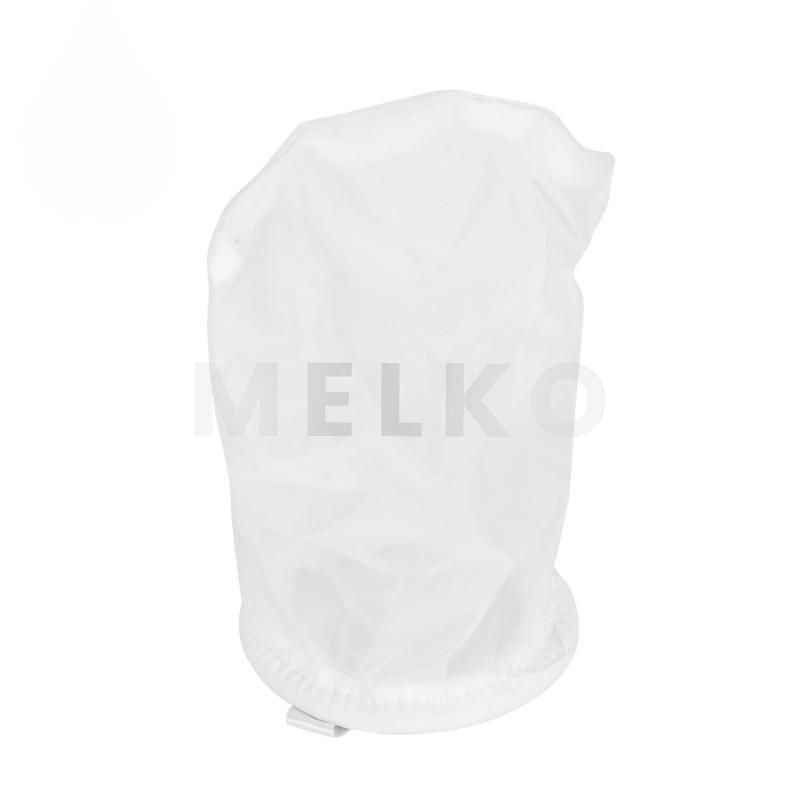
Certain industries cannot tolerate even microscopic contamination. Automotive coatings, clear coats, and specialized resins require flawless finishes. A single stray fiber migrating from a filter bag can ruin a vehicle's paint job, leading to costly sanding and rework. You must specify nylon mesh for these applications. The absolute zero fiber migration requirement makes continuous monofilament the only viable option. The rigid mesh also handles the heavy pigments and metallic flakes found in automotive paints without stretching or altering the color profile.
High-viscosity fluid processing often requires coarse filtration to protect transfer pumps. Pumping thick syrups, heavy lubricating oils, or industrial adhesives through tight depth media causes massive pressure drops and restricts flow. Nylon mesh excels here. The thin profile and precise square pores allow viscous fluids to pass efficiently while retaining large, damaging contaminants. Applications requiring 400+ micron ratings benefit greatly from the high flow rates and low resistance of nylon mesh.
Parts washing systems and high-temperature solvent filtration represent another ideal use case. Industrial washers use aggressive alkaline detergents heated to near-boiling temperatures to strip grease from machined parts. Nylon withstands both the high pH and the thermal stress effortlessly. Similarly, solvent recovery systems processing hot hydrocarbons rely on nylon's superior solvent resistance. The mesh maintains its integrity where polypropylene would quickly swell, blind, and fail.
Automotive clear coats, primers, and metallic flake paints.
High-viscosity adhesives, resins, and heavy lubricating oils.
Industrial parts washing systems using hot alkaline detergents.
Solvent recovery systems and hydrocarbon processing lines.
Machining coolants requiring the removal of sharp metal shavings.
Food and beverage processing heavily relies on polypropylene media. Manufacturers produce FDA-compliant polypropylene bags specifically for this sector, ensuring no harmful chemicals leach into the product. The material imparts no taste, odor, or color to the final fluid. You will find polypropylene bags filtering bottled water, edible oils, liquid sugars, and beverage syrups. The inert nature of the polymer ensures complete compliance with strict food safety regulations and sanitation standards.
Wastewater treatment and aggressive chemical manufacturing require robust, broad-spectrum chemical resistance. Polypropylene handles the unpredictable pH swings common in industrial effluent. Whether the water spikes acidic from a pickling line or basic from a cleaning cycle, the filter bag remains intact. Chemical plants use polypropylene to filter bulk acids, electroplating solutions, and corrosive brines. The material simply ignores chemical attacks that would destroy other polymers.
Applications requiring the capture of gelatinous or highly deformable particulates demand polypropylene felt. Surface mesh fails against slime, biological growth, and soft flocs. The pump pressure simply extrudes the soft material through the square pores. Polypropylene felt traps these contaminants deep within its tortuous fiber matrix. The depth filtration mechanism holds the deformable particles securely, preventing them from pushing downstream and fouling heat exchangers or reverse osmosis membranes.
Bottled water, edible oils, and beverage syrup clarification.
Industrial wastewater effluent treatment and pH neutralization systems.
Bulk chemical manufacturing involving strong mineral acids.
Electroplating solutions, anodizing baths, and corrosive brines.
Cooling tower water containing biological slime, algae, or mud.
Evaluating filtration economics requires looking far beyond the initial purchase order. You must compare the upfront procurement cost of standard lightweight polypropylene felt bags against nylon mesh bags. Generally, a standard polypropylene felt bag costs less per unit than a precision-woven nylon monofilament bag. The manufacturing process for needle felt allows for high-volume, low-cost production. If you only look at the initial invoice, polypropylene appears to be the cheaper option.
However, true operational economics factor in change-out frequency, labor costs for maintenance personnel, and disposal fees. A cheaper bag that blinds twice as fast requires twice the labor to replace. This means more process interruptions and more operator time spent opening housings. Furthermore, disposal fees for hazardous waste volume add up quickly. If you filter hazardous chemicals or solvents, you pay by the pound or by the drum for disposal. A wet felt bag holds significantly more liquid weight than a thin mesh bag. Reducing the number of bags sent to the hazardous waste facility directly impacts your bottom line.
This positions NMO Filter Bags as a highly economical choice for capturing non-deformable contaminants. Because the mesh does not blind as quickly with hard particles, the lifecycle extends. You change the bags less frequently. This reduction in labor, downtime, and disposal volume often offsets the higher initial unit cost. You must calculate the long-term operational expenses to make an accurate financial decision for your facility.
Sustainability and waste reduction drive modern facility management. You must assess the viability of washing and reusing filter media to lower long-term operational expenses. Nylon mesh bags offer a distinct advantage in coarse filtration applications. Because the contaminants sit on the surface of the smooth monofilament threads, you can often wash them off. Using a standard hose or a dedicated parts washer, operators can clean a 400-micron nylon bag, inspect it for damage, and return it to service multiple times.
This reusability drastically reduces consumable spending. However, you must implement strict cleaning protocols. If washing damages the mesh, stretches the pores, or fails to remove all contaminants, you risk process failure upon reinstallation. Reusability works best for coarse straining of hard particulates like sand or metal chips. Fine micron nylon bags prove much harder to clean effectively and are usually treated as disposable.
Conversely, you must acknowledge the strictly disposable nature of polypropylene depth-felt bags. Once a felt bag blinds, it is finished. The contaminants embed deep within the three-dimensional fiber matrix. No amount of washing will clear the tortuous path. Attempting to wash a felt bag only drives the dirt deeper or destroys the fiber structure entirely. You must treat polypropylene felt as a single-use consumable and plan your inventory accordingly.
Coarse nylon mesh allows for surface cleaning and multiple reuses.
Reusing bags lowers long-term consumable spending and reduces waste.
Strict washing protocols prevent mesh damage and ensure reliable performance.
Polypropylene felt traps dirt internally, making cleaning impossible.
Felt bags remain strictly single-use, disposable items requiring steady inventory.
Chemical swelling presents a hidden danger in liquid filtration. Using polypropylene in certain organic solvents causes the polymer fibers to absorb the fluid. As the fibers absorb the solvent, they physically swell and expand. This swelling reduces the effective micron rating of the bag. A 50-micron bag might quickly swell into a 10-micron bag. This leads to rapid, premature blinding. The pressure differential spikes, and the filter stops flowing long before it actually fills with dirt, confusing operators and wasting media.
Mitigation requires strict administrative controls. You must mandate strict cross-referencing of fluid safety data sheets (SDS) with manufacturer chemical compatibility charts prior to procurement. Never assume a plastic bag will survive a new solvent mixture. If the compatibility chart indicates any potential for swelling or degradation, switch to a more resistant material like nylon or polyester. Verify compatibility at the actual operating temperature, as heat accelerates chemical attacks and swelling behaviors.
A filter bag only works if all the fluid passes through the media. Bypass occurs when fluid escapes around the top seal of the bag, allowing unfiltered liquid to travel downstream. Incorrect ring material often causes this failure. For example, using a standard plastic ring in a high-temperature solvent application causes the ring to soften, warp, and lose its shape. The seal breaks, and unfiltered fluid bypasses the bag entirely, contaminating the downstream process and fouling equipment.
Mitigation involves specifying the correct collar or ring type to match the housing and fluid profile. You can choose from galvanized steel rings, stainless steel rings, or molded polypropylene and nylon flanges. Molded plastic flanges often provide a better seal than metal rings, as they expand slightly under pressure to lock into the housing basket. Ensure the ring material matches the bag material's chemical and thermal resistance. A nylon bag needs a nylon flange or a stainless steel ring to survive high temperatures.
Observed Symptom | Probable Cause | Corrective Action |
|---|---|---|
Rapid pressure spike with little dirt in bag | Chemical swelling of fibers (e.g., PP in solvent) | Switch to Nylon or Polyester media |
Contamination found downstream | Fluid bypass at the collar seal | Upgrade to a molded flange or check basket O-ring |
Bag melted to the restrainer basket | Operating temperature exceeded polymer limits | Switch from PP to Nylon, or Nylon to High-Temp Aramid |
Fibers found in final product | Shedding from untreated felt media | Specify singed/glazed felt or switch to monofilament mesh |
The choice between Nylon and Polypropylene hinges entirely on fluid chemistry, operating temperature, and whether the process requires surface or depth filtration. You cannot select media based on unit price alone. Understanding the physical limitations of the polymers prevents catastrophic process failures, reduces maintenance labor, and protects expensive downstream equipment from contamination.
Your shortlisting logic should remain straightforward. Default to polypropylene for acidic, low-temperature, or gelatinous fluid applications. Specify nylon mesh for solvent-based, high-temperature, or absolute non-shedding surface filtration requirements. Matching the structural approach to the contaminant type ensures maximum efficiency and extends the lifecycle of your consumables.
Audit current filtration change-out logs to identify areas experiencing premature blinding or excessive maintenance labor.
Verify exact operating temperatures at the filter housing location using calibrated instruments.
Cross-reference all process fluids and solvents with a comprehensive chemical compatibility chart before ordering.
Request technical data sheets and sample bags for pilot testing in the specific process fluid to confirm performance.
Inspect current filter bag rings and housing baskets for signs of thermal warping, chemical degradation, or bypass wear.
A: NMO (Nylon Monofilament) offers higher temperature resistance and excellent solvent compatibility. PPMO (Polypropylene Monofilament) provides superior resistance to highly acidic or basic environments but is restricted to lower operating temperatures. Both utilize a woven, surface-filtration mesh structure.
A: Yes, depending on the contaminant. Because they are surface filters made of woven monofilament, NMO bags can often be washed and reused in coarse filtration applications. This differs from depth-felt bags, which trap dirt internally and cannot be cleaned.
A: Polypropylene filter bags are generally rated for a maximum continuous operating temperature of 180°F (82°C). Exceeding this limit causes the fibers to soften, deform, and eventually melt, leading to filtration failure.
A: For applications exceeding the 250°F limit of NMO filter bags, engineers typically specify Polyester filter bags (rated up to 275°F), High-Temperature Aramid, or Stainless Steel mesh bags. You must select a material engineered for extreme thermal loads.
A: Polypropylene is the industry standard for acidic solutions. It offers excellent resistance to both mineral and organic acids, maintaining its structural integrity where materials like nylon would quickly degrade and fail.
A: Switch to a monofilament mesh bag (like NMO) which inherently does not shed due to its continuous extruded threads. If you must use felt, ensure your polypropylene bags have a glazed or singed finish designed to lock surface fibers in place.
A: NMO filter bags are highly versatile, typically available in precise micron ratings ranging from 1 micron up to 1200 microns. This wide range accommodates everything from fine solvent polishing to coarse debris straining.


