
English 
T: +86-17717097520
E: sales1@melko2015.com
E: sales1@melko2015.com
No.222 Xiangche Rd. Chedun Town Songjiang Dist. Shanghai China 201611


Views: 0 Author: Site Editor Publish Time: 2026-09-16 Origin: Site


Selecting the wrong filter bag material introduces hidden operational costs that quickly derail industrial processes. You might face premature media blinding, fluid contamination, or catastrophic bag failure. These issues lead directly to unplanned system downtime and compromised product quality. Engineers and facility managers constantly balance chemical compatibility, thermal limits, and mechanical stress when specifying filtration media. Relying on incomplete data often results in suboptimal performance and system vulnerabilities. You need an objective, data-driven framework to evaluate Polypropylene (PP) against Polyester (PE) filter media. This guide breaks down operational parameters and chemical resistance matrices to ensure the correct specification for industrial liquid filtration. We focus on matching the physical properties of the polymer to the exact demands of your process fluid. By understanding the distinct thresholds of each material, you can eliminate bypass risks and stabilize your filtration operations.
Thermal Limits Dictate the Baseline: PE filter bags can withstand continuous operating temperatures up to 150°C (300°F) and thermal surges up to 170°C-190°C, whereas PP filter bags structurally degrade above 90°C (194°F).
Inverse Chemical Compatibility: Polypropylene excels in highly acidic or alkaline environments, while Polyester is the superior choice for solvents, petrochemicals, and oxidative agents.
Surface Treatments Mitigate Risk: To prevent downstream contamination, PP bags utilize a glazed finish, whereas PE filter bags rely on a singed finish to eliminate fiber migration.
You must first identify the specific gravity and chemical composition of your process fluid. Particulate nature plays a massive role in media selection. Rigid particles like metal fines or sand interact differently with needle-felt media than deformable particles. Biological gels, waxes, or oils tend to extrude through the pore structure under pressure. You must match the polymer's structural rigidity to the contaminant type. Analyzing the baseline chemistry prevents immediate material degradation upon fluid contact. You also need the full particle size distribution data. Relying solely on the average particle size guarantees premature blinding. You must know the concentration of fines versus large particulates to specify the correct micron rating.
High-viscosity fluids exert severe mechanical stress on filter media. Thick resins, paints, and syrups drag against the fabric during processing. This drag requires specific tensile strengths to prevent bag rupture or seam failure. As flow rates increase, hydraulic pressure multiplies the physical strain on the bag. You need to calculate the maximum flow rate against the fluid's viscosity index. This calculation determines whether the fabric can sustain the required throughput without stretching or tearing inside the housing. Follow these steps to evaluate flow dynamics:
Measure the fluid viscosity at the exact operating temperature.
Calculate the maximum pump output during peak production cycles.
Determine the annular velocity inside the filter housing.
Select a bag size that keeps the flow rate below the media's maximum flux rate.
Establishing necessary retention capabilities requires differentiating between nominal and absolute efficiency ratings. Process criticality dictates this choice. Nominal bags capture a percentage of particles at a given micron size. Absolute bags guarantee retention of nearly all particles at that specific size, often measured by a Beta ratio. You must align the material's manufacturing capabilities with your purity targets. Needle-felt materials provide depth filtration. They capture particles throughout the media matrix rather than just on the surface. You must specify the exact micron rating needed to protect downstream equipment or meet final product specifications. If you require absolute retention, you must verify the manufacturer's testing protocols.
Establishing baseline and terminal pressure drop thresholds is mandatory. Differential pressure indicates how much resistance the filter creates as it captures contaminants. You must monitor Delta P to determine optimal change-out frequencies. A sudden drop in pressure often signals a ruptured bag or a bypassed seal. A rapid spike indicates premature blinding. Industry standard practice dictates changing bags when differential pressure reaches 15 to 20 psi. Operating beyond this threshold risks pushing contaminants through the media. It can also cause the internal support basket to collapse. You must install calibrated pressure gauges on both the inlet and outlet of the filter housing to track these metrics accurately.
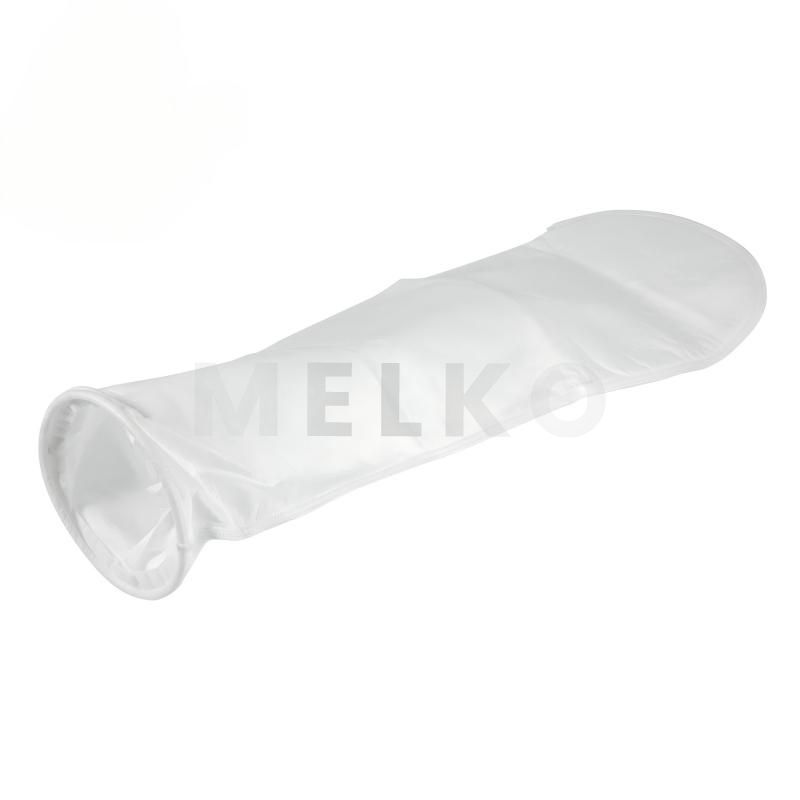
Polypropylene offers excellent resistance to strong acids, alkalis, and corrosive chemicals. It handles aggressive pH environments where other polymers fail. You can confidently deploy PP in high-concentration sulfuric acid, hydrochloric acid, and sodium hydroxide applications. The polymer chain lacks reactive sites that these aggressive chemicals typically attack. This broad chemical inertia makes PP the default choice for general chemical processing at ambient temperatures. It resists hydrolysis and maintains tensile strength even during prolonged exposure to harsh caustics. You do not have to worry about the fabric disintegrating when processing strong bases.
Physical limitations define polypropylene's operating envelope. Structural integrity and filtration efficiency drop precipitously when process temperatures exceed 90°C (194°F). The polymer begins to soften as it approaches this thermal threshold. As the material softens, the carefully engineered pore structure stretches and distorts. This distortion allows larger particles to bypass the media. If temperatures spike beyond 90°C, the bag can melt or collapse entirely. You must strictly monitor process temperatures to avoid catastrophic failure when using PP. Never use polypropylene in applications involving steam sterilization or hot oil.
PP features a lightweight composition that simplifies handling and installation. The low material density makes these bags highly pliable. Operators can easily fold and insert them into standard filter housings. This flexibility ensures a tight fit against the support basket. The lightweight nature also benefits low-pressure applications where heavy media might restrict flow. Despite its low weight, the needle-felt construction provides substantial dirt-holding capacity. This makes PP highly efficient for capturing a wide range of particle sizes without adding unnecessary bulk to the filtration system.
Specification scenarios where PP is the optimal choice primarily involve ambient-temperature processing. Municipal water treatment facilities rely heavily on PP for pre-filtration and reverse osmosis protection. Food and beverage processing plants utilize it for bulk liquid clarification. Ambient-temperature chemical manufacturing depends on PP to handle aggressive acids and bases safely. Agricultural chemical blending and parts washing systems also benefit from its broad chemical compatibility. If your process operates below 90°C and involves highly corrosive aqueous solutions, PP is the correct specification.
Polyester fibers provide distinct structural advantages in high-heat environments. PE Filter Bags maintain dimensional stability in continuous fluid temperatures up to 150°C (300°F). They easily tolerate peak thermal surges up to 170°C-190°C for short durations. The polymer's high melting point ensures the pore structure remains rigid. This rigidity prevents particle bypass when processing hot fluids. Engineers specify polyester when thermal loads would quickly melt or deform standard polypropylene media. You must use polyester when operating near the boiling point of water or processing heated resins.
Polyester demonstrates a high tolerance for organic solvents, petrochemicals, and oxidizing agents. It handles aromatics, hydrocarbons, and alcohols without swelling or degrading. However, polyester carries a specific vulnerability to strong alkalis. Exposing PE to high-pH caustic solutions at elevated temperatures triggers hydrolysis. Hydrolysis breaks down the ester bonds, causing the fabric to disintegrate rapidly. You must carefully map your fluid's pH and chemical makeup before specifying polyester. It excels in solvents but fails in hot caustics. You cannot use polyester for sodium hydroxide or potassium hydroxide filtration.
Specific industrial scenarios make PE Filter Bags mandatory. Oil and gas refining operations use them to filter hot hydrocarbons. High-temperature resin manufacturing relies on polyester to withstand both the heat and the chemical composition of the fluid. Solvent-based paint and coating filtration requires PE to prevent media swelling. Industrial parts cleaning systems using aggressive solvent degreasers also depend on polyester. If your process involves heavy solvents or continuous temperatures above 90°C, polyester is the required material. You will experience immediate failure if you substitute PP in these applications.
Temperature spikes affect the pore structure and tensile strength of both materials differently. Polypropylene softens immediately above 90°C, causing the pores to stretch. This stretching ruins the micron rating and allows contaminants downstream. Polyester maintains its micron rating up to 150°C. If a system experiences unexpected thermal surges, polyester provides a critical safety margin. Relying on PP in fluctuating temperature zones invites bypass risks. You must evaluate your system's maximum potential temperature, not just the average operating temperature. A single temperature spike can destroy a PP bag and contaminate an entire batch of product.
You need a strict guide detailing when to avoid each material. Avoid polyester completely in high-pH caustic solutions, especially at elevated temperatures, due to rapid hydrolysis. Avoid polypropylene in high-temperature aromatics and heavy solvents, as the polymer will swell and blind the pores. Use PP for strong acids like sulfuric or hydrochloric. Use PE for solvents like toluene, xylene, or mineral spirits. Cross-referencing your fluid chemistry with these hard limits prevents rapid media failure.
Operating Parameter | Polypropylene (PP) | Polyester (PE) |
|---|---|---|
Continuous Max Temperature | 90°C (194°F) | 150°C (300°F) |
Thermal Surge Tolerance | Poor (Melts/Deforms) | Excellent (Up to 190°C) |
Acid Resistance | Excellent | Good to Fair |
Alkali (Base) Resistance | Excellent | Poor (Hydrolysis Risk) |
Solvent Resistance | Poor to Fair | Excellent |
Surface Treatment | Glazed | Singed |
Each material handles hydraulic shock and pressure surges uniquely. Polyester offers superior tensile strength compared to polypropylene. In continuous high-flow environments, PE resists stretching better under heavy differential pressure. Polypropylene is more pliable, which helps it conform to the basket, but it may stretch if Delta P climbs too high. When filtering high-viscosity fluids that generate massive drag, polyester's rigid fiber structure provides better resistance against tearing. You must match the fabric's mechanical tolerance to your pump's output characteristics. Positive displacement pumps require media with high tensile strength to handle the pulsation.
Both needle-felt PP and PE media offer a wide range of micron ratings. You can source both materials from 1 micron up to 200 microns. Needle-felt construction provides excellent depth filtration for both polymers. The tortuous path created by the entangled fibers traps particles effectively. However, the efficiency relies entirely on the material maintaining its structure. A 5-micron PP bag acts like a 50-micron bag if it softens under heat. You only achieve targeted particle retention if the material operates within its thermal and chemical limits. You must verify the operating conditions before trusting the stated micron rating.
Extreme edge cases require bypassing both PP and PE entirely. If your process involves simultaneous high heat (above 150°C) and high acidity, both materials will fail. In these scenarios, engineers must specify specialized materials like PTFE (Teflon) or Nylon. PTFE handles temperatures up to 260°C and resists nearly all industrial chemicals. Nylon offers exceptional strength for highly abrasive slurries and handles certain solvents better than PP. You must recognize when standard polymers fall short and upgrade to high-performance alternatives. Do not force a standard polymer into an extreme application.
Surface treatments protect high-purity downstream processes. Untreated needle-felt media sheds loose fibers into the fluid stream. To prevent this, manufacturers apply specific thermal treatments. PE Filter Bags are singed. A flame quickly melts the surface fibers, locking them into the matrix without affecting airflow. PP bags are glazed. Heated rollers iron the surface flat, fusing the fibers together. You must verify these treatments are present to avoid contaminating your final product with microscopic polymer threads. Unfinished bags will ruin sensitive downstream equipment like reverse osmosis membranes.
The sealing mechanism dictates the true efficiency of the filter. Sewn seams create needle holes that allow fluid bypass. Welded seams fuse the fabric together, eliminating bypass entirely. You should specify welded seams for high-purity applications. Selecting the correct collar or ring material is equally vital. The ring must match the bag material and the fluid chemistry. You can choose carbon steel, stainless steel, or molded plastic flanges. A mismatched plastic flange will melt or degrade just as quickly as the wrong bag material. A stainless steel snap ring provides the most secure seal in high-temperature applications.
Rapid pore blockage halts production. Blinding occurs when a high volume of fine particles coats the media surface, preventing fluid passage. You can mitigate this by implementing pre-filtration steps. Installing a 50-micron bag upstream of a 5-micron bag distributes the contaminant load. Adjusting micron ratings based on actual particle distribution data also prevents blinding. If your fluid contains a wide range of particle sizes, a single tight filter will blind instantly. Staged filtration ensures each bag operates efficiently and reaches its full mechanical lifespan. You must analyze the spent bags to determine if blinding is occurring on the surface or deep within the media.
Verify your system's maximum continuous and peak operating temperatures using calibrated inline sensors before specifying media.
Cross-reference your specific fluid chemistry with a verified polymer compatibility chart to prevent material degradation.
Specify welded seams and matching flange materials to eliminate bypass risks in high-purity applications.
Implement staged pre-filtration to manage high contaminant loads and prevent premature media blinding.
A: Polyester filter bags withstand continuous operating temperatures up to 150°C (300°F). They tolerate brief peak thermal surges between 170°C and 190°C without melting. Exceeding these limits causes the polymer to degrade and the pore structure to collapse.
A: No. Polypropylene has poor resistance to most industrial solvents, aromatics, and hydrocarbons. Exposure to these chemicals causes the PP fibers to swell, which quickly blinds the filter and restricts fluid flow. You must use polyester for solvent applications.
A: Polyester responds better to open-flame singeing. The flame quickly melts and locks the loose surface fibers into the media matrix without sealing the pores. This singed finish effectively prevents fiber migration into the downstream fluid.
A: Differential pressure measures the flow resistance across the filter. As the bag captures dirt, resistance increases. You should change the bag when the differential pressure reaches 15 to 20 psi. Operating beyond this risks tearing the bag or forcing contaminants through the media.
A: Sewn seams use thread, which creates microscopic needle holes in the fabric. These holes allow small amounts of fluid to bypass the filter. Welded seams use heat to fuse the fabric edges together, completely eliminating bypass paths for high-purity applications.
A: Choose PTFE when your process exceeds 150°C and involves highly aggressive chemicals that destroy both PP and PE. Choose Nylon when filtering highly abrasive slurries, as it offers superior mechanical strength and abrasion resistance compared to standard polymers.


