
English 
T: +86-17717097520
E: sales1@melko2015.com
E: sales1@melko2015.com
No.222 Xiangche Rd. Chedun Town Songjiang Dist. Shanghai China 201611


Views: 0 Author: Site Editor Publish Time: 2026-07-17 Origin: Site


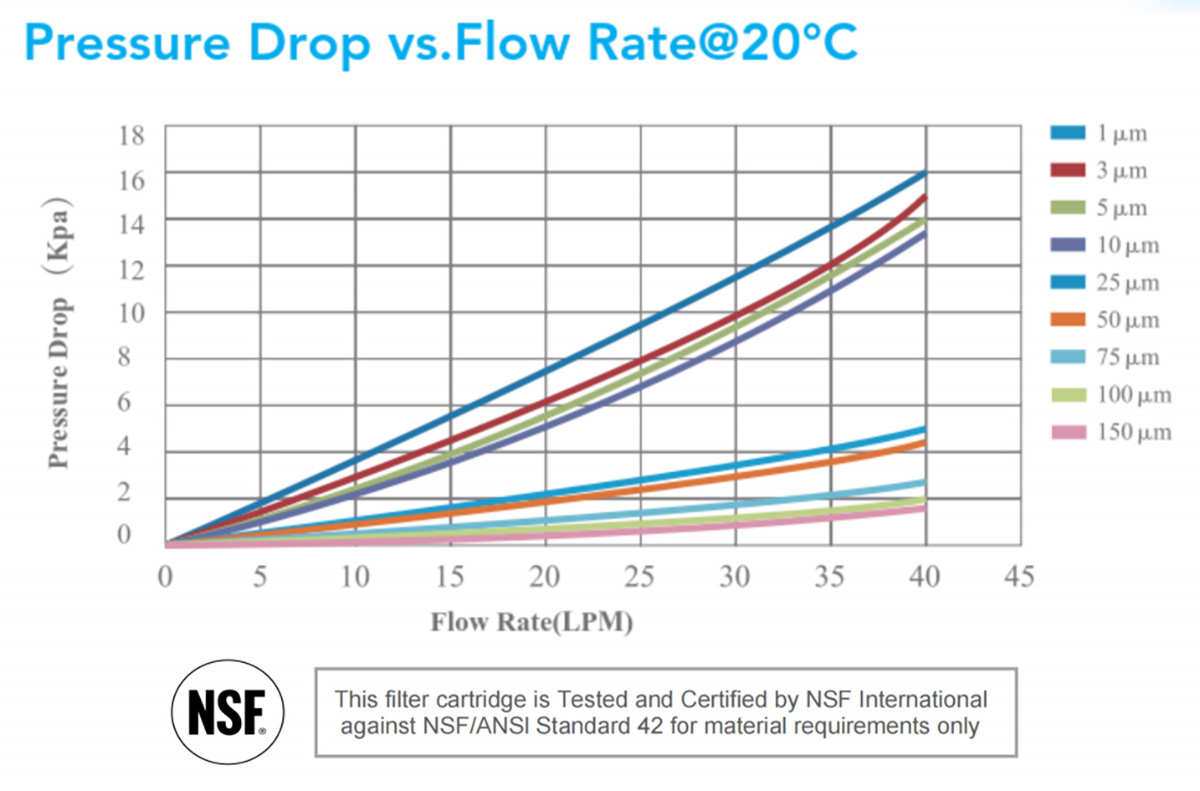
Selecting a melt-blown antibacterial filtration unit is not just about picking the tightest possible micron rating. Many operators assume a smaller pore size automatically guarantees cleaner water. They often face severe operational bottlenecks as a direct result. Choosing a rating heavily restricting flow rates quickly spikes your system pressure drop (Delta P). Conversely, picking a rating oversized for your application allows bio-foulants and harmful particulates to bypass your critical system defenses. This bypass creates dangerous downstream vulnerabilities.
To protect sensitive equipment and maintain strict water safety protocols, you need a highly balanced approach. You cannot afford to prematurely blind your filters. Operators must strategically match the specific micron rating to their distinct flow requirements and unique contaminant profile. A careful evaluation of these variables ensures optimal fluid dynamics. It guarantees sustained biological control across your entire infrastructure.
Filtration precision always competes against overall system flow. They operate on a strict inverse relationship. When you select a highly restrictive rating, your flow rate inherently drops. Smaller pores trap microscopic debris effectively. They also block fluid passage rapidly. This physical dynamic represents the core dilemma for process engineers. You must carefully balance purity requirements against required throughput.
An incorrectly sized micron filter cartridge heavily penalizes your physical infrastructure. It forces industrial pumps to work much harder to push fluid through dense media. Increased mechanical workload strains internal seals. It drastically shortens your routine maintenance lifecycle. High resistance causes excessive energy consumption. It leads to premature equipment fatigue.
You can offset some resistance through intelligent media design. A melt-blown cartridge filter uses a unique gradient depth structure. Manufacturers extrude molten polymer through fine nozzles. High-velocity air stretches these polymers into microscopic fibers. These fibers layer randomly over a central core. The outer layers remain relatively loose to catch large debris. The inner layers grow progressively tighter to trap fine silt. This tiered approach mitigates sudden pressure drops. However, even the best gradient structure cannot override a fundamentally poor micron selection.
The chart below illustrates this performance balance.
| Micron Rating | Relative Flow Resistance | Pump Workload Impact | Filtration Precision |
|---|---|---|---|
| 0.5-Micron | Extreme | Severe Strain | Maximum |
| 1-Micron | High | Heavy Strain | Very High |
| 5-Micron | Moderate | Manageable | Standard |
| 10-Micron | Low | Minimal Strain | Basic |
Not all ratings share the same testing standards. You must distinguish clearly between nominal and absolute classifications. Choosing the wrong classification leaves your fluid streams completely unprotected.
Nominal ratings capture roughly 85% to 90% of particles at the stated size. They work exceptionally well for general fluid clarification. They remove visible dirt, sand, and large rust flakes. They do not offer clinical-level guarantees. You should never rely on nominal ratings for strict biological control.
Absolute ratings undergo much stricter laboratory testing. They capture greater than 99.9% of particles at the target size. They form a reliable, physical barrier. You absolutely need them when pathogen interception stands as your primary engineering goal.
Bacterial sizing realities complicate facility management. Most common bacteria range from 0.2 to 2 microns in diameter. Pseudomonas and E. coli slip through standard industrial media easily. A properly rated melt-blown antibacterial filter cartridge uses active inorganic agents. Manufacturers embed silver ions or zinc compounds directly into the polymer matrix. These additives actively inhibit biofilm formation on the media surface. They disrupt the cellular walls of trapped microbes. However, chemical additives alone do not trap microbes from the moving fluid. Physical interception still requires tight, absolute ratings. The media stops the bacteria physically. The antibacterial agent then prevents them from colonizing the filter surface.
Let us compare the two most common industrial filtration sizes. You must align the specific pore size to your exact contaminant load. A mismatch here guarantees systemic failure.
These fine units excel at microscopic particulate removal. They serve as excellent reverse osmosis (RO) pre-treatment safeguards. RO membranes require extremely clean feed water to function properly. A 1-micron rating easily intercepts larger microbial cysts. It blocks fine colloidal matter effectively.
You achieve maximum surface protection against biofouling. Downstream membranes remain pristine and operational. You extend the operational periods between intensive chemical cleanings.
We must note a significant caveat. These units are highly susceptible to premature clogging. High loads of suspended solids will blind a 1-micron unit rapidly. They cannot handle heavy mud, coarse sand, or large biological masses. They require relatively clean incoming water to function optimally.
Use these robust units for general sediment removal. They handle municipal water filtration applications incredibly well. They act as a vital protective pre-filter for tighter downstream systems. They capture the bulk of incoming physical debris.
You get an excellent operational balance. They deliver sustained flow rates alongside basic particulate protection. They maintain stable system pressures for long durations. They resist immediate surface blinding.
They do carry a clear caveat. They will pass smaller organic matter. Microscopic bacteria will travel right through the media structure. You will require downstream UV irradiation systems or tighter secondary filtration for complete water sanitization.
The comparative table below highlights these functional differences.
| Rating Size | Primary Target Application | System Flow Rate Impact | Biofouling Risk Management |
|---|---|---|---|
| 1-Micron | RO pre-treatment, microbial cysts | High Restriction | Excellent downstream protection |
| 5-Micron | General sediment, municipal utility | Moderate Restriction | Requires secondary UV treatment |
Procurement teams must look closely beyond simple pore sizes. You need to evaluate the physical and chemical attributes of the cartridge carefully. Industry standards dictate several mandatory checks.
First, verify material compliance and chemical additives. Check the specific antibacterial agent used during the manufacturing extrusion process. Silver-based or zinc-based additives must remain completely non-leaching. They should hold proper FDA or NSF compliance for safe human contact. NSF/ANSI Standard 42 and 61 certifications demonstrate verified safety. You must also ensure these chemical additives match your specific fluid compatibility needs. Aggressive solvents or extreme pH levels may degrade certain active agents.
Next, evaluate the structural core integrity. Core strength matters immensely during sudden operational spikes. Melt-blown filters lacking a reinforced inner core face severe physical risks. They may easily collapse or warp under high pressure drops. This structural failure happens rapidly if your micron rating proves too restrictive for your system dynamics. A collapsed filter allows completely unfiltered fluid to bypass the media.
Finally, map specific product features to concrete facility outcomes.
Facility operators routinely fall victim to the single-filter fallacy. Relying on one fine-micron filter to do everything rarely works. You cannot ask a single unit to handle heavy incoming sediment and rigorous bacterial control simultaneously. This unrealistic expectation usually results in rapid filter failure. The unit simply chokes on the coarse debris before it can intercept the microscopic threats.
Successful industrial facilities rely on multi-stage system design. Best engineering practice involves strategic serial staging. You divide the physical labor across multiple housings.
The first unit acts as a physical shield. It allows the final filter to focus purely on microscopic biological threats. This multi-stage approach extends overall lifecycle durations significantly.
Rigorous monitoring governs your staging success. Establish a clear baseline for clean pressure drop on day one. Track this metric closely across shifts. Replace the filter when the differential pressure (Delta P) reaches the manufacturer's maximum recommended threshold. This critical threshold typically sits between 1.5 and 2.5 bar. Do not wait for fluid flow to stop entirely before acting. Delayed maintenance damages pumps and compromises liquid purity.
You need a structured, logical approach to finalize your purchase order. Guessing sizes leads to inefficient operations. Follow these logical steps to isolate the exactly correct specification for your plant.
You should take one final actionable step before finalizing the order. Always request detailed specification sheets from the filter manufacturer. Ask specifically to see the efficiency curve of the targeted micron rating. You need to verify its performance under varying flow conditions before committing to a bulk inventory purchase. A reputable manufacturer will readily supply laboratory testing data demonstrating absolute retention capabilities.
Selecting the right micron rating remains a precise, critical engineering decision. You must carefully balance incoming particulate load, dynamic flow mechanics, and available maintenance intervals. A misguided guess compromises both water quality and overall system longevity. We highly recommend you avoid over-specifying filtration precision blindly. Do not chase the smallest possible micron size unless your system architecture is purposefully designed to handle the associated pressure drops. Smaller is not universally better.
Ensure you apply multi-stage filtration to protect fine media from rapid blinding. To ensure absolute operational reliability, consult directly with a filtration engineer. Ask them to audit your current pressure drop profiles thoroughly. You should then test a sample melt-blown cartridge directly in your live operational environment. Monitor its physical performance before standardizing your procurement protocols.
A: No. Most bacteria range from 0.2 to 2 microns in diameter. A 5-micron filter traps larger particles effectively. Its antibacterial properties prevent biofilm growth on the filter itself. It does not physically purify water of microscopic bacteria. You need absolute-rated sub-micron filters or secondary UV purification to achieve sterile drinking water safely.
A: Melt-blown filters offer superior depth filtration utilizing a multi-layered gradient. The outer layers are loose, while inner layers are tight. This structure generally holds much more dirt. It resists chemical breakdown much better than traditional string-wound alternatives under heavy pressure.
A: Lifespan is strictly dictated by total suspended solids (TSS) in your source water and the resulting pressure drop. It is not necessarily dictated by calendar time. You should replace it when Delta P exceeds operational limits, even if the antibacterial agent remains highly active.
A: Absolute is required for strict, predictable biological control in critical sectors like medical or food and beverage. Nominal is often sufficient for closed-loop cooling systems or general industrial pre-filtration where the primary goal is simply preventing systemic system fouling.

