
English 
T: +86-17717097520
E: sales1@melko2015.com
E: sales1@melko2015.com
No.222 Xiangche Rd. Chedun Town Songjiang Dist. Shanghai China 201611


Views: 0 Author: Site Editor Publish Time: 2026-06-29 Origin: Site


Industrial chemical filtration carries exceptionally high stakes. Process integrity, operator safety, and batch purity depend entirely on reliable filtration media. Choosing the right filtration system requires balancing chemical compatibility, temperature limits, and operational efficiency accurately. Single-use solutions successfully mitigate dangerous cross-contamination risks across multiple industries. However, they demand highly precise specifications. Incorrect media selection often triggers catastrophic filter bypass or rapid material degradation. This leaves your operators exposed and your product ruined.
Our goal is to provide a comprehensive technical evaluation framework. You will learn how to shortlist options effectively. We guide you through selecting single-use PE filter bags for acidic environments. We cover material constraints, seam integrity, and strict safety protocols. By applying these principles, you secure optimal chemical processes and protect your facility from costly downtime.
Industrial environments punish poorly selected equipment. We must frame the business problem clearly. Using incorrect media guarantees massive financial losses. Rapid filter degradation happens when acids attack incompatible fibers. The material physically breaks down inside the housing. It releases synthetic fibers directly into your clean product. This downstream contamination ruins entire production batches quickly. Furthermore, acidic bypass causes severe equipment corrosion. Unfiltered aggressive chemicals pit stainless steel housings permanently. You also face soaring maintenance costs. Frequent change-out labor drains your operational budget. Unplanned downtime destroys your production schedules.
Why do single-use models out-compete reusable systems here? Reusable filters require intense cleaning cycles. Operators must wash down acid-soaked elements manually. This exposes them to dangerous chemical fumes. It also creates large volumes of hazardous wastewater. Single-use models eliminate these dangerous wash-down protocols entirely. You simply remove and dispose of them safely. Multi-product facilities gain another massive advantage. Reusable filters often trap trace chemicals permanently. Disposable models eradicate cross-contamination risks entirely. You start every batch with pristine media. This ensures highly predictable maintenance schedules.
We must define clear success criteria. A successful implementation looks remarkably boring. You see highly stable differential pressure across the housing. The system exhibits absolute zero liquid bypass. No unfiltered slurry ever escapes downstream. The filter media demonstrates zero material shedding under high flow. Finally, disposal processes remain safe and fully compliant.
You must evaluate seam construction rigorously. The debate between welded and sewn seams ends here. We advocate strictly for fully welded seams in acidic applications. Sewn seams create thousands of tiny needle holes. These perforations allow dangerous acid bypass immediately. Sewing also introduces foreign thread materials into the process. These threads often lack proper chemical compatibility. They dissolve rapidly when exposed to harsh acids. Welded seams fuse the filter media completely. They create a solid, continuous barrier. This ensures a uniform chemical resistance profile across the entire unit.
Ring and flange selection determines your seal integrity. Evaluate collar materials before finalizing any purchase. Avoid galvanized steel rings entirely. Carbon steel rings corrode almost immediately in acidic baths. Corrosion ruins the seal and contaminates the fluid. Instead, specify chemically inert plastic flanges. Molded polypropylene collars create an excellent seal. Polyethylene rings also perform exceptionally well here. They expand slightly under pressure. This forms a positive, leak-proof seal against your filter housing.
Micron rating controls your flow dynamics heavily. Standard retention ratings span from 1 to 200 microns. You must match this rating carefully. Evaluate the dynamic viscosity of your chemical slurry first. Thick slurries blind tight pores extremely fast. High flow rates demand higher micron ratings generally. Balance your retention needs against fluid velocity. This precise matching prevents premature filter blinding.
Follow these standard evaluation steps to ensure success:
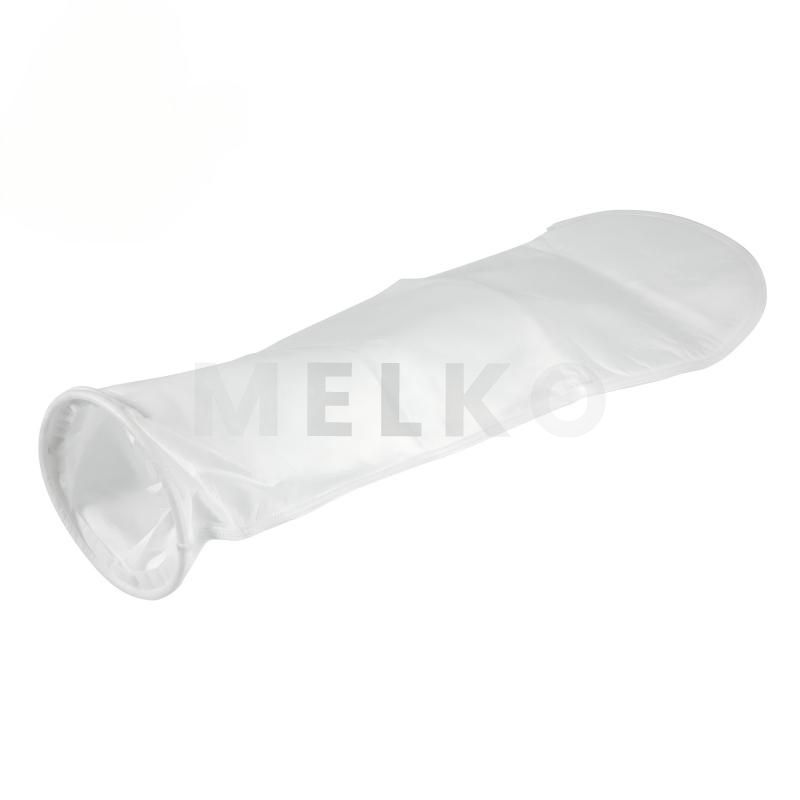
Polyester (PE) offers a highly specific chemical resistance profile. We rely heavily on it for targeted industrial tasks. It resists weak to moderate acids brilliantly. Organic solvents rarely damage PE fibers during operation. It also withstands elevated operating temperatures highly effectively. The material functions safely up to 300°F (150°C). This impressive thermal stability proves invaluable during hot solvent filtration. It maintains structural integrity when other plastics warp or melt.
We must outline clear boundary conditions. Trustworthy engineers state transparent assumptions openly. PE does fail under certain extreme conditions. Highly concentrated strong acids destroy it completely. For example, 98% sulfuric acid melts polyester almost instantly. Strong alkalis also cause rapid chemical degradation. They break down the ester bonds through a process called hydrolysis. You must specify alternative materials in these extreme environments. Polypropylene (PP) handles strong broad-spectrum alkalis much better. PTFE resists extreme acid concentrations flawlessly. PE filter bags excel only within their specific operational window.
Consider the temperature versus concentration matrix carefully. Chemical aggressiveness increases sharply as temperatures rise. You cannot evaluate these two variables in isolation. Engineers must analyze them simultaneously for accurate results. A 10% acid solution might seem perfectly safe initially. At room temperature, it causes absolutely no damage. However, near boiling points, it becomes highly corrosive. The thermal energy accelerates the chemical attack on the fibers. Always map your exact process conditions accurately before deploying any filter.
| Filter Material | Resistance to Weak Acids | Resistance to Strong Acids | Maximum Operating Temperature (°F) |
|---|---|---|---|
| Polyester (PE) | Excellent | Poor | 300 |
| Polypropylene (PP) | Excellent | Good | 200 |
| PTFE (Teflon) | Excellent | Excellent | 500 |
Preventing liquid bypass requires strict mechanical compatibility. Housing compatibility dictates your overall success rate. Even premium chemical filtration bags fail if improperly sized. They must fit the internal support basket perfectly. A loose fit guarantees catastrophic liquid bypass. The bag stretches unnaturally and tears under flow pressure. Conversely, an oversized bag bunches up at the bottom. This bunching creates stress points that eventually rupture. Always verify your exact internal housing dimensions beforehand.
Change-out considerations dictate critical operator safety protocols. Handling used filters presents severe biological and chemical hazards. Saturated bags require extreme caution during removal. You must monitor differential pressure (dP) continuously during operation. This metric dictates safe change-out intervals perfectly. Never allow the bag to reach its rupture point. Ruptures release toxic fluids uncontrollably into the environment. Standard industry practice suggests changing bags before reaching 15 psi dP. Operators must wear full personal protective equipment (PPE). This includes chemical suits, respirators, and heavy-duty face shields.
Disposal compliance requires careful proactive planning. Saturated single-use plastics pose severe environmental hazards. We must observe EPA and OSHA guidelines strictly. Disposing of acid-soaked materials involves rigid hazardous waste rules. You cannot throw them into standard municipal dumpsters. Some facilities utilize permitted chemical incineration safely. Others require specialized hazardous waste landfills for compliance. Establish your exact disposal route before purchasing new media.
Shortlist your manufacturing partners carefully. Quality control ensures crucial batch consistency. Seek vendors holding active ISO 9001 certifications. They must provide easily traceable lot numbers for every shipment. This traceability ensures highly uniform pore sizing across batches. Inconsistent pores ruin downstream chemical purity unpredictably. You need reliable performance from every single unit. Strict quality control prevents unexpected process variations.
Evaluate customization capabilities thoroughly during selection. Standard sizes sometimes fail complex legacy systems. Partner with vendors offering custom length manufacturing capabilities. You might need highly specific flange types for proprietary housings. Multi-layered designs offer advanced graded density filtration. This design traps large particles outside and fine particles inside. It extends overall filter life significantly. A flexible vendor adapts to your unique architectural requirements.
Assess supply chain reliability very closely. Continuous chemical processing demands steady, uninterrupted inventory flow. Evaluate vendor lead times rigorously before signing contracts. Ask detailed questions about their inventory management programs. A sudden stock-out halts your entire production line immediately. Reliable shipping logistics matter just as much as technical specifications. Choose partners who guarantee safety stock for critical consumables.
Specifying these filters represents a strategic risk-management decision. It relies entirely on exact chemical and temperature matching. A precise fit eliminates catastrophic bypass events entirely. Strict adherence to safety protocols protects your most valuable assets. Your operators depend on your rigorous selection process.
A: Polyethylene (PE) generally handles higher heat, operating safely near 300°F. It excels in combinations involving weak acids and organic solvents. Polypropylene (PP) provides better broad-spectrum resistance to strong acids and strong bases. However, PP typically maxes out around 200°F. You must choose based on your specific temperature and acid concentration matrix.
A: Yes, they can. However, the filter housing itself takes the actual pressure. The bag relies entirely on a properly fitting internal support basket. If the basket fits poorly, the bag will rupture under flow. Always monitor differential pressure closely. Standard best practices recommend changing the bag before reaching 15 psi differential pressure.
A: Reputable manufacturers routinely custom-fabricate single-use filters. They can match non-standard or proprietary industrial housing dimensions perfectly. Custom lengths and specialized plastic flanges ensure a proper seal. This prevents costly liquid bypass. Always provide exact internal basket dimensions to your vendor when requesting a custom fabrication quote.

