
English 
T: +86-17717097520
E: sales1@melko2015.com
E: sales1@melko2015.com
No.222 Xiangche Rd. Chedun Town Songjiang Dist. Shanghai China 201611


Views: 0 Author: Site Editor Publish Time: 2026-07-05 Origin: Site


Choosing between a bag filter and a cartridge system is rarely a simple preference. It represents a critical engineering decision directly tied to facility uptime. It affects maintenance budgets and dictates your regulatory compliance. Selecting the wrong filtration media often leads to premature blinding. You might experience excessive pressure drops or bloated operational expenditures. Industrial operations demand continuous processing without unexpected shutdowns. An optimal choice requires aligning baseline process data carefully. You must evaluate particulate load, moisture levels, and space constraints. Flow rates must match the specific physical mechanisms of each media type. Failing to align these factors causes rapid equipment deterioration. This guide provides an objective, evaluation-stage framework. It helps plant managers determine the exact filtration profile their operation demands. Engineers can use these insights to streamline system performance effectively.
Engineers must grasp the fundamental physics of their equipment. You cannot select media based purely on dimensional fit. Two distinct physical processes govern industrial particle separation. Understanding these mechanisms ensures you deploy the right technology for your specific contaminants.
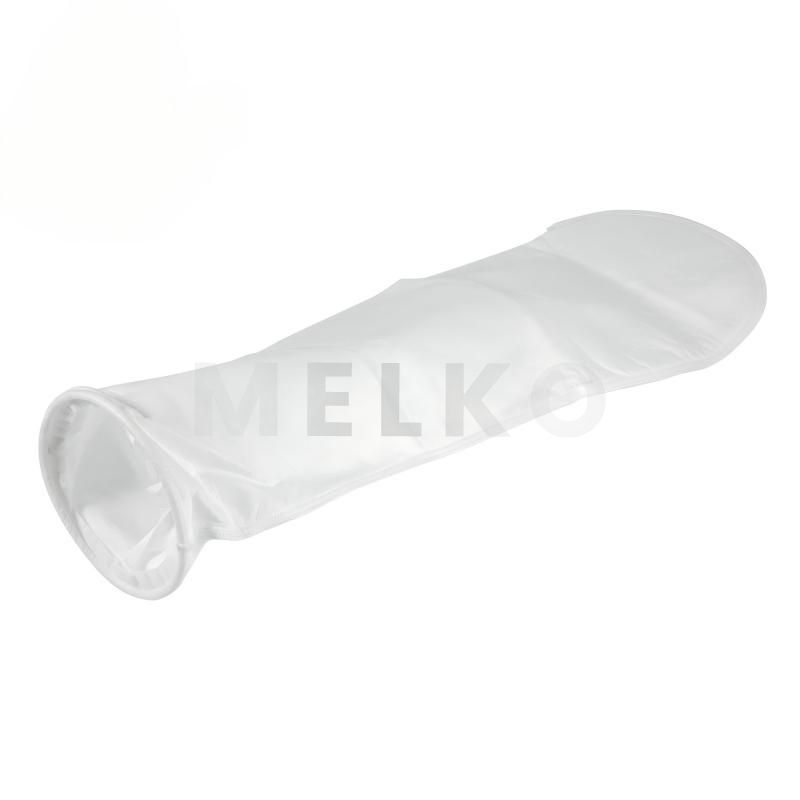
This design functions primarily by allowing fluid or air to pass through woven or felted media. The fabric traps larger particles initially. It quickly builds a "dust cake" or particulate layer on the surface. This layer actually enhances filtration efficiency over time. The cake itself becomes the primary filter medium. It blocks increasingly finer particles as it thickens. They are highly resilient components. You can subject them to abrasive materials. They handle variable particle sizes effortlessly. Heavy particulate loading does not cause immediate failure.
This approach utilizes tightly pleated media. Manufacturers typically use synthetic fabrics or cellulose blends. The design captures particles strictly on the exterior surface. Contaminants do not penetrate the media depth. A filter cartridge maximizes surface area within a minimal physical footprint. The deep pleats pack enormous square footage into a compact cylinder. Engineers design them for high initial efficiency. They deliver precise sub-micron particulate capture immediately upon installation.
Your specific process variables dictate media survival. You must analyze the airstream or fluid stream meticulously. Overlooking a single variable often causes catastrophic system failure.
High bulk loading requires durable media. Larger, mixed particulates favor an industrial bag filter due to its ruggedness. Heavy dust loads build stable cakes on these fabrics. They carry a significantly lower risk of rapid clogging. Cement manufacturing and wood processing facilities generate enormous bulk dust volumes. These applications rely heavily on depth filtration. Conversely, sub-micron dust demands extreme precision. Fine or highly regulated particulates require the tight micro-structure of a pleated element. You should deploy them when capturing welding fumes, fine pharmaceutical powders, or chemical dust.
Process heat often eliminates certain materials immediately. Bag media offers a wider array of specialized fabrics. You can specify PTFE, aramid, or fiberglass. These withstand extreme temperatures effortlessly. They navigate corrosive chemical environments safely. Cartridge media has strict temperature limitations. High-heat applications degrade standard adhesives. They often require specialized potting compounds to maintain structural integrity. These high-temp upgrades become quite costly. You must consult chemical compatibility charts before finalizing any material selection.
You must evaluate the risk of "blinding" constantly. Moisture and oils easily bind pleated materials. The narrow pleat spacing traps damp dust permanently. This renders them ineffective and nearly impossible to clean. Bags generally handle moisture much better. The flexing action during cleaning helps dislodge sticky materials. You can treat them utilizing specific hydrophobic or oleophobic coatings. This ensures continuous operation in challenging environments. Hygroscopic dust absorbs ambient humidity rapidly. It requires flexible media to break apart agglomerated chunks during pulse cleaning.
Media Capability and Process Chart
| Process Variable | Depth Filtration Media | Pleated Surface Media |
|---|---|---|
| Particulate Size | Coarse to fine mixed particles | Sub-micron and fine particles |
| Moisture Tolerance | High (especially treated fabrics) | Low (high risk of blinding) |
| Temperature Limits | Very High (up to 500°F+ via fiberglass) | Moderate (requires costly upgrades for high heat) |
| Bulk Dust Loading | Excellent capability | Poor capability (rapid clogging) |
Facility managers must look beyond the initial purchase order. True economic evaluation requires a multi-year perspective. You must weigh upfront investments against long-term maintenance burdens.
Housing units for tubular fabrics are typically less expensive. You can purchase and install them for a lower initial outlay. The manufacturing process for simple felt media remains highly economical. Pleated systems require higher upfront investment. Complex media manufacturing drives up base costs. They also demand specialized housing designs. The rigid internal structures require precise engineering. Facilities with tight initial capital budgets often lean toward traditional depth filtration setups.
You should assess replacement frequency rigorously. Cheaper tubular elements replaced weekly may cost more annually. A higher-priced pleated element replaced bi-annually often yields better savings. Labor costs impact the budget heavily. Pleated units generally offer faster changeouts. The maintenance process remains much cleaner. Tubular element replacement can be highly labor-intensive. It consumes valuable technician hours. You must calculate the hourly burden rate of your maintenance crew when comparing these options.
Calculate the exact cost of fan or pump energy. Airflow encounters resistance when passing through dirty media. We measure this resistance as differential pressure. A rapidly clogging filter increases differential pressure aggressively. The system must work harder to push air or liquid. A high differential pressure forces the variable frequency drive to ramp up the fan speed. This consumes massive amounts of electricity. The correct filter type stabilizes pressure drops over a longer cycle. It prevents unexpected energy spikes.
Even perfect media fails if it does not fit your plant. Physical dimensions and safety protocols dictate the final installation. You cannot ignore your facility footprint.
Pleated elements allow for a substantially smaller housing design. They deliver exceptionally high media-to-space ratios. This characteristic proves crucial for crowded plant floors. A typical facility expansion often faces strict space limits. When engineers upgrade older plants, they cannot always build new concrete pads. You can fit immense filtration capacity into tight corners using pleated units. Industrial depth systems require massive volumes. Large vessels demand significant vertical clearance. They require long internal cages. They consume much larger physical footprints.
You must evaluate employee exposure during routine changeouts. Pleated systems often allow for external, tool-free extraction. Technicians pull them out without entering the dirty air plenum. This reduces worker exposure to hazardous particulates or toxic chemicals. Depth media replacements may require confined space entry permits. Workers often face closer contact with captured hazardous material. Enhancing operator safety lowers your facility liability profile.
Converting an older housing to a pleated system is not plug-and-play. You cannot simply install new elements and start the fan. It requires re-engineering flow velocities completely. You must adjust pulse-cleaning mechanics. The compressed air volume needed to clean a pleat differs from a tubular fabric. Evaluating structural housing compatibility remains absolutely essential. Air-to-cloth ratios shift dramatically during retrofits. Ignoring these fluid dynamics guarantees rapid system failure.
Regulators demand verifiable performance metrics. Your equipment must guarantee safe outputs consistently. Industry standards protect both workers and the environment.
Air purification systems face stringent rules. Meeting strict OSHA combustible dust standards dictates your efficiency requirements. You must follow NFPA guidelines closely to prevent industrial explosions. EPA emission limits often force a move to high-efficiency pleated units. Sometimes, you must utilize membrane-laminated fabrics to achieve acceptable discharge levels. Liquid filtration faces comparable scrutiny. Municipal discharge regulations demand verifiable micron ratings. Strict manufacturing quality controls in food, beverage, or pharmaceuticals necessitate absolute compliance. FDA Title 21 mandates specific material approvals for liquid contact.
Documenting performance under continuous load is non-negotiable. Relying on pleated media in an inappropriate, high-moisture environment introduces extreme risk. It can lead to sudden compliance failures. Moisture causes media rupture over time. Bypass events release untreated contaminants directly into the environment. You must assure reliability through proper application matching. Facility audits will uncover inappropriate media selections quickly. Preventative compliance prevents costly regulatory fines.
Use this systematic approach to finalize your media selection. Do not rely on guesswork or historical habit.
A: Yes, but it requires substantial engineering. You must modify the tube sheet to accommodate different element collars. You also need to recalculate air-to-cloth ratios and adjust the pulse-cleaning mechanisms. Failing to assess changes in flow dynamics often leads to rapid media blinding and system failure.
A: Depth media generally outperforms pleated elements in damp conditions. Treated fabrics resist moisture and flex significantly during pulse cleaning. This flexing breaks apart agglomerated, sticky dust. Pleated elements have tight spacing that traps damp particles, increasing blinding risks and making them nearly impossible to clean.
A: Generally, pleated elements excel at out-of-the-box surface filtration for fine particles. However, they are not the only solution. You can achieve comparable sub-micron efficiencies in harsher, high-temp environments by utilizing ePTFE membrane-laminated tubular fabrics. The membrane provides high-efficiency surface capture on a rugged depth framework.
A: You must calculate lifecycle expenses, not just unit price. Use this formula: (Cost of Media + Maintenance Labor Hours + Hazardous Disposal Fees + Energy cost from pressure drop) multiplied by your Annual Replacement Frequency. This reveals the true financial impact over a standard operating year.

