
English 
T: +86-17717097520
E: sales1@melko2015.com
E: sales1@melko2015.com
No.222 Xiangche Rd. Chedun Town Songjiang Dist. Shanghai China 201611


Views: 0 Author: Site Editor Publish Time: 2026-09-08 Origin: Site


Specifying the wrong liquid filtration material leads to severe operational consequences on the plant floor. You might face unexpected pressure drops, catastrophic bag failure, or product contamination from fiber migration. Engineers and facility managers constantly balance chemical compatibility, thermal limits, and micron precision when standardizing filtration systems. This evaluation frequently forces a direct choice between polypropylene and polyester materials.
Relying on default vendor recommendations often results in suboptimal performance and frequent maintenance stops. Selecting the optimal filtration media requires a rigorous evaluation of fluid dynamics, the operating environment, housing compatibility, and regulatory requirements. Understanding the structural and chemical differences between these polymers ensures continuous production and prevents sudden system downtime. We will break down exactly how to match the right polymer to your specific fluid stream.
Thermal Limits Dictate the Baseline: Polypropylene (PP) is restricted to lower temperature applications (typically up to 200°F/93°C), whereas Polyester (PE) handles higher thermal loads (up to 300°F/149°C).
Chemical Compatibility is Non-Negotiable: PP excels in broad chemical resistance, particularly against strong acids and alkalis, while PE is highly vulnerable to alkaline degradation but performs well with most oxidizing agents and solvents.
Surface Treatment Matters: Glazed finishes on PP and singed finishes on PE are critical manufacturing steps required to eliminate fiber shedding in high-purity applications.
Depth vs. Surface Filtration: Felt media (used in standard PP and PE bags) provides depth filtration for capturing irregular or gelatinous particles, whereas mesh media provides surface filtration for precise top-of-funnel sizing.
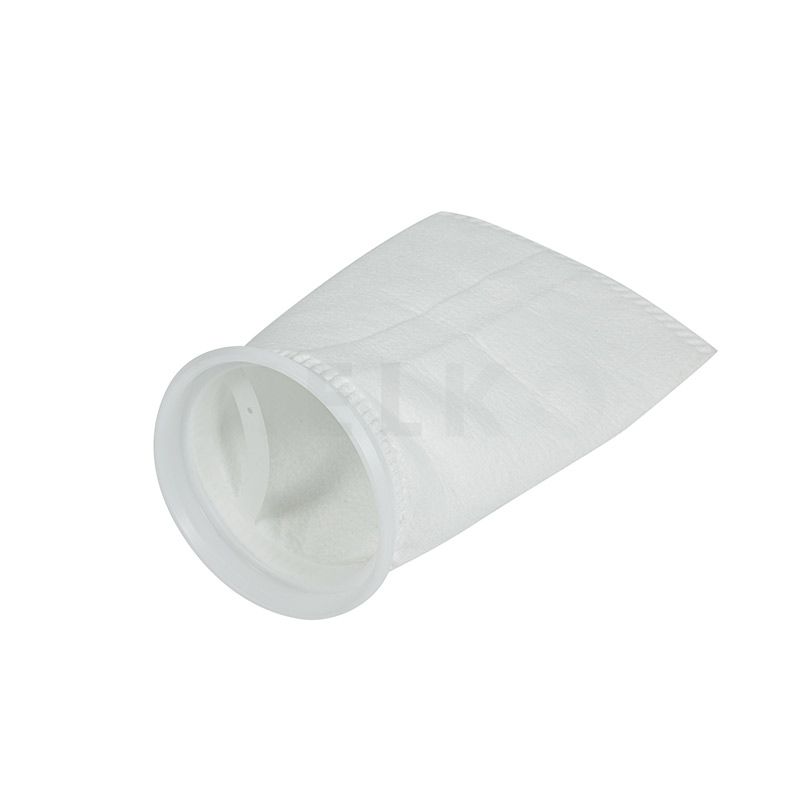
Needle-punched polypropylene felt serves as the foundation for many industrial filtration systems. This material exhibits a naturally hydrophobic profile. It repels water initially but allows hydrocarbons, aqueous solutions, and other fluids to pass efficiently once wetted and under pressure. A standard pp bag filter provides high dirt-holding capacity and broad chemical inertness. You will find this material highly versatile across multiple processing environments, from municipal water treatment to aggressive chemical batching.
The depth filtration mechanism relies on a tortuous path created by entangled polymer fibers. As fluid passes through the needle-punched felt, gelatinous and solid contaminants become trapped throughout the entire depth of the media wall. This contrasts sharply with surface-filtration meshes. Mesh materials only capture particles on a single two-dimensional plane and blind much faster when processing deformable particulates like algae or soft polymers.
Surface treatments maintain filtrate purity. Manufacturers apply a glazed finish to the exterior of the bag. Melting the outermost fibers locks them into place, preventing media migration into the downstream fluid. Without this glazing process, stray polypropylene fibers detach under high flow rates and contaminate the final product. When you run your hand over a properly glazed bag, it feels smooth and slightly stiff compared to the raw felt interior.
Standard micron ratings for these filters typically range from 1 to 200 microns. The depth-filtration structure captures a wide spectrum of particle sizes simultaneously. Finer micron ratings utilize denser fiber matrices. This increases the initial differential pressure but provides exceptional precision for critical clarification stages before fluid hits expensive reverse osmosis membranes or final packaging lines.
Polyester felt offers distinct mechanical and physical properties that solve problems polypropylene cannot handle. It possesses a higher specific gravity than polypropylene and exhibits hydrophilic tendencies. This allows polyester to wet out easily in aqueous solutions without requiring high initial pump pressure. The mechanical strength of polyester media ensures it maintains structural integrity even when subjected to demanding operational stresses and high flow velocities.
Thermal and mechanical advantages define the primary use cases for Single-Use PE Filter Bags. Polyester delivers superior tensile strength. It prevents the media from stretching, ballooning, or tearing under high differential pressures. It also withstands significantly elevated temperatures. Polyester maintains its filtration efficiency in hot environments that would melt or severely deform standard polypropylene.
Instead of glazing, polyester bags undergo a singeing process. Passing the media over an open flame burns off loose surface fibers. This treatment locks the remaining fibers securely into the felt matrix. Singeing achieves a clean downstream fluid profile without compromising the overall permeability or flow characteristics of the bag. The singed surface looks slightly textured but sheds zero loose fibers during operation.
Engineers must distinguish between polyester felt and polyester mesh. Specify polyester felt for depth filtration when dealing with heavy particulate loads or gelatinous substances. Specify polyester mesh for precise, cleanable surface-filtration applications. Mesh works best when capturing rigid, oversized particles like pipe scale or unmixed powders where you want to wash and reuse the screen temporarily.
Chemical environments dictate material selection before you consider any other variable. Polypropylene delivers superior resistance to strong alkalis and acids. Polyester is highly susceptible to hydrolytic degradation and swelling when exposed to alkaline solutions. Placing a polyester bag in a high-pH environment, such as a sodium hydroxide wash line, leads to rapid fiber breakdown. The bag will literally dissolve, causing catastrophic failure and massive downstream contamination.
Chemical Environment | Polypropylene (PP) | Polyester (PE) |
|---|---|---|
Strong Acids (e.g., Hydrochloric) | Excellent | Good |
Strong Alkalis (e.g., Caustic Soda) | Excellent | Poor (Degrades rapidly) |
Organic Solvents | Good | Excellent |
Hydrocarbons & Oils | Good | Excellent |
Oxidizing Agents | Poor | Good |
When filtering organic solvents, oils, and petrochemicals, polyester provides an operational edge. Its structural stability in the presence of aggressive solvents prevents media swelling. Swollen fibers choke off the flow path, leading to premature blinding. Polyester ensures consistent flow rates and reliable particle retention in solvent-heavy applications.
Operating temperature thresholds strictly divide the application ranges for these materials. Polypropylene operates safely up to a maximum continuous temperature of approximately 200°F (93°C). Pushing PP beyond this limit causes the fibers to soften and stretch. Polyester extends this operational window significantly. It handles continuous fluid temperatures up to 300°F (149°C) without losing tensile strength.
Pushing a polymer past its thermal limit introduces severe degradation risks. Physical symptoms of thermal failure include media blinding, where melted fibers fuse together and block flow entirely. Stretching and catastrophic rupture follow shortly after. A ruptured bag releases all captured contaminants directly into the downstream process, ruining the batch and potentially damaging sensitive downstream equipment.
Fluid viscosity heavily impacts the initial pressure drop across the filtration media. Highly viscous fluids like resins, syrups, or heavy oils require materials that withstand increased resistance without deforming. PP Bag Filters handle moderate viscosities well, provided you size the housing correctly to distribute the flow evenly across the media surface.
Optimizing flow rates requires balancing the fluid's viscosity with the media's micron rating and total surface area. Forcing thick fluids through a tight 1-micron rating at high velocities guarantees premature blinding. Upsizing the filter housing or selecting a coarser initial micron rating helps maintain optimal flow rates. You must monitor the differential pressure gauge closely when processing viscous fluids to catch blinding before the bag bursts.
Standard industry trade sizes dictate flow capacity and system design. Matching the correct standard size to your process volume prevents bottlenecks and excessive change-outs.
Industry Size | Dimensions (Diameter x Length) | Surface Area (sq. ft.) | Typical Max Flow Rate (GPM) |
|---|---|---|---|
Size #1 | 7.06" x 16.5" | 2.0 | 90 |
Size #2 | 7.06" x 32.0" | 4.4 | 180 |
Size #3 | 4.12" x 8.0" | 0.5 | 25 |
Size #4 | 4.12" x 14.0" | 1.0 | 50 |
Filtration system design directly influences the mechanical stress placed on the bag. Multi-bag vessels processing high volumes exert significant force on the filter bag seams and collar rings. Ensuring perfect alignment between the bag collar and the vessel seat prevents fluid bypass under high system pressure. A misaligned bag allows dirty fluid to slip past the seal, rendering the entire filtration effort useless.
Regulatory compliance drives material selection in the food and beverage sector. Materials in direct contact with consumables must meet strict FDA and EC requirements. Polypropylene is frequently preferred for cold-process beverages, syrups, and edible oils. It offers a zero-toxicity profile and a reliable glazed finish that prevents fiber shedding into the final product. Operators use size #2 PP bags extensively in bottling plants to catch fine particulates before final sterilization.
Aggressive fluid handling requires precise material matching. High pH levels immediately disqualify polyester. Facilities processing caustic cleaners or alkaline neutralizers rely entirely on polypropylene. Conversely, applications involving high-temperature resins, industrial coatings, and aggressive solvents mandate the use of polyester. Polyester prevents thermal melting and solvent-induced swelling, keeping the batch flowing smoothly through the reactor lines.
In reverse osmosis (RO) pre-filtration, capturing suspended solids efficiently extends the service life of expensive downstream membrane filters. Polypropylene provides an excellent barrier against biological and organic fouling in municipal and industrial wastewater. It offers reliable depth filtration that captures irregular organic loads without blinding prematurely. Plant operators typically stage 50-micron PP bags ahead of 5-micron cartridge filters to optimize the dirt-holding capacity of the entire skid.
Preventing bypass is the most critical factor in filtration system assembly. If fluid bypasses the media, the entire filtration effort fails. Collar and ring designs must seal perfectly with the housing seat. Molded plastic flanges, Sentinel-style seals, and traditional carbon steel or stainless steel snap bands offer different sealing mechanisms. Plastic flanges typically provide the most reliable, bypass-free seal by expanding under pressure and locking into the housing groove.
Legacy, proprietary, or non-standard filter vessels often require custom configurations. Retrofitting these systems involves selecting custom-tailored dimensions or utilizing adapter baskets to accommodate standard bag sizes. Attempting to force a standard bag into a non-standard housing guarantees sealing failures and ruptured seams. Always measure the internal basket dimensions before ordering replacement media.
Managing pressure drop spikes prevents catastrophic blowouts. Facilities must establish strict change-out protocols based on differential pressure readings. Monitoring gauges across the filter housing allows operators to replace the bag material well before it reaches its burst pressure limit. Follow these steps to mitigate pressure risks:
Install differential pressure (Delta P) gauges on the inlet and outlet of every filter housing.
Establish a maximum Delta P threshold (typically 15-20 PSI) for mandatory bag change-outs.
Train operators to bleed air from the housing vent valve during startup to prevent pressure hammers.
Inspect the internal support basket during every change-out for sharp edges or deformed wire mesh that could puncture the new bag.
Use a bag hold-down device or displacement balloon to keep the bag seated firmly during flow surges.
Audit your current filtration logs to identify patterns of premature bag failure or unexpected pressure drops.
Cross-reference all process fluids against a comprehensive chemical compatibility chart before ordering replacement media.
Install differential pressure gauges on all filter housings to establish data-driven change-out schedules.
Consult with a filtration engineer to conduct a pilot test when introducing new fluid streams or altering process temperatures.
A: Polypropylene (PP) filter bags have a maximum continuous operating temperature of approximately 200°F (93°C). Exceeding this thermal limit causes the polymer fibers to soften, stretch, and eventually melt, leading to immediate blinding and catastrophic rupture of the filtration media.
A: Yes. Polyester (PE) filter bags withstand significantly higher thermal loads than polypropylene. They operate continuously in fluid temperatures up to 300°F (149°C) without losing tensile strength or structural integrity, making them ideal for hot resins and high-temperature chemical processing.
A: Manufacturers prevent fiber migration by applying a glazed finish to the exterior surface of the polypropylene felt. This process uses heat to melt and fuse the outermost fibers together, locking them in place so they cannot detach and contaminate the downstream filtrate.
A: Yes. Polypropylene exhibits excellent chemical resistance to strong alkalis and high-pH solutions. Unlike polyester, which degrades and breaks down rapidly in alkaline environments, polypropylene maintains its structural integrity and filtration efficiency when processing harsh basic chemicals.
A: Glazing involves melting the outer fibers of polypropylene bags to create a smooth, fused surface that prevents fiber shedding. Singeing involves passing polyester bags over an open flame to burn off loose surface fibers, locking the remaining matrix without reducing the material's permeability.
A: Choose felt media for depth filtration when you need to capture a high volume of irregular, deformable, or gelatinous particles throughout the material's thickness. Choose mesh media for surface filtration when you need precise, absolute retention of rigid particles at a specific micron size.


