
English 
T: +86-17717097520
E: sales1@melko2015.com
E: sales1@melko2015.com
No.222 Xiangche Rd. Chedun Town Songjiang Dist. Shanghai China 201611


Views: 0 Author: Site Editor Publish Time: 2026-09-09 Origin: Site


In industrial liquid filtration, specifying the wrong filter media leads to premature blinding, equipment damage, and excessive maintenance downtime. Engineers and facility managers must balance dirt-holding capacity with fluid purity requirements. Selecting a filter based solely on micron rating without accounting for material compatibility and process conditions often results in bypass failures or compromised downstream equipment (like pumps and membranes). Evaluating a pp bag filter requires analyzing its chemical resistance, temperature thresholds, and specific micron rating against the operational realities of the facility. This guide provides a technical framework for specifying the right polypropylene bag filter for your process.
Material Superiority for Broad Compatibility: Polypropylene (PP) offers exceptional resistance to a wide range of acids, alkalis, and organic solvents, making it the default choice for diverse chemical and water treatment applications.
Micron Rating Dictates Function: Selecting between 1 µm and 200 µm dictates whether the filter acts as a final polish or a coarse pre-filter to protect heavy-duty downstream equipment.
Operational Limits: While highly chemically compatible, standard PP bag filters have strict thermal limits (typically around 200°F/93°C) and are generally designed for single-use, requiring accurate lifecycle cost modeling.
Proper Sizing Prevents Bypass: Matching the bag filter size (e.g., Size 1 vs. Size 2) to the housing and flow rate is critical to maintaining an acceptable initial pressure drop and preventing structural failure.
Understanding media construction is the first step in filter specification. Needle-felt PP media provides depth filtration characteristics. It is ideal for capturing irregularly shaped particulates throughout the entire media thickness. Manufacturers apply thermal singeing to the outer surface of the felt. This glazing process locks loose fibers in place and prevents media migration downstream into the clean fluid path. When you cut open a used needle-felt filter, you will see a gradient of trapped particles. The larger debris sits on the surface, while finer silt penetrates deeper into the fiber matrix before getting caught.
Monofilament or mesh PP construction relies on surface filtration mechanics. These filters feature precise, square-weave openings for exact size exclusion. You can often rinse and reuse mesh filters in non-critical applications where heavy, hard particulates are present. However, the structural depth of felt PP Bag Filters allows for deep-bed loading. This extends service life and delays the initial pressure drop compared to surface-only alternatives. If your process fluid contains gelatinous or deformable particles, a mesh filter will blind almost instantly. A needle-felt filter absorbs these deformable solids within its depth, keeping the flow channels open much longer.
Polypropylene delivers outstanding resistance to strong mineral acids, organic acids, alkalis, and salt solutions. This broad chemical inertness makes it highly reliable in aggressive fluid streams. You can run 20% sodium hydroxide or 15% sulfuric acid through a standard polypropylene media without structural degradation. However, the material has distinct vulnerabilities. PP experiences rapid degradation when exposed to strong oxidizing agents, highly concentrated nitric acid, and specific aromatic or chlorinated hydrocarbons. If you expose polypropylene to high concentrations of free chlorine or ozone, the fibers will embrittle and shatter under pressure.
Engineers must apply the dual-axis selection rule. You must balance mechanical filtration needs with chemical survival. Micron selection dictates what gets captured. Raw material limits dictate whether the filter survives the process conditions intact. A 1-micron filter does no good if the base polymer dissolves into the process fluid within ten minutes of operation.
Selecting between common polymers requires matching material properties to fluid dynamics. You cannot guess. You must verify the chemical makeup of your fluid stream against the polymer's known weaknesses.
Material | Max Operating Temp | Chemical Strengths | Primary Vulnerabilities | Best Field Application |
|---|---|---|---|---|
Polypropylene (PP) | 200°F (93°C) | Excellent acid and alkali resistance. | Oxidizing agents, aromatic hydrocarbons. | Water treatment, plating baths, bulk chemicals. |
Polyester (PE) | 300°F (149°C) | High temperature stability, good solvent resistance. | Hydrolytic degradation in hot, alkaline fluids. | Hot oils, petrochemicals, high-temp resins. |
Nylon | 250°F (121°C) | Exceptional tensile strength, abrasion resistance. | Lacks broad chemical inertness, poor acid stability. | Paints, heavy sludges, abrasive slurries. |
Polyester is best for elevated operating temperatures but remains vulnerable to hydrolytic degradation in hot, humid, or highly alkaline fluids. In these environments, PP remains highly stable. If you run a hot caustic wash through a polyester filter, it will turn to mush. Nylon offers exceptional tensile strength and resists abrasive particulates well, but it lacks the acidic stability of polypropylene. We often see nylon used in heavy machining coolant applications where sharp metal chips would slice through softer polymers.
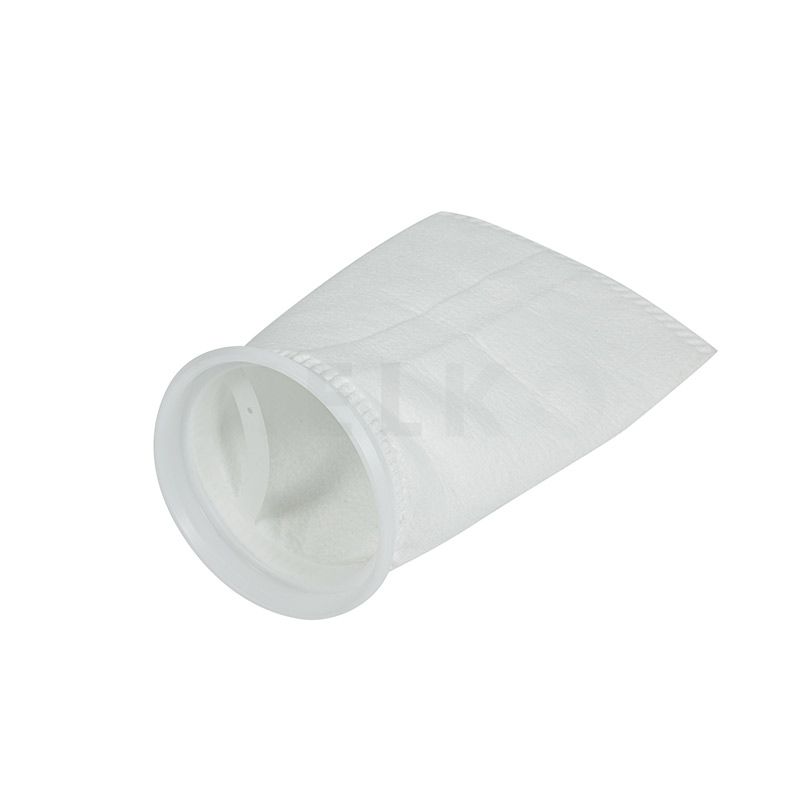
A nominal rating represents an approximate retention value, typically capturing 60% to 85% of particulates at the specified size. Standard PP filters are traditionally nominally rated. This makes them optimal for high-capacity, cost-effective pre-filtration. If you buy a nominally rated 50-micron filter, it will catch the vast majority of 50-micron particles, but some will pass through. An absolute rating represents a certified retention rate of 99% or higher at a specific micron size. Absolute ratings are necessary for critical final polishing stages where zero downstream bypass is tolerated. Absolute filters utilize multiple layers of melt-blown media to guarantee particle retention, resulting in a much thicker, denser filter wall.
Ratings of 100 µm, 50 µm, and 25 µm serve as the industry-standard defaults for primary filtration stages. They are heavily utilized in chemical plants and water treatment systems. These coarse filters act as a physical guard. They protect downstream positive-displacement pumps, spray nozzles, heat exchangers, and ultra-fine membrane systems. The goal is maximizing throughput and flow rate while minimizing early differential pressure build-up. If you pull water directly from a river or a cooling tower basin, you start with a 100-micron or 200-micron filter to catch leaves, scale, and large grit before it destroys your pump impellers.
When sizing a coarse filtration system, you must calculate the expected solids loading rate. A Size 2 filter housing flowing at 100 gallons per minute will blind rapidly if the incoming fluid contains 500 parts per million of suspended solids. In high-solids applications, operators often install two housings in parallel. This allows one housing to remain online while the other is isolated for maintenance, preventing process shutdowns.
Medium micron ratings handle clarification and transition filtering. They balance high dirt-holding capacity with improved fluid purity. In a pre-filtration role, a 10 µm or 25 µm filter extends the life of more expensive sub-micron cartridge filters. They also protect Reverse Osmosis (RO) systems from premature colloidal fouling. RO membranes are highly sensitive to particulate damage. A 10-micron pre-filter acts as cheap insurance for a membrane array that costs tens of thousands of dollars to replace.
We frequently deploy medium-rated filters in closed-loop cooling systems. Over time, these systems accumulate fine rust and pipe scale. A 10-micron filter installed on a side-stream loop will continuously clean a portion of the circulating water. This prevents the scale from settling in heat exchanger tubes and reducing thermal transfer efficiency.
Fine micron ratings target polishing applications. Facilities use them for high-purity loop systems, chemical clarification, and achieving optical clarity goals. These tight porosities come with operational trade-offs. You will experience exponentially faster loading rates and higher frequency changeouts. Fine filtration requires precise process monitoring to prevent premature system blinding. If you attempt to filter a dirty fluid directly with a 1-micron filter, it will plug in minutes.
To successfully implement fine filtration, you must use a step-down approach. You stage multiple housings in series. The fluid passes through a 50-micron filter, then a 10-micron filter, and finally a 1-micron filter. This distributes the dirt load across multiple media beds. The coarse filter catches the large rocks, the medium filter catches the sand, and the fine filter catches the silt. This staged approach drastically reduces maintenance frequency and prevents the 1-micron filter from being overwhelmed.
In water treatment facilities, these filters serve as a high-capacity first-stage liquid filtration system. They efficiently capture sand, pipe scale, silt, and macro-biological debris. Removing these large solids protects fine membrane systems (UF/RO) from physical abrasion and severe bio-fouling. Wastewater streams often contain unpredictable contaminant loads. A sudden rainstorm can flush massive amounts of silt into a treatment plant. Polypropylene media handles these sudden spikes in turbidity without tearing or collapsing.
Operators also use them for groundwater remediation projects. When pumping contaminated water out of an aquifer, the fluid carries heavy amounts of abrasive sand. The filters strip out the sand before the water enters carbon adsorption tanks or air strippers. If the sand enters the carbon beds, it coats the activated carbon granules and destroys their ability to absorb dissolved volatile organic compounds.
Chemical plants rely on a Bag Filter to process aggressive industrial solvents, bulk chemical reagents, and polymer solutions. The natural inertness of polypropylene allows operators to process varied chemical batches. You can switch fluids without risking cross-reaction or physical degradation of the filtration media. For example, a facility might blend a batch of acidic cleaning compound in the morning and an alkaline degreaser in the afternoon. The same polypropylene housing and media type can handle both extremes safely.
Viscosity plays a major role in chemical filtration. Resins, adhesives, and heavy polymers resist flowing through tight filter pores. When filtering high-viscosity fluids, you must upsize the filter housing and select a coarser micron rating. Forcing a thick resin through a 5-micron filter requires massive pump pressure, which often leads to media rupture. We typically recommend 50-micron or 100-micron ratings for fluids exceeding 5,000 centipoise.
Food and beverage facilities use FDA-compliant filters to clarify process water, bulk syrups, and edible oils. Critical compliance parameters dictate the construction. Facilities require food-grade media certifications. They also mandate silicon-free construction and ultrasonic welded seams to prevent bypass and contamination. Any loose fibers or bypassed contaminants in a food plant can trigger a massive product recall.
In beverage bottling, operators use these filters to polish municipal makeup water before it enters the mixing tanks. The filters remove rust flakes from old city pipes and ensure the final beverage maintains perfect optical clarity. In edible oil processing, facilities filter hot fryer oils to remove carbonized food particles. This extends the life of the oil and prevents the final product from taking on a burnt, bitter flavor. The temperature of the oil must be carefully monitored to ensure it does not exceed the 200°F limit of the polypropylene media.
Machining centers use these filters to remove metal fines, chips, and grinding dust from cutting coolants. Clean coolant prolongs tool life and preserves machined surface finishes. When a CNC machine cuts aluminum or steel, it generates thousands of microscopic metal shards. If these shards recirculate in the coolant, they act like liquid sandpaper, destroying the cutting tools and scratching the finished parts. A 25-micron filter effectively strips these fines out of the coolant loop.
Automotive paint and e-coat applications utilize specialized silicone-free filters. This specific construction prevents surface defects and fisheyes in the final paint finish. Even a microscopic trace of silicone lubricant on a filter seam will ruin an entire car body's paint job. Paint plants require strict chain-of-custody documentation from filter manufacturers to guarantee the media was produced in a silicone-free cleanroom environment.
Seam construction directly impacts filtration reliability. You must choose the right construction method based on your tolerance for bypass.
Sewn Seams: These offer a lower initial purchasing cost. However, the needle holes act as bypass channels for oversized particulates. Thread can also degrade depending on the chemical environment. If you filter a fluid that attacks polyester, and the manufacturer used polyester thread to sew the polypropylene felt, the seam will unravel under pressure.
Welded Seams: This construction eliminates stitch holes and bypass risks. Ultrasonic thermal bonding preserves the structural integrity of the filter media. It guarantees performance up to the maximum rated pressure drop. Welded seams provide a continuous, unbroken barrier. We mandate welded seams for any application finer than 25 microns.
Industry standard dimensions provide immediate drop-in compatibility for most housings. Standard sizes keep unit costs low and ensure predictable flow rates. The four main sizes are:
Size Designation | Dimensions (Diameter x Length) | Surface Area (Sq. Ft.) | Max Flow Rate (GPM) |
|---|---|---|---|
Size 1 | 7" x 16" | 2.0 | 90 |
Size 2 | 7" x 32" | 4.4 | 200 |
Size 3 | 4" x 8" | 0.5 | 25 |
Size 4 | 4" x 14" | 1.0 | 50 |
Custom fabrications address specialized process needs. You can specify custom collar materials, length extensions, or heavy-duty handling loops. These modifications assist with high-viscosity fluids or unique OEM filter housings. If an operator struggles to pull a heavy, sludge-filled Size 2 filter out of a housing, we specify a custom heavy-duty nylon lifting strap sewn into the collar. This prevents the operator from tearing the media during extraction.
Effective filtration requires strict monitoring of differential pressure. The initial clean pressure drop typically registers at 1–2 PSI, depending on fluid viscosity and flow rate. You must establish critical changeout thresholds. Standard industry practice dictates replacing the filter at 15–20 PSI ΔP. Exceeding this limit causes media collapse, fiber migration, or particulate unloading into the clean fluid stream.
You cannot rely on visual inspections to determine when a filter is full. A filter might look clean on the inside while the microscopic pores are completely blinded by clear gelatinous material. Always install pressure gauges on the inlet and outlet nozzles of the filter housing. Subtract the outlet pressure from the inlet pressure to find your differential. If the inlet reads 45 PSI and the outlet reads 25 PSI, your differential is 20 PSI, and it is time for an immediate changeout.
The seal between the filter and the housing prevents fluid bypass. If the seal fails, dirty fluid flows around the filter, rendering the entire system useless.
Metal Ring Seals: Constructed from carbon steel or 314/316 stainless steel. They offer high mechanical strength but rely entirely on housing lid compression to form a proper seal. If the housing lid is warped or the operator fails to tighten the eye-nuts evenly, fluid will bypass the metal ring.
Plastic Flange Seals: Polypropylene V-Rings or Sentinel-style flanges provide a pressure-activated seal. As inlet pressure increases, the flange expands against the housing, actively preventing bypass. The plastic flange also features molded lifting handles, making it much easier to remove than a rigid metal ring.
Proper installation prevents immediate mechanical failure. You must follow a strict sequence to ensure the filter performs as designed.
Isolate the filter housing by closing the inlet and outlet valves. Relieve internal pressure using the vent valve before opening the lid.
Remove the spent filter and inspect the internal restrainer basket. Clean out any debris sitting in the bottom of the basket.
Insert the new filter. Push it all the way down into the basket. Ensure the collar seats perfectly flat on the housing support lip.
Close the lid and tighten the bolts in a star pattern to ensure even compression on the seal.
Prevent structural hydraulic shock, commonly known as water hammer, during startup. Crack the inlet valve open slightly to fill the housing slowly. Leave the vent valve open until fluid bleeds out, ensuring all trapped air is purged.
Once the housing is full and vented, fully open the inlet and outlet valves.
Always ensure proper fitment of the internal restrainer basket. The basket must fully support the heavy, fluid-loaded filter under pressure to prevent ruptures. If you run a filter without the metal support basket, the media will blow out through the bottom nozzle the second you turn on the pump.
Verify your process fluid temperature remains strictly below 200°F (93°C) before specifying polypropylene media.
Cross-reference your process chemicals against a polymer compatibility chart to ensure PP will not degrade or swell.
Select welded seams over sewn seams if your application cannot tolerate any particulate bypass.
Install differential pressure gauges on your filter housings to track loading rates and establish exact changeout schedules.
Conduct pilot trials using adjacent micron ratings to balance fluid quality with realistic maintenance cycles.
A: The maximum continuous operating temperature is typically 200°F (93°C). Exceeding this limit causes the polypropylene fibers to soften, leading to thermal creep, pore distortion, and eventual structural failure under pressure.
A: You should change the filter when the differential pressure (ΔP) reaches 15 to 20 PSI. Waiting beyond this threshold risks media rupture, bypass, and the release of captured contaminants downstream.
A: No. Needle-felt polypropylene is a depth filtration media. Particulates become permanently embedded within the fiber matrix. Washing only cleans the surface and cannot restore the internal porosity, leading to immediate blinding upon reuse.
A: A plastic flange creates a pressure-activated seal. As fluid pressure increases, the flange presses tighter against the housing walls, eliminating bypass. Metal rings rely solely on downward lid compression, which can sometimes seat unevenly.
A: Not necessarily. A lower micron rating captures smaller particles, but it will blind much faster. You should select the highest micron rating that still meets your downstream purity requirements to maximize filter lifespan.


