
English 
T: +86-17717097520
E: sales1@melko2015.com
E: sales1@melko2015.com
No.222 Xiangche Rd. Chedun Town Songjiang Dist. Shanghai China 201611


Views: 167 Author: Site Editor Publish Time: 2026-07-23 Origin: Site


Inadequate sediment filtration accelerates equipment wear, fouls expensive downstream membranes, and inflates operational expenditures across industrial fluid systems. Facility engineers and procurement teams must balance dirt-holding capacity, differential pressure, and replacement frequency when specifying pre-filtration architecture. Selecting the wrong filter media leads to premature blinding or contaminant bypass. This allows abrasive particulate to destroy pump seals and clog fine-pore membranes downstream.
Evaluating the structural mechanics of a melt blown depth filter—specifically its gradient density and thermal bonding—provides a verifiable framework for optimizing sediment removal. You need reliable pre-filtration to protect capital equipment and standardize maintenance cycles. By analyzing fiber density, surface configurations, and material compatibility, operators can engineer filtration arrays that handle high sediment loads without causing unexpected pressure drops or system shutdowns.
Gradient Density Architecture: Melt blown depth filters utilize a multi-layered fiber structure to trap large particles on the exterior and fine particles in the core, maximizing dirt-holding capacity without causing rapid pressure drops.
Media Integrity: Thermally bonded polypropylene construction eliminates the need for binders or adhesives, preventing media migration, resisting bacterial growth, and ensuring broad chemical compatibility.
Surface Configurations: Selecting between a plain surface melt blown filter cartridge and grooved alternatives dictates the initial surface area and directly impacts the filter's response to high-sediment loads.
Operational Economics: Proper sizing based on micron rating, flow rate, and fluid viscosity is critical to establishing predictable change-out schedules and minimizing system downtime.
Surface filters act as a single-plane sieve. They trap contaminants exclusively on the outer boundary layer. Once that single layer fills with debris, the filter blinds off completely. This causes a rapid, often unpredictable spike in differential pressure. A melt blown depth filter operates on a completely different mechanical principle. It captures particulate throughout the entire cross-section of the cylindrical media. This multi-layered approach utilizes the full physical volume of the cartridge, rather than just the outer skin.
The manufacturing extrusion process creates this unique structural advantage. Micro-fine polypropylene fibers are blown and spun onto a central rotating core. During this process, production equipment adjusts fiber thickness and packing density. This creates a variable pore structure across the radius of the filter. The outer layers remain relatively loose and open. The inner layers become progressively tighter and more densely packed as they approach the core.
Contaminant deposition maps directly to this engineered gradient structure. Coarse particles like gravel, sand, and heavy pipe scale stop on or near the outer boundary. Finer particles, including silt, rust flakes, and colloidal debris, pass through the outer zones. They penetrate deeper into the matrix before becoming permanently trapped in the tighter inner layers. Gradient density prevents premature surface blinding. It allows the cartridge to utilize its entire volume for sediment retention, drastically extending the operational lifespan compared to flat-sheet media.
Filtration Mechanics Comparison | ||
Feature | Surface Filtration | Gradient Depth Filtration |
|---|---|---|
Particle Capture Zone | Outer surface only | Throughout entire media volume |
Blinding Resistance | Low (rapid pressure spikes) | High (gradual pressure increase) |
Dirt-Holding Capacity | Limited by surface area | Maximized by media depth |
Ideal Contaminant Type | Uniform, hard particles | Mixed sizes, deformable particles |
Polypropylene serves as the foundational material for modern depth filtration due to its exceptional physical properties. It offers robust resistance to acids, alkalis, and organic solvents. This makes it suitable for highly diverse industrial environments. This chemical inertness ensures the filter media does not degrade, swell, or dissolve when exposed to harsh process fluids. You can deploy these filters in aggressive chemical baths just as easily as in municipal water lines.
Biological inertness represents another massive operational advantage. Pure polypropylene naturally resists bacterial colonization and biofilm formation. Unlike natural fibers such as cotton or cellulose, synthetic polypropylene prevents the media from becoming a breeding ground for microorganisms. This maintains fluid purity in sensitive applications like food processing or pharmaceutical pre-filtration.
High-quality manufacturing relies entirely on thermal bonding. This process fuses the individual fibers together using heat. It completely eliminates the need for surfactants, chemical binders, or adhesives. Eliminating these chemical additives prevents any foreign substances from leaching into the filtrate. The processed fluid remains uncontaminated. Thermal bonding also provides necessary structural rigidity. The fused fibers resist shifting under severe pressure spikes. This mitigates the risk of media migration and prevents trapped contaminants from unloading downstream into the clean fluid path.
Verify fluid compatibility with polypropylene using standard chemical resistance charts.
Confirm the absence of chemical binders in the manufacturer's specifications.
Inspect the cartridge for structural rigidity before installation.
Ensure the operating temperature remains below the thermal limit of polypropylene (typically 140°F to 160°F).
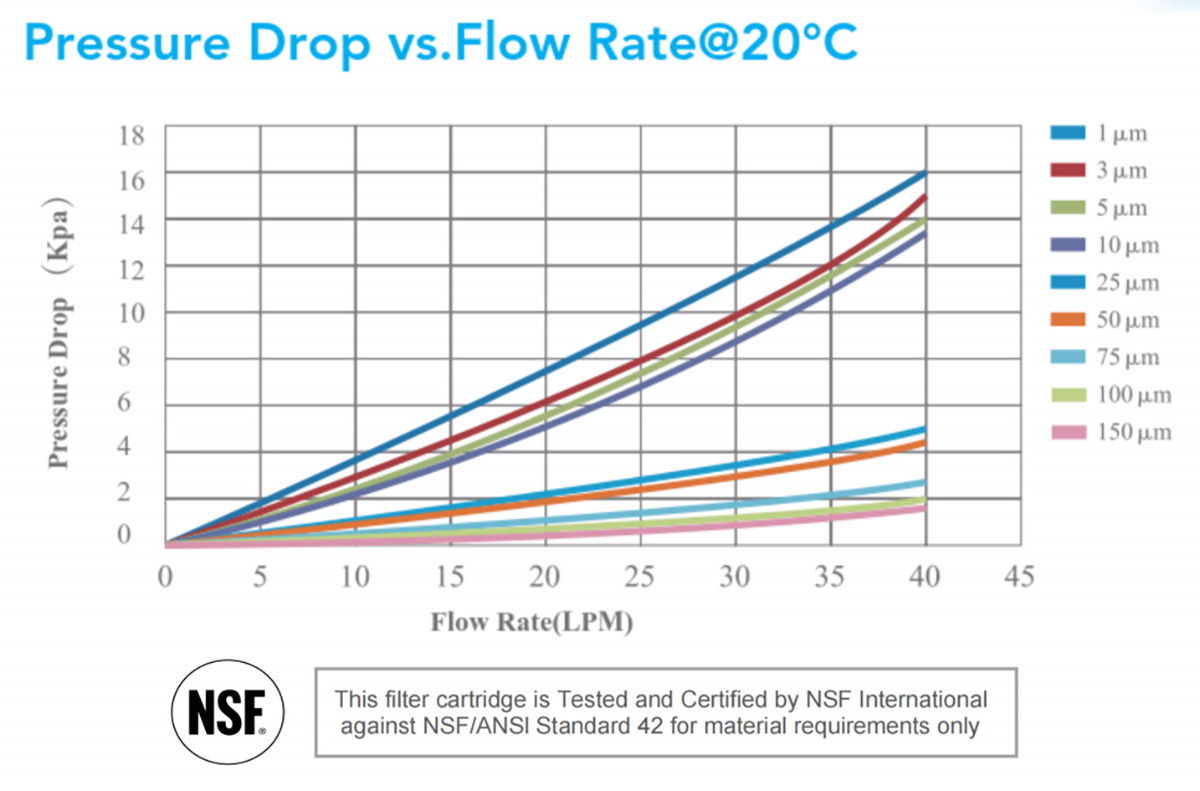
Understanding micron ratings is essential for proper filter specification and system protection. Nominal ratings indicate the average particle size the filter retains. A nominally rated 5-micron filter will capture most particles 5 microns and larger. However, a small percentage of particles that size or slightly larger may pass through the irregular fiber matrix. Absolute ratings guarantee retention at a specific percentage, typically 99.9%. This provides a strict, verifiable barrier for critical applications where bypass is unacceptable.
When considering microbial barrier boundaries, operators must recognize the physical limitations of nominal cartridges. While polypropylene resists bacterial growth, standard sediment cartridges cannot act as absolute biological sterilizers. Applications requiring strict pathogen removal demand validated sub-micron or absolute-rated membrane filters downstream. The depth filter serves only to protect those expensive absolute filters from premature fouling.
Selecting the correct micron rating depends entirely on the target sediment profile. A 50-micron to 100-micron rating suits coarse sand, heavy rust, and large scale. A 5-micron to 20-micron rating targets fine silt, machining dust, and general particulate. For ultra-fine colloidal matter or pre-filtration for sensitive reverse osmosis membranes, a 1-micron rating provides the necessary protection. Using a tighter micron rating than necessary will only result in shorter filter life and higher replacement costs.
A Plain Surface Melt Blown Filter Cartridge offers a highly consistent depth filtration profile. It is ideal for standard sediment loads where uniform particle distribution and predictable pressure drops are the primary requirements. The smooth exterior provides reliable, repeatable performance across general water treatment and light industrial applications. It represents the baseline standard for depth filtration.
Grooved, textured, or orange-peel surfaces modify the initial contact area of the filter. These structural changes physically increase the available surface area exposed to the incoming fluid. This delays surface blinding in high-turbidity applications. The grooves provide additional physical space for heavy dirt accumulation before the fluid is forced to penetrate the deeper layers of the media.
Choosing between a Plain Surface Melt Blown Filter Cartridge and a modified version requires evaluating your specific fluid dynamics. Plain surfaces generally cost less to manufacture and excel in standard conditions with moderate sediment. Grooved surfaces command a slight premium but offer extended life in fluids with high concentrations of suspended solids or heavy mud. You must weigh the initial purchase price against the extended maintenance intervals provided by the modified surface.
Standard industry dimensions ensure compatibility with existing filter housings across different facilities. Diameters typically measure 2.5 inches for standard applications and 4.5 inches for high-flow requirements (often referred to as Big Blue style). Standard lengths include 10, 20, 30, and 40 inches. Matching the cartridge dimensions exactly to the housing prevents fluid bypass and ensures proper seating of the end caps.
Calculating the required filter length depends on system flow rate, fluid viscosity, and allowable pressure drop. Higher flow rates, measured in gallons per minute (GPM) or liters per minute (LPM), require longer or wider cartridges to maintain an acceptable face velocity. Forcing too much fluid through a small cartridge increases the velocity, which can push deformable particles straight through the media. Viscous fluids generate higher pressure drops naturally, necessitating increased surface area or larger micron ratings to prevent severe flow restriction.
End-cap configurations dictate how the cartridge seals within the stainless steel or plastic housing. Double Open End (DOE) configurations rely on knife-edge seals within the housing bowl pressing into the flat ends of the cartridge. Single Open End (SOE) configurations utilize specific O-rings, such as 222 or 226 styles, to provide a positive, mechanical seal. SOE configurations significantly reduce the risk of bypass in critical applications because the O-ring physically blocks the fluid path around the filter.
String wound filters rely on tightly wound yarn wrapped around a central rigid core. While effective for basic, low-cost filtration, the wound structure presents several mechanical vulnerabilities. The yarn can shift under fluctuating pressures or flow surges. This shifting creates channeling, allowing fluid to bypass the media entirely. Furthermore, string wound filters are highly susceptible to fiber shedding. They can introduce new fibrous contaminants into the process stream, defeating the purpose of filtration.
Purity and biodegradation risks clearly separate these two technologies. Thermally bonded polypropylene provides complete biological resistance. Natural or cotton string wound cartridges can degrade, rot, or support bacterial growth over time. This is especially problematic in warm or stagnant water applications where bacteria multiply rapidly. Synthetic string wound filters exist, but they still suffer from the mechanical shifting issues.
Regarding dirt-holding capacity, a Melt Blown Filter Cartridge generally offers superior retention of fine particulates. The rigid, fused matrix prevents the media migration inherent to lower-tier string wound options. The gradient density traps more dirt per cubic inch than the uniform winding pattern of a string filter. This ensures consistent effluent quality throughout the filter's entire lifespan.
Pleated filters offer massive surface area by folding a thin sheet of media into an accordion shape. This enables exceptionally high flow rates and very low initial pressure drops. However, they lack the physical depth required to hold high volumes of deformable or gelatinous contaminants. Once the thin surface of a pleated filter blinds with dirt, the pressure drop increases rapidly, forcing an immediate change-out.
A Melt Blown Filter Cartridge provides the physical depth necessary to trap these challenging particles. The thick wall of the cartridge absorbs gelatinous material without immediately blinding. While pleated filters may be washable and reusable in certain coarse applications, melt blown cartridges remain far more cost-effective for high-load, single-use pre-filtration where depth retention is paramount.
Technology Comparison Matrix | |||
Filter Type | Primary Advantage | Primary Weakness | Best Application |
|---|---|---|---|
Melt Blown Depth | High dirt-holding capacity, rigid structure | Single-use only | General pre-filtration, RO protection |
String Wound | Low initial cost | Media migration, channeling | Coarse utility water, non-critical fluids |
Pleated Surface | High flow rates, low pressure drop | Rapid blinding with gelatinous dirt | High-flow final filtration, washable setups |
Reverse osmosis membranes require strict protection from particulate fouling. The microscopic pores of an RO membrane will clog instantly if exposed to raw sediment. A 1-micron to 5-micron melt blown filter serves as the primary defense mechanism in these systems. These cartridges prevent silt density index (SDI) spikes, which indicate a high potential for membrane fouling.
They also capture chlorine-degraded particulates. If carbon filters upstream break down, the melt blown filter catches the carbon fines before they reach the RO elements. Protecting the RO membrane extends its life from months to years, saving facilities thousands of dollars in replacement costs and downtime.
Applications contacting potable water and consumables demand strict regulatory compliance. You cannot install industrial-grade filters in a beverage plant. Filters must meet FDA requirements under CFR Title 21 for food contact. They must also carry NSF/ANSI standard certifications, specifically NSF 42 or 61. These certifications verify that the materials are safe for food and beverage processing and will not leach harmful chemicals.
High-purity polypropylene prevents taste, odor, or color transfer into the final product. In municipal water treatment, ultra-fine, certified melt-blown cartridges can capture larger biological contaminants. While not absolute sterilizers, 1-micron absolute-rated depth filters can reduce Cryptosporidium and Giardia cysts. This helps municipal facilities meet stringent drinking water parameters and protect public health.
The broad chemical inertness of polypropylene makes melt blown depth filters ideal for aggressive environments. They perform reliably in highly acidic plating solutions, petrochemical processing, and strong alkali filtration. The thermal bonding ensures the cartridge maintains structural integrity even when exposed to harsh solvents that would dissolve glues or binders.
Facility engineers use these filters to clarify chemical baths, remove precipitated solids from process streams, and protect chemical transfer pumps from abrasive wear. You must always verify the specific chemical concentration and operating temperature against polypropylene compatibility charts before deployment.
Establishing proper change-out schedules requires continuous monitoring of differential pressure. You must install pressure gauges on both the inlet and outlet of the filter housing. A terminal differential pressure—typically 25 to 35 psid (pounds per square inch differential)—indicates the filter has reached its maximum dirt-holding capacity. Pushing the cartridge beyond this point risks structural failure, core collapse, and massive contaminant unloading.
Monitoring ΔP curves helps operators predict maintenance intervals accurately. A sudden, sharp spike in pressure indicates rapid fouling from an unexpected contamination event. A completely flat curve over weeks of operation suggests the filter is either bypassing fluid or is vastly oversized for the application. Tracking these metrics prevents sudden system starvation and protects downstream equipment from running dry.
Install calibrated pressure gauges on the inlet and outlet ports.
Record baseline differential pressure with a clean filter installed.
Log pressure readings daily or integrate sensors into the facility SCADA system.
Schedule replacements when ΔP reaches 25 psid to maintain a safety margin.
Improper micron selection often leads to rapid blinding. Using a 1-micron filter on heavily sedimented river water will cause immediate failure. The filter will clog in hours. Incorrect end-cap sealing allows fluid to bypass the media entirely. If the housing knife-edge is damaged, or if an O-ring is pinched, dirty fluid flows around the filter, rendering it useless.
Implementing step-down filtration mitigates these risks effectively. Installing a 50-micron housing followed by a 5-micron housing distributes the sediment load across multiple stages. The coarse filter catches large debris like sand and rust. This extends the lifespan of the finer cartridge downstream. Step-down arrays optimize overall system efficiency and reduce the total volume of filters consumed annually.
Implement step-down filtration architectures using multiple housings to distribute heavy sediment loads and protect finer cartridges downstream.
Specify micron ratings based on actual fluid analysis and particle size distribution rather than arbitrary estimates.
Select Single Open End (SOE) configurations with O-rings for critical applications to guarantee positive sealing and eliminate bypass risks.
Install inlet and outlet pressure gauges to monitor differential pressure continuously and establish data-driven replacement schedules.
A: Gradient density allows the filter to trap large particles on the outside and fine particles on the inside. This utilizes the entire depth of the media, significantly increasing dirt-holding capacity and preventing premature surface blinding compared to standard surface filters.
A: No, melt blown cartridges are designed strictly as single-use, disposable filters. Attempting to wash them will only drive trapped contaminants deeper into the matrix, disrupting the pore structure and compromising filtration efficiency.
A: Replacement should occur when the differential pressure across the filter reaches the manufacturer's recommended terminal limit, typically between 25 and 35 psid. Relying on visual inspection alone is inaccurate for depth filters.
A: Thermal bonding fuses the fibers together without using chemical binders or adhesives. This prevents chemical leaching into the process fluid and provides structural rigidity, preventing media migration under pressure spikes.
A: Yes. A plain surface provides consistent depth filtration for standard loads. Grooved surfaces increase the initial contact area, which helps delay surface blinding in applications with high turbidity or heavy suspended solids.


