
English 
T: +86-17717097520
E: sales1@melko2015.com
E: sales1@melko2015.com
No.222 Xiangche Rd. Chedun Town Songjiang Dist. Shanghai China 201611


Views: 0 Author: Site Editor Publish Time: 2026-09-10 Origin: Site


Industrial liquid processing faces escalating operational costs tied to premature membrane fouling, equipment wear, and unplanned maintenance. When first-stage filtration fails, facilities experience unpredictable pressure drops, frequent downtime, and compromised downstream product purity. These issues force plant managers to seek reliable primary defense mechanisms. Integrating a precisely specified pp bag filter serves as a reliable, cost-effective primary defense line. This approach stabilizes flow and protects high-value downstream assets. By intercepting bulk contaminants early, facilities maintain continuous throughput and safeguard sensitive equipment from abrasive wear and particulate overload. Proper implementation requires understanding fluid dynamics, material compatibility, and system sizing to ensure maximum efficiency and equipment protection.
PP bag filters act as a sacrificial first-stage barrier, significantly extending the lifecycle of expensive downstream micro-filtration and reverse osmosis (RO) systems.
Properly matching the filter media to a precision-engineered filter casing prevents fluid bypass, stabilizes system pressure, and ensures flow consistency.
Polypropylene offers a broad chemical resistance profile, making it highly effective for aggressive fluids across water treatment, chemical processing, and food & beverage sectors.
Optimizing filtration costs requires balancing the initial consumable price against dirt-holding capacity, change-out labor, and equipment protection metrics.
Establishing baseline metrics for shielding expensive downstream equipment is the primary goal of pre-filtration. Pumps, fine-membrane filters, and heat exchangers require protection from particulate damage to function efficiently. A robust first-stage barrier intercepts abrasive solids before they can cause mechanical wear or blind sensitive micro-filtration layers. We look at specific particle size distributions to determine the exact micron rating needed to protect these assets. If a reverse osmosis membrane requires feed water with a silt density index below a certain threshold, the primary filtration stage must reliably remove the bulk of suspended solids to meet that specification.
Evaluating the requirement for high dirt-holding capacity without inducing severe, process-halting pressure drops dictates media selection. The filtration media must capture a substantial volume of solids while allowing fluid to pass efficiently. Maintaining continuous throughput in high-volume liquid streams despite fluctuating contaminant loads ensures production schedules remain uninterrupted. Operators monitor differential pressure gauges to track loading rates. A sudden spike indicates the media is blinding, while a slow, steady rise confirms the depth matrix is capturing particles as designed.
Flow consistency directly impacts the efficiency of downstream processes. When a filter restricts flow prematurely, pumps work harder, consuming more energy and generating excess heat. By sizing the filtration system correctly, facilities maintain a steady flow rate, optimizing the performance of the entire fluid handling system. This requires calculating the total surface area needed based on the fluid's viscosity and the expected particulate load.
Polypropylene boasts compatibility with a wide spectrum of aggressive fluids. This includes strong acids, alkalis, and various organic solvents. This broad chemical resistance profile makes it a versatile choice for diverse industrial applications, from wastewater treatment to aggressive chemical manufacturing. Unlike standard cellulose or certain polyesters, polypropylene does not degrade when exposed to high pH cleaning solutions or acidic process streams.
Defining realistic operational thresholds is necessary for safe deployment. Polypropylene typically caps at operating temperatures around 200°F (93°C). When processes exceed this thermal limit, transitioning to alternative materials like polyester or PTFE becomes mandatory to prevent media degradation. Operating too close to the thermal limit can cause the fibers to soften, leading to extrusion through the restrainer basket and subsequent bypass.
Polypropylene's natural resistance to moisture absorption impacts initial wetting and flow dynamics in aqueous solutions. Because of its hydrophobic properties, specific pre-wetting procedures are often required to establish optimal flow and prevent initial high pressure drops when filtering water-based fluids. Operators typically soak the media in a compatible low-surface-tension fluid or use a slow-fill method to force air out of the fiber matrix before bringing the system up to full operating pressure.
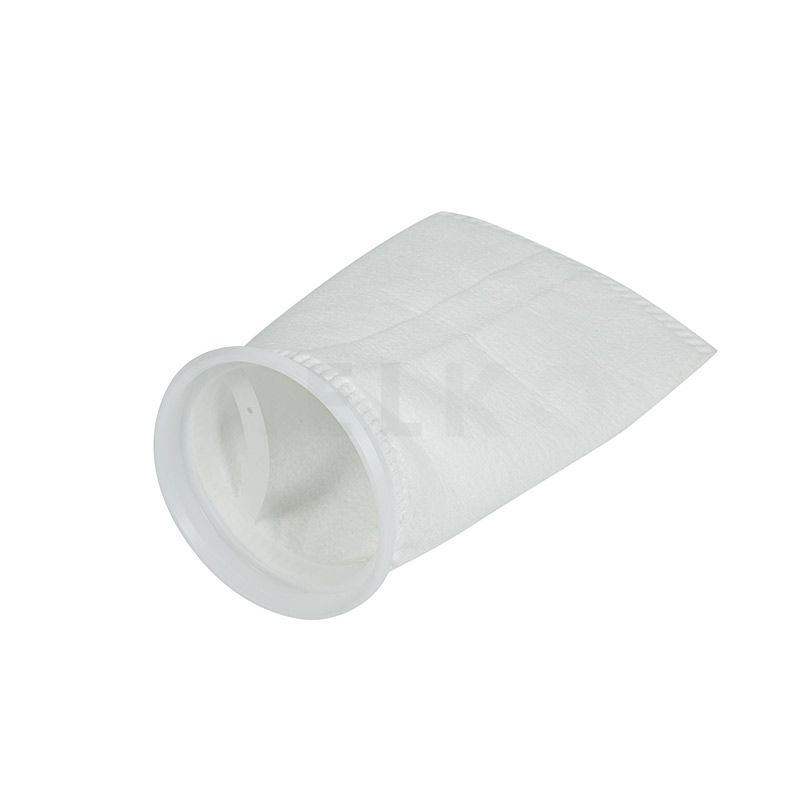
Needle-punched PP felt utilizes depth filtration mechanics. This construction creates a tortuous path for fluid, trapping particles throughout the thickness of the media. It is ideal for high solid retention, capturing gelatinous particles, and providing broad pre-filtration across various fluid streams. The manufacturing process involves interlocking fibers mechanically, creating a dense matrix that holds a significant volume of dirt before reaching terminal pressure.
Conversely, PP monofilament or multifilament mesh relies on surface filtration mechanics. Particles are retained on the surface of the mesh rather than within the media matrix. This design is ideal for precise particle classification, rigid contaminant removal, and applications where the media might need to be washed and reused. Mesh provides a strict cutoff point, making it suitable for applications requiring exact particle sizing, such as paint and coatings filtration.
To understand the application differences, consider the following comparison:
Feature | Needle-Punched PP Felt | PP Monofilament Mesh |
|---|---|---|
Filtration Mechanism | Depth filtration | Surface filtration |
Particle Type | Gelatinous, deformable, mixed sizes | Rigid, uniform sizes |
Dirt Holding Capacity | High | Low to Moderate |
Washability | Not recommended | Washable for specific applications |
Typical Micron Range | 1 to 200 microns | 50 to 800+ microns |
Mapping the fluid's particle size distribution to nominal versus absolute micron ratings is a foundational step. Micron ratings typically range from 1 to 200+ microns. Understanding whether the process requires a nominal rating (average retention) or an absolute rating (strict retention) dictates the media choice. A nominal 10-micron filter might only capture 70% of 10-micron particles, whereas an absolute rated filter will capture 98% or more.
Navigating the inverse relationship between tight micron ratings and rapid blinding is a common challenge. Higher efficiency filters capture smaller particles but blind faster, increasing change-out frequency. Balancing efficiency with longevity is key to maintaining operational flow. Facilities often employ a stepped filtration approach, using a coarse filter upstream of a tighter filter to distribute the particulate load and extend the life of the final filter.
Utilizing industry-standard dimensions ensures vendor-agnostic procurement and scalability. Standard sizes simplify inventory management. However, evaluating when custom-tailored configurations are required is also necessary. Custom lengths, specialized handles, or multi-layered configurations often solve unique challenges in legacy liquid processing streams.
Analyze the fluid viscosity and operating temperature.
Determine the target particle size for removal.
Select between nominal and absolute retention based on downstream requirements.
Calculate the required surface area to maintain the desired flow rate.
Choose the appropriate standard size (e.g., Size 1 or Size 2) to fit the housing.
The critical role of the restrainer basket within the Filter Casing cannot be overstated. It supports the bag under heavy differential pressure, preventing the media from rupturing or tearing during operation. Without this structural support, the bag would fail under normal process conditions. The basket must be precisely machined to match the dimensions of the bag, ensuring a snug fit that prevents the media from ballooning or shifting during flow surges.
The cylindrical shape of the housing optimizes flow distribution. This geometry maximizes surface area utilization of the media and prevents dead zones where fluid might stagnate. Proper flow distribution ensures even loading of contaminants across the entire filter surface. Inlet configurations, whether side-entry or top-entry, dictate how the fluid strikes the media. Top-entry designs often provide better sealing and reduce the risk of bypass by using the fluid's pressure to seat the bag firmly into the restrainer basket.
Deciding between single-bag housings for localized batch processing and multi-bag configurations for continuous, high-flow industrial applications depends on volume requirements. Implementing duplex and parallel arrangements allows continuous processing and bag change-outs without system shutdowns. Furthermore, ensuring the housing material aligns with the chemical profile of the process fluid is essential for long-term integrity. Stainless steel 316L is common for corrosive environments, while carbon steel suffices for standard oil and water applications.
Establishing baseline clean pressure drops and setting strict terminal pressure thresholds dictates replacement schedules. Monitoring differential pressure provides a clear indicator of when the media is fully loaded. Replacing bags based on pressure drop rather than arbitrary timeframes prevents unexpected failures. A standard change-out is typically performed when the differential pressure reaches 15 to 20 psi above the clean baseline.
Housing design and inlet/outlet configurations significantly influence fluid velocity. Properly designed systems manage fluid velocity dynamics to prevent localized scouring or premature blinding of the media. Controlled velocity ensures the filter operates efficiently throughout its intended lifespan. High fluid velocities can force deformable particles through the depth matrix, compromising the filtration efficiency and contaminating the downstream process.
Weighing the low unit cost of consumables against the high financial risk of downstream equipment failure clarifies the value proposition. A relatively inexpensive pre-filter protects pumps and fine membranes that cost thousands of dollars to replace. This dynamic makes robust pre-filtration a highly favorable investment. Plant managers must look beyond the purchase price of the filter and consider the savings generated by extended maintenance intervals on primary process equipment.
Factoring in the labor costs and production downtime associated with change-out intervals is critical for accurate operational assessment. Transitioning from reactive, schedule-based changes to sensor-driven differential pressure thresholds maximizes the lifespan of each unit. Reducing overhead by standardizing bag sizes and micron ratings across multiple facility processes further streamlines operations. Maintaining a consolidated inventory reduces carrying costs and minimizes the risk of installing the wrong micron rating during a rapid change-out.
Optimizing change-out schedules requires field-proven protocols. Operators should log differential pressure readings daily to establish a trend line. This data allows maintenance teams to predict when a filter will reach its terminal pressure and schedule the change-out during planned downtime, avoiding disruptive mid-shift halts.
Adjusting filtration setups to accommodate seasonal changes in feed water quality or batch-to-batch fluid inconsistencies is necessary for consistent output. Facilities must adapt their pre-filtration strategy to handle varying particulate loads without halting production. For example, surface water sources often experience high turbidity during spring runoff, requiring a temporary shift to a coarser micron rating or a higher-capacity depth media to handle the increased dirt load.
Minimizing fluid retention within the bag and housing maximizes yield. In high-value chemical or pharmaceutical processing, every drop counts. Selecting configurations that allow for efficient fluid recovery reduces product loss and improves overall process profitability. Displacement balloons can be inserted into the filter bag to reduce the internal void volume, minimizing the amount of valuable process fluid trapped inside the housing during a change-out.
Unfiltered liquid escaping around the bag collar contaminates the downstream process. This bypass negates the purpose of the filtration system and exposes sensitive equipment to particulate damage. Bypass often occurs due to improper installation, worn housing gaskets, or selecting a bag with an incompatible collar style for the specific housing.
Evaluating collar ring types is the primary mitigation strategy. Galvanized steel, stainless steel snap rings, or molded PP plastic flanges offer different sealing capabilities. Selecting the right collar ensures a positive, bypass-free seal within the housing seat. Plastic flanges often provide the most reliable seal in top-entry housings, as they compress directly against the restrainer basket lip, creating a gasket-like barrier.
Sudden pressure spikes or exceeding terminal differential pressure causes the bag to burst or shed fibers. This catastrophic failure releases a massive slug of contaminants into the downstream process. Ruptures typically happen when operators ignore differential pressure alarms or when a system experiences severe water hammer during pump startup.
Mandating the use of fully supported restrainer baskets and installing automated differential pressure gauges mitigates this risk. Additionally, utilizing glazed or singed PP felt prevents fiber migration, ensuring the filtered fluid remains clean. The surface treatment melts the outermost fibers, locking them in place and preventing them from breaking loose and traveling downstream.
Implementing specific pre-wetting procedures for hydrophobic media in aqueous solutions lowers the initial pressure drop. Proper wetting ensures the entire surface area is available for filtration immediately upon startup. Failure to pre-wet can result in localized flow channeling, where fluid forces its way through a small section of the media, leading to rapid, premature blinding.
Utilizing slow-start startup procedures eliminates hydrodynamic water hammer and pressure spikes. These spikes can damage the media or break the collar seal. Verification steps to ensure the bag collar sits flush within the housing seat before tightening the lid are essential for preventing bypass.
Isolate the filter housing by closing the inlet and outlet valves.
Vent the housing to relieve any internal pressure before opening the lid.
Remove the spent bag and inspect the restrainer basket for damage or debris.
Insert the new bag, ensuring the collar seats perfectly flush on the basket lip.
Close and secure the lid, then slowly open the inlet valve to fill the housing while venting air.
Once fluid appears at the vent, close the vent and slowly open the outlet valve to resume flow.
Introducing contaminants or non-compliant materials into sanitary processes poses severe regulatory and safety risks. Facilities must ensure all components meet industry-specific standards. Using industrial-grade filters in a food processing line can introduce unapproved lubricants, loose fibers, or chemical leachates into the consumable product.
Specifying FDA/EU-compliant, thermally welded, and silicone-free variants is mandatory for food, beverage, and pharmaceutical applications. These specialized filters prevent contamination and ensure regulatory compliance. Thermally welded seams eliminate the need for sewing thread, which can act as a bypass point or shed into the process fluid.
Audit your current differential pressure logs to identify premature blinding trends and adjust your micron rating strategy accordingly.
Inspect all restrainer baskets for deformation or wear during the next scheduled maintenance window to prevent future bag ruptures.
Standardize your inventory by consolidating redundant micron ratings and standardizing on a single collar type that matches your primary housings.
Implement a mandatory slow-start procedure for all pump startups to eliminate water hammer and protect the integrity of the filter media.
A: The standard operational limit for polypropylene is approximately 200°F (93°C). Exceeding this temperature risks media degradation, softening, and structural failure. For higher temperature applications, alternative materials like polyester or PTFE must be used.
A: Replacement should be based on differential pressure thresholds, typically reaching 15-20 psi above the clean baseline. Replacing bags based on pressure drop rather than arbitrary timeframes ensures maximum media utilization and prevents unexpected ruptures.
A: Washing depth-filtration felt bags is highly discouraged as contaminants become permanently trapped within the media matrix. Mesh bags offer limited reusability for rigid particles, but single-use felt bags provide the most reliable and consistent filtration performance.
A: A nominal rating indicates the filter will capture an average percentage of particles at that size. An absolute rating guarantees a much higher retention efficiency, typically 98% or greater, for particles at or above the specified micron size.
A: The casing houses the restrainer basket, which provides critical structural support to prevent the bag from rupturing under pressure. It also facilitates the sealing mechanism at the collar, preventing unfiltered fluid from bypassing the media.
A: Duplex setups utilize valves that permit flow switching from a loaded bag to a clean bag without shutting down the primary process. This continuous operation eliminates costly production downtime associated with maintenance change-outs.


