
English 
T: +86-17717097520
E: sales1@melko2015.com
E: sales1@melko2015.com
No.222 Xiangche Rd. Chedun Town Songjiang Dist. Shanghai China 201611


Views: 0 Author: Site Editor Publish Time: 2026-09-08 Origin: Site


Downstream filtration systems—like reverse osmosis membranes or fine pleated cartridges—frequently fail prematurely. This failure rarely stems from inherent defects within the fine filters themselves. Instead, it happens because of inadequate primary particulate removal. Unoptimized pre-filtration allows bulk solids to bypass initial stages, leading to rapid blinding of fine filters. This escalates consumable usage, increases maintenance downtime, and introduces severe risks of off-spec product batches. You need a reliable first stage to catch the heavy dirt load before it wrecks your sensitive equipment. Implementing the right pre-filtration strategy protects downstream assets and stabilizes system pressure. We will evaluate the technical sizing, material limits, and field implementation of PP Bag Filters as the foundational step in an optimized industrial liquid filtration process.
Strategic Pre-Filtration: Deploying PP bag filters as a primary stage captures bulk solids, significantly extending the lifespan and efficiency of finer, more expensive downstream filtration media.
Broad Chemical Compatibility: Polypropylene (PP) offers exceptional resistance to a wide range of acids, alkalis, and organic solvents, making it the default choice for diverse industrial applications.
Construction Dictates Performance: The choice between welded versus sewn seams, specific collar/ring designs, and multi-layer configurations directly impacts bypass risks, dirt-holding capacity, and overall filtration integrity.
Predictable Maintenance: Proper sizing based on flow rate, fluid viscosity, and differential pressure (Delta P) minimizes changeout frequency, optimizing the balance between consumable usage and maintenance labor.
Industrial filtration operates most effectively as a staged cascade. Process fluids move through progressively finer media, stripping out large contaminants before addressing microscopic particles. Attempting to remove bulk solids with a sub-micron absolute filter guarantees immediate blinding. The filter media quickly clogs, differential pressure spikes, and flow ceases entirely. Staged filtration prevents this by assigning specific particle size ranges to designated filter stages.
Deploying bag filters as the primary stage captures the heaviest particulate load. This bulk removal protects the delicate pore structures of downstream cartridges or membranes. By sacrificing a standard bag to capture the majority of the dirt mass, facilities drastically reduce the changeout frequency of secondary filters. Success in this stage is highly measurable. Operators will observe stabilized system pressure, prolonged intervals between membrane cleanings, and a direct reduction in annual maintenance hours. If you pump raw river water directly into a 1-micron pleated cartridge, you will replace that cartridge daily. Putting a 50-micron bag filter in front of it extends the cartridge life to months.
Selecting the correct polymer for filter media dictates operational success. Polypropylene (PP) competes primarily with Polyester (PE) and Nylon mesh. Each material possesses distinct physical and chemical properties suited to different fluid streams. You cannot use a one-size-fits-all approach when dealing with aggressive industrial fluids.
Polypropylene stands out due to its broad pH tolerance and oleophilic properties. It effectively resists both strong acids and strong alkalis, offering unmatched versatility across varying chemical environments. Furthermore, PP fibers naturally attract and hold oils. This makes them highly effective at absorbing trace hydrocarbons and tramp oils from aqueous solutions. High-quality PP media is also manufactured without silicone, eliminating the risk of silicone contamination in sensitive chemical or coating applications.
However, polypropylene has strict application limitations regarding heat. PP structural integrity begins to degrade at higher temperatures. It generally supports a maximum continuous operating temperature of 200°F (93°C). If process fluids exceed this threshold, operators must transition to Polyester (PE), which handles up to 300°F (149°C), or specialized materials like Teflon (PTFE) for extreme thermal environments.
Filter Media | Acid Resistance | Alkali Resistance | Oil Absorption | Max Operating Temp |
|---|---|---|---|---|
Polypropylene (PP) | Excellent | Excellent | High | 200°F (93°C) |
Polyester (PE) | Good | Poor | Low | 300°F (149°C) |
Nylon | Poor | Excellent | Low | 250°F (121°C) |
Teflon (PTFE) | Excellent | Excellent | Low | 500°F (260°C) |
Understanding the distinction between nominal and absolute micron ratings is mandatory when specifying felt bag filters. Polypropylene needle felt is a depth media. It creates a tortuous path of entangled fibers that trap particles throughout the depth of the material. Because of this structure, standard PP bags carry a nominal rating. A nominal rating means the filter will capture approximately 60% to 70% of particles at the stated micron size. It is not an absolute barrier.
Matching the micron rating to the specific particle size distribution of the process fluid requires careful analysis. Ratings typically range from 1 to 200 microns. If the fluid contains a high volume of 50-micron particles, selecting a 1-micron bag will lead to rapid surface blinding. The outer surface seals over, rendering the depth of the media useless. Operators must balance the desire for finer filtration against the physical reality of dirt-holding capacity. Selecting a slightly coarser micron rating often improves overall throughput without compromising downstream quality, provided the secondary filters are sized correctly to handle the remaining load.
Polypropylene offers a highly resilient chemical resistance profile. It remains stable when exposed to aggressive media, including hydrochloric acid, sulfuric acid, and sodium hydroxide. It also performs well with many organic solvents, alcohols, and plating solutions. This broad compatibility reduces the need to stock multiple types of filter bags for different process lines in a single plant.
Despite its chemical resilience, thermal limitations require strict monitoring. Operating near or above 200°F (93°C) causes the polymer fibers to soften. This softening leads to pore expansion, allowing previously trapped contaminants to push through the media. To mitigate this risk, operators must evaluate the entire process cycle for thermal spikes. Intermittent steam cleaning or exothermic chemical reactions can easily exceed PP's thermal limits. If a chemical reaction generates unexpected heat, the PP bag will warp, lose its micron rating, and potentially melt into the support basket.
Initial differential pressure (Delta P) serves as the primary baseline for filter lifespan. When a clean bag is installed, the resistance to flow should be minimal—typically under 2 psi. As contaminants accumulate, resistance increases. Monitoring this pressure drop is the most reliable way to manage filtration efficiency on the plant floor.
Calculating optimal flow rates requires factoring in fluid viscosity and specific gravity. Water, with a viscosity of 1 centipoise (cps), flows easily through a standard bag. However, processing resins, syrups, or heavy oils with viscosities exceeding 1000 cps dramatically changes the fluid dynamics. High-viscosity fluids generate higher initial pressure drops and require significantly lower flow rates per bag to prevent immediate blinding.
Establishing strict change-out parameters prevents catastrophic failures. Industry standard practice dictates replacing bags when the differential pressure reaches 15 to 20 psi. Pushing a bag beyond 20 psi yields diminishing returns in flow and drastically increases the risk of the bag rupturing. A ruptured bag releases all captured contaminants directly into the clean filtrate, completely negating the filtration process and sending a massive dirt load straight into your expensive secondary filters.
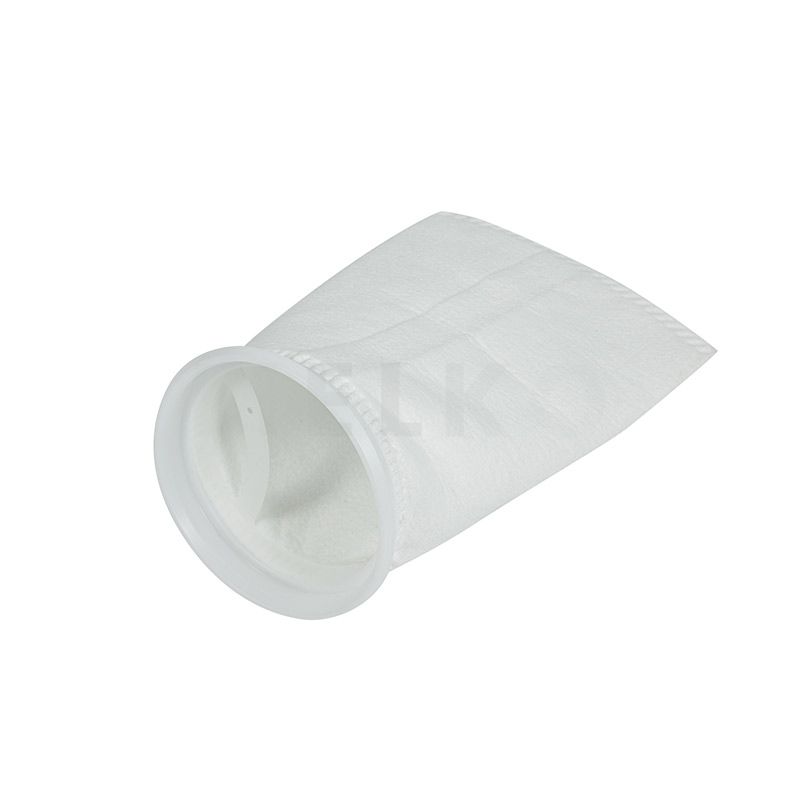
The method used to join the filter media directly impacts bypass risks. Sewn seams utilize heavy-duty thread to stitch the fabric together. While structurally sound, the sewing needle punches thousands of microscopic holes through the media. These needle holes create direct bypass channels. In non-critical bulk filtration, this minor bypass is often acceptable. However, for strict quality control applications, sewn seams introduce unacceptable contamination risks.
Fully welded seams eliminate this vulnerability. Ultrasonic welding fuses the polypropylene fibers together using high-frequency vibrations. This process creates a continuous, impenetrable bond without introducing any holes. The welded seam becomes as strong and efficient as the surrounding filter media. For applications requiring strict adherence to micron ratings, fully welded construction is mandatory. If you are filtering a high-gloss automotive coating, a single sewn seam can let enough oversized particles through to ruin an entire batch.
The interface between the filter bag and the housing requires a perfect seal. Standard sealing rings include galvanized steel, stainless steel, and molded polypropylene flanges. Metal snap-rings rely on the compression of the housing lid to force the ring against the basket shoulder. Over time, metal rings can warp, or the housing shoulder can wear, leading to fluid bypassing the bag entirely.
Molded PP collars provide a vastly superior sealing mechanism. These plastic flanges are designed to expand slightly under pressure, actively engaging the inner wall of the filter housing. This dynamic sealing action creates a positive, bypass-free fit. Additionally, molded collars feature integrated lifting handles, making removal significantly faster and safer for maintenance personnel. When dealing with hazardous chemicals, a quick-lift handle reduces operator exposure time.
Needle felt media consists of thousands of entangled fibers. Under high flow rates or fluctuating pressures, loose fibers on the downstream side of the bag can break free and migrate into the clean fluid. This fiber shedding is disastrous in sensitive applications.
Manufacturers apply surface treatments to mitigate this risk. The two most common treatments are glazing and singeing. Glazing uses a heated roller to flatten the surface fibers, while singeing passes the media over an open flame to melt the outermost fibers into a unified matrix. Singed finishes provide superior protection against fiber migration. Applications such as automotive clear coats, food and beverage processing, and high-purity chemical manufacturing demand singed-finish bags to prevent downstream contamination.
Standard single-layer needle felt provides excellent general-purpose filtration. However, demanding applications require advanced configurations. Multi-layer designs incorporate several distinct media types to enhance performance and extend run times between maintenance intervals.
High-Efficiency Meltblown PP: By inserting layers of dense, meltblown polypropylene between standard felt layers, manufacturers achieve near-absolute filtration efficiencies. These bags can capture up to 99% of targeted particles, bridging the gap between bag and cartridge performance.
Graded Density/Extended Life: These configurations utilize progressive pore structures. The outermost layers feature coarse pores to capture large particles, while the inner layers feature progressively tighter pores for fine filtration. This depth utilization prevents surface blinding, doubling or tripling the dirt-holding capacity and significantly extending changeout intervals.
Oil Absorbing Inserts: Some multi-layer bags include a thick core of loose meltblown PP specifically designed to maximize surface area for hydrocarbon absorption, ideal for heavy tramp oil applications.
Municipal and industrial wastewater treatment facilities rely heavily on bag filtration. They serve as excellent pre-filters for reverse osmosis systems, capturing sand, scale, and biological debris. Beyond simple particulate removal, the unique chemical properties of polypropylene make it invaluable in process water treatment.
Polypropylene is highly oleophilic. It naturally attracts and binds hydrocarbons. Facilities processing machining coolants, parts washing fluids, or industrial runoff utilize PP bags to absorb tramp oils and trace hydrocarbons from aqueous solutions. As the water passes through the media, the oil adheres to the PP fibers, resulting in cleaner discharge water and protecting downstream equipment from oil fouling. A standard Size 2 PP bag can hold several pounds of oil before reaching saturation.
The coatings industry requires absolute purity. Even microscopic contaminants cause visible defects like cratering, fisheyes, or surface inclusions in high-gloss finishes. Polypropylene is the standard media for these applications because it can be manufactured entirely free of silicone.
Silicone contamination is the primary cause of adhesion failure and surface defects in paints. Utilizing silicone-free PP bags ensures batch integrity. Furthermore, the necessity of singed-finish bags is absolute in this sector. A single migrated fiber trapped in a layer of automotive clear coat results in expensive rework and scrapped panels. Welded, singed PP bags provide the necessary security for high-value coating lines.
Chemical manufacturing involves aggressive fluids that rapidly degrade standard materials. Polypropylene excels in these harsh environments. It routinely filters strong acids used in metal plating, alkaline solutions in industrial cleaning, and various organic solvents in petrochemical refining.
In these applications, PP outperforms standard polyester or nylon media. Nylon degrades quickly in acidic environments, while polyester hydrolyzes in strong alkalis. Polypropylene maintains its structural integrity across both extremes, ensuring continuous filtration without the risk of media breakdown contaminating the chemical batch. Operators must simply ensure the process temperature stays below the 200°F threshold.
Filter housings and bags follow standardized sizing across the industry. This standardization ensures compatibility and predictable performance metrics. Selecting the correct size depends entirely on the required flow rate and the anticipated dirt load. Undersizing a system leads to constant maintenance, while oversizing wastes floor space.
Bag Size | Dimensions (Diameter x Length) | Surface Area (sq. ft.) | Max Water Flow Rate (GPM) |
|---|---|---|---|
Size 1 | 7" x 16" | 2.0 | 45 |
Size 2 | 7" x 32" | 4.4 | 90 |
Size 3 | 4" x 8" | 0.5 | 15 |
Size 4 | 4" x 14" | 1.0 | 25 |
Matching the bag size to system flow rates is critical. A standard Size 2 bag can typically handle up to 90 GPM of water. However, if the fluid is highly viscous, this maximum flow rate must be drastically reduced to prevent excessive initial differential pressure. Pumping a 500 cps resin through a Size 2 bag at 90 GPM will instantly peg the pressure gauge and likely blow the bag through the basket.
Facilities often inherit legacy filtration vessels from various manufacturers. Matching new filter bags to existing proprietary housings requires careful attention to the collar style. An incorrect collar will not seal, leading to massive fluid bypass.
Standard metal ring bags generally fit older, generic housings. However, modern vessels often require specific molded plastic flanges. Identifying the correct collar style—such as a Polyloc, Sentinel, or specific V-ring design—ensures drop-in compatibility. A properly matched collar provides a positive seal without requiring any expensive housing modifications or aftermarket adapters. Always measure the internal diameter of the basket shoulder before ordering a new style of collar.
As production volumes increase, filtration capacity must scale accordingly. Operators face the choice of installing multiple single-bag vessels in parallel or transitioning to a single, large multi-bag housing. Each approach carries distinct operational trade-offs.
Parallel single housings offer redundancy. Operators can isolate and service one vessel while the others continue processing fluid, eliminating production downtime. However, this setup requires a larger physical footprint and complex manifold piping. Multi-bag housings consolidate the footprint and simplify piping. They can hold anywhere from 2 to 24 bags in a single vessel. The drawback is that servicing a multi-bag unit requires halting the entire flow through that vessel, and opening a massive lid requires mechanical assistance and more labor time per changeout event.
Calculate total system flow rate in GPM.
Adjust flow rate based on fluid viscosity and specific gravity.
Divide adjusted flow rate by the maximum flow capacity of a Size 2 bag.
Round up to the nearest whole number to determine the minimum number of bags required.
Add a 20% safety margin to account for unexpected dirt loads or flow surges.
Managing a filtration system requires balancing the frequency of bag replacements against the labor required to perform those replacements. Using the cheapest available bag often results in rapid blinding. This forces maintenance personnel to halt production and swap bags multiple times per shift. The labor hours and lost production time quickly outweigh any savings on the filter media itself.
Specifying a higher-capacity, extended-life PP bag filter yields a more stable operation. While the initial unit might be different, the extended dirt-holding capacity means the bag stays in the housing three times longer. This reduces maintenance interventions, lowers operator exposure to hazardous fluids, and keeps the process line running continuously. You must evaluate the total operational impact, not just the unit specification.
Filtration systems fail when maintenance protocols are ignored or when fluid conditions change unexpectedly. Recognizing common failure modes allows operators to implement effective mitigation strategies on the floor.
Blinding/Plugging: This occurs when the media pores seal over prematurely. It is usually caused by selecting a micron rating that is too tight for the bulk particulate load. It can also result from unexpected gelatinous contaminants that smear across the media surface. The solution involves stepping up to a coarser micron rating or utilizing a graded-density extended-life bag that can absorb gels without surface blinding.
Bag Rupture: This is a catastrophic failure mode. It happens exclusively when operators ignore differential pressure gauges. As pressure builds beyond 20 psi, the structural limits of the polypropylene are exceeded. The bag tears, releasing all captured dirt. Preventing this requires strict adherence to changeout schedules based on pressure drops. Additionally, verifying that the internal stainless steel support basket is intact and free of sharp edges prevents mechanical damage to the bag.
Bypass: This occurs when unfiltered fluid escapes around the bag collar. This is caused by improper seating during installation, using an incompatible collar style for the housing, or operating a vessel with a damaged sealing shoulder. Routine inspection of the housing seals and ensuring personnel are trained on proper bag seating techniques eliminates this risk.
Not all polypropylene is created equal. Industrial-grade PP bags are suitable for wastewater, chemicals, and coatings. However, they are strictly prohibited in food, beverage, and pharmaceutical applications. These sensitive industries require certified materials.
Food-grade applications demand compliance with FDA Title 21 CFR Part 177.1520, which governs the safe use of polyolefins in contact with food. Filters must be manufactured in clean, silicone-free environments using virgin polypropylene resin. They cannot contain any industrial lubricants, binders, or antistatic agents. Facilities must secure and file material specification sheets and compliance certificates from the manufacturer before installing any filter in a food-contact process.
Spent filter bags represent a continuous waste stream. The disposal pathway depends entirely on the nature of the captured contaminant, not just the filter media itself. If a bag filters municipal water, it can often be disposed of as standard industrial waste. If it captures hazardous chemicals or heavy metals, the entire bag must be treated as hazardous waste, significantly increasing disposal complexity.
Polypropylene offers a distinct environmental advantage regarding incineration. When utilized in waste-to-energy disposal methods, PP burns exceptionally clean. It possesses a high BTU value and breaks down primarily into trace ash, carbon dioxide, and water vapor. It does not release toxic halogens or dioxins during combustion, making it an environmentally preferable option for facilities utilizing incineration for waste management.
Optimizing your pre-filtration strategy requires precise execution and strict adherence to operating parameters. Implement the following actionable steps to secure your downstream processes:
Audit your current differential pressure logs to establish a strict, pressure-based changeout protocol, ensuring bags are replaced before reaching 20 psi.
Verify the chemical and thermal compatibility of your fluid streams, confirming temperatures remain below 200°F (93°C) before specifying polypropylene media.
Inspect your existing filter housings to identify the exact collar style required, guaranteeing a bypass-free seal without relying on makeshift adapters.
Conduct a pilot test using graded-density bags if your current single-layer filters are experiencing rapid surface blinding from gelatinous contaminants.
A: Polypropylene bag filters have a maximum continuous operating temperature of approximately 200°F (93°C). Exceeding this temperature causes the polymer fibers to soften, which expands the pore structure and allows contaminants to bypass. For higher temperatures, alternative materials like polyester or Teflon are required.
A: No. Polypropylene needle felt is a depth filtration media. Contaminants become permanently entangled deep within the tortuous fiber matrix. Attempting to wash or backwash the bag only removes surface debris while leaving the internal pores permanently blinded, leading to immediate failure upon reinstallation.
A: A nominal rating means the filter captures approximately 60% to 70% of particles at the specified micron size; it is not a rigid barrier. An absolute rating guarantees the capture of 99% or more of particles at that size. Standard PP felt is nominal, while meltblown multi-layer PP bags can achieve absolute ratings.
A: Changeouts should be dictated by differential pressure (Delta P), not by time. You should replace the bag when the pressure gauge indicates a drop of 15 to 20 psi across the housing. Pushing beyond 20 psi drastically increases the risk of the bag rupturing.
A: Yes, provided they are specifically manufactured and certified for such use. Food-grade PP bags must comply with FDA Title 21 CFR regulations, be constructed from virgin resin without industrial binders, and be manufactured in a clean, silicone-free environment.
A: They are highly effective. Polypropylene is naturally oleophilic, meaning it attracts and binds hydrocarbons. This makes PP bags an excellent choice for absorbing tramp oils, trace hydrocarbons, and machining coolants from aqueous process streams.


